

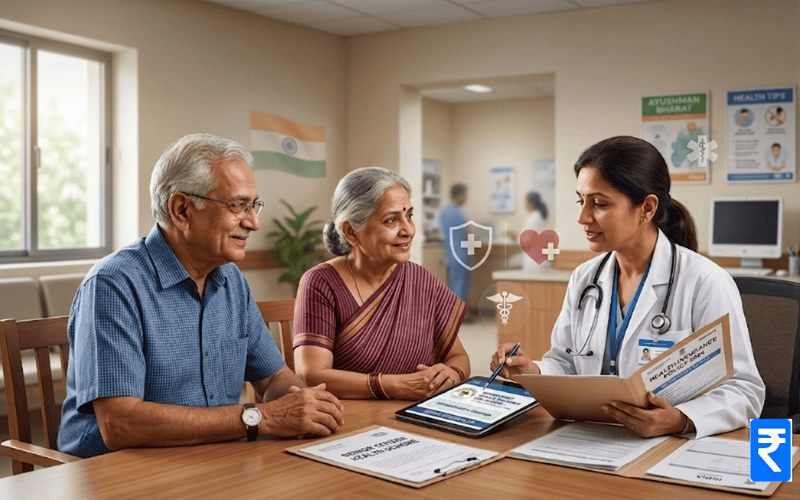
Healthcare costs in India are rising steadily, and senior citizens are often the most affected. With age, the need for regular treatment, medication, and hospitalization increases, while income after retirement usually becomes limited. This makes managing medical expenses a serious financial concern for many families.
To address this gap, the government has introduced several health insurance schemes that offer free or subsidised coverage for senior citizens. These schemes aim to reduce out-of-pocket expenses and improve access to quality healthcare.
This article explains the major government health insurance schemes available for senior citizens in India, along with their eligibility, benefits, limitations, and how to apply.
Why Government Health Insurance Matters for Senior Citizens
Older adults frequently experience:
- Greater rates of being hospitalized
- Higher chances of acquiring chronic diseases (diabetes, hypertension, heart disease).
- Costly extended-care
- Lower source(s) of income after retiring.
The government health insurance for senior citizens helps by providing coverage for hospitalizations, surgeries, tests and, when possible, outpatient treatment.
Government Health Insurance for Senior Citizens
Here are Government health insurance programmes and policies designed to cater to the needs of senior citizens.
Ayushman Bharat – Pradhan Mantri Jan Arogya Yojana (PM-JAY)
Launch Date: 2018
Oversight Agency: National Health Authority
India’s Ayushman Bharat – PM-JAY is the world’s largest government program that offers health assurance.
Core Elements:
- Up to ₹5 lakhs per family per year in coverage
- Secondary/tertiary care hospitalization
- No cash required at participating public & private hospitals
- Non-discriminatory on age; all ages qualify
While this plan is not exclusively focused on elderly individuals, senior family members who meet eligibility requirements under this program receive coverage.
Importance To Seniors:
This program provides substantial assistance for thousands of low-income seniors; it is considered the largest source of government health insurance for senior citizens living in poverty.
Ayushman Vay Vandana Card (For 70+ Citizens Under PM-JAY)
In 2023–2024, the government announced an expansion of health insurance for individuals over the age of 70, as well as the potential ability to obtain health insurance if an individual is currently not qualified for a SECC category.
Main highlights include:
- A focus on individuals aged 70 or older
- Coverage provided through the Ayushman Bharat program
- Individuals over 70 years of age will receive cashless hospital services at the empanelled hospitals
This recently announced initiative will further boost government health insurance for senior citizens and will continue to assist elderly seniors without dependents.
Central Government Health Scheme (CGHS)
Established by India in 1954 under the Ministry of Health and Family Welfare, the CGHS program is designed to provide comprehensive health care to establish the health of the following groups of people:
- Central Government Employees
- Pensioners
- Freedom Fighters
- Certain Autonomous Body Employees
The CGHS program is designed to provide the following coverage to its members:
- Outpatient treatments
- Hospitalization
- Diagnostic testing
- Prescription medicines
- Specialist physician consultations.
The CGHS program is available in select cities throughout India.
Pensioners only have to contribute one time, based on their pay scale, for the remaining balance of their membership in the CGHS program.
Ex-Servicemen Contributory Health Scheme (ECHS)
Initiated in 2003, the ECHS health insurance program for senior citizens is managed by the Ministry of Defence and provides health care benefits to ex-servicemen, their spouses, and their dependents. This benefit includes:
- An unrestricted range of outpatient and inpatient care
- Cashless outpatient and inpatient medical treatment, as long as the ex-servicemen have a valid card at any empanelled hospital
- Coverage throughout India
The program offers considerable financial assistance to senior veterans and widow beneficiaries through its government health insurance for senior citizens.
Employees’ State Insurance Scheme (ESIS)
Managed by: Employees’ State Insurance Corporation (ESIC)
This program is designed to help mainly wage employees earning less than a specified amount; however, retired people who received ESIS coverage while working will still be able to receive benefits after retiring if they meet certain criteria.
Medical Benefits After Retirement:
- Requires an inexpensive annual premium
- Covers the retirees and their spouses
For retirees who qualify for this program, ESIS contributes to the government health insurance for senior citizens of the formal sector.
Rashtriya Swasthya Bima Yojana (RSBY) – Legacy Beneficiaries
The RSBY program was created in 2008 with the purpose of providing health insurance to people living below the poverty line (BPL). However, many BPL families who had participated in the RSBY program have since been moved into newer state-run programs that have replaced it.
Now, senior citizens who have been enrolled in RSBY may be eligible for coverage under Ayushman Bharat, thereby ensuring continued government health insurance for senior citizens.
State-Specific Health Insurance Schemes for Seniors
There are numerous independent or supplementary health insurance schemes in some parts of India.
Chief Minister’s Comprehensive Health Insurance Scheme – Tamil Nadu
- Each family can obtain up to ₹500,000 worth of coverage.
- Members will have cashless access to hospitalization.
- Members must meet the eligibility criteria established for residents.
Mahatma Jyotiba Phule Jan Arogya Yojana – Maharashtra
- The program provides coverage for high-cost surgeries (major).
- The program is intended for families with limited income.
Vajpayee Arogya Shree Scheme – Karnataka
- The focus is on receiving health care from a specialized (tertiary) facility.
- In addition to the national programs, these programs provide additional support and can expand the number of individuals enrolled in government health insurance for senior citizens beyond state borders.
Senior Citizen Health Insurance Scheme (SCHIS – Proposed/State Variants)
A number of states have established or are testing dedicated programs that will only provide coverage for seniors, such as:
- Higher benefits
- No family ties to qualify
- Lower premium contributions
Although availability differs from state to state, these are all examples of an ongoing evolution of government health insurance for senior citizens that responds to the changing population.
Coverage Comparison Overview
| Scheme | Coverage Limit | Age Limit | Cashless Treatment | Target Group |
| PM-JAY | ₹5 lakh/family/year | No limit | Yes | Low-income families |
| CGHS | Varies | No limit | Yes | Central govt employees |
| ECHS | Comprehensive | No limit | Yes | Ex-servicemen |
| ESIS | Varies | Limited | Yes | Organized workers |
| State Schemes | Up to ₹5 lakh | Varies | Yes | State residents |
What is Typically Covered?
All government health insurance for senior citizens provided by the federal government covers the following:
- In-patient hospitalizations
- ICU care
- Surgical procedure costs
- Diagnostic tests
- Pre- and post-hospitalization expenses (within the specified time window)
All health insurance for seniors has some items excluded from coverage (depending upon specific program rules), including:
- Cosmetic procedures
- Experimental procedures
- Non-medical consumable items
- Specific pre-existing medical conditions (according to plan rules)
Every type of insurance has its own list of requirements concerning documentation and its own list of hospitals included in the plan.
How to Apply
The application process for government health insurance for senior citizens varies based on the scheme.
PM-JAY:
- Check eligibility
- Go to a Common Service Centre (CSC).
- Provide your Aadhaar Card and Ration Card.
CGHS:
- You need to apply on the CGHS Portal.
- You will have to submit pension documents.
ECHS:
- You need to register via the Zila Sainik Board.
State Schemes:
- You will have to visit the respective state health department websites.
Anyone who is applying for government health insurance for senior citizens must make sure they meet the eligibility criteria before applying and have all of the correct documents necessary for the application.
Important Considerations
When applying for government health insurance for senior citizens, keep the following factors in mind:
- Income Criteria: Many schemes are income-based. Seniors from middle- or upper-income groups may not qualify for fully subsidized plans.
- Geographic Availability: Schemes like CGHS operate only in select cities.
- Coverage Limits: A ₹5 lakh cap may not be sufficient for complex treatments such as organ transplants or long ICU stays.
- Waiting Periods: Certain benefits may have waiting periods or pre-authorization requirements
- Network Hospitals: Treatment is usually restricted to empanelled hospitals.
Understanding these aspects helps evaluate how government health insurance for senior citizens aligns with individual needs.
Combining Government and Private Insurance
Many retirees opt to use multiple sources of insurance coverage:
- Government resources for minimum coverage
- Private policies specifically designed for senior citizens to provide additional coverage
Using a combination of these types of insurance can help mitigate the financial threats associated with increasing costs for providing medical services.
Nevertheless, all retirees should take into account policy provisions, price, and ease of submitting claims when determining which insurers will meet their insurance needs.
How to Verify Authentic Information
Always refer to the official websites and government portals, like:
- Ministry of Health and Family Welfare: https://www.mohfw.gov.in
- National Health Authority: https://nha.gov.in
- Press Information Bureau: https://pib.gov.in
- State health department portals
Avoid relying solely on third-party agents or unofficial websites.
Future of Government Health Insurance for Seniors in India
Government health insurance for senior citizens will likely see continued expansion.
Some major areas of policy discussion are:
- Universal health insurance
- New maximum insurable amounts
- Inclusive of preventive care
- Inclusion of electronic medical records.
Conclusion
Healthcare costs continue to increase with greater longevity, so medical insurance is essential in your retirement planning. Several national and state programs provide structured forms of government health insurance for senior citizens that cover hospital stays, surgery, and specialized care.
There are various schemes, such as PM-JAY, CGHS, ECHS, ESIS, and state-level programs that offer different benefits based on qualification. While they are beneficial to reduce a person’s out-of-pocket medical expenses, you must evaluate coverage limits, exclusions, and geographic restrictions before enrolling in any of these schemes.
Senior citizens and their caregivers should:
- Check eligibility requirements
- Understand coverage options
- Compare any scheme(s) benefits
- Review any required documentation
- Regularly reassess their healthcare needs
Making an informed decision about your retirement can promote financial stability while maintaining the medical care required during your golden years.
FAQs
1. Is government health insurance available to all senior citizens in India?
Not universally. Eligibility depends on income criteria, employment history, or state residency.
2. Can senior citizens above 70 apply for Ayushman Bharat?
Recent expansions allow broader inclusion of citizens aged 70+, subject to official guidelines.
3. Does CGHS cover private hospital treatment?
Yes, but only at empanelled hospitals and subject to package rates.
4. Are pre-existing diseases covered?
Most government schemes cover pre-existing diseases, especially PM-JAY, but specific terms vary.
5. Can seniors combine government and private insurance?
Yes, depending on individual eligibility and affordability.