

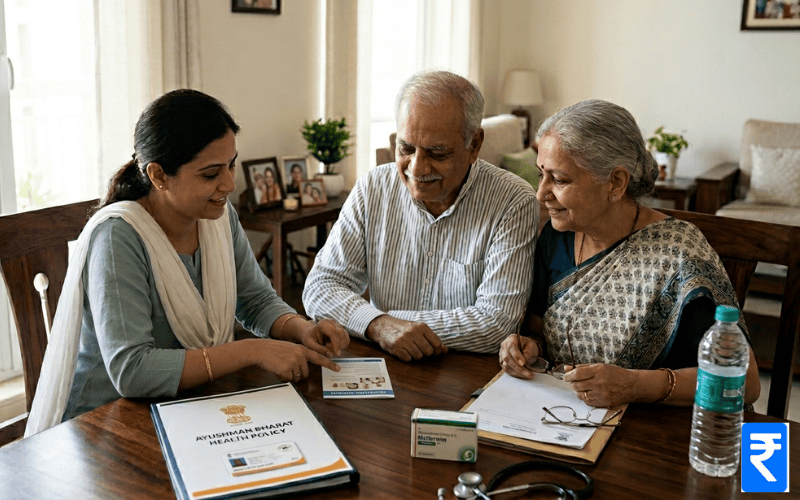
Today, senior citizens in India often have to face higher medical bills. Progressing age brings more doctor visits, overnight hospital stays, and ongoing multiple treatments. This is why the Government of India has come up with many programs that are designed around the needs of older people. These act as good financial shields for those who qualify. A good look at the senior citizen health insurance scheme by Government of India can give you an idea of how it works.
Not everyone qualifies, so checking the rules is very important. Coverage by government schemes might include only certain treatments. Signing up takes several steps, and you must pay attention to each. Families with aging members must weigh their options carefully before applying for senior citizen health insurance.
Table of Contents
- Understanding Senior Citizen Health Insurance Scheme by Government of India
- Major Senior Citizen Health Insurance Schemes by the Government of India
- Eligibility Criteria for Senior Citizen Health Insurance Scheme by Government of India
- Coverage Benefits of a Senior Citizen Health Insurance Scheme by Government of India
- Cashless Payments at Network Hospitals
- Funding and Premium Setup
- Enrollment Process for a Senior Citizen Health Insurance Scheme by Government of India
- Waiting Periods and Pre-Existing Conditions
- Limitations and Exclusions
- Comparing Private Health Insurance for Seniors
- Key Considerations for Families
- Conclusion
- Frequently Asked Questions
Understanding Senior Citizen Health Insurance Scheme by Government of India
A senior citizen health insurance scheme by the government of India generally refers to publicly funded health protection programs designed to reduce medical expenses for elderly individuals. Sometimes money comes straight from the government, and at other times, local officials might join in too.
Unlike private insurance policies, these programs aim to make medical care easier to access, especially for those with lower incomes or older adults. This is why it is easier for most people to avail these schemes since their eligibility criteria can be comparatively lenient.
Major Senior Citizen Health Insurance Schemes by the Government of India
Senior citizens of India can benefit through various efforts tied to national schemes for medical coverage. These schemes bring financial support, as well as offer help with treatment costs under government rules. Access to good healthcare increases when local centers work with central guidelines.
Each step follows updated standards meant to assist aging citizens. Coverage grows slowly as policies adapt across different areas. Some of the most notable senior citizen health insurance scheme by the Government of India include:
1. Ayushman Bharat- Pradhan Mantri Jan Arogya Yojana (PM-JAY)
Under the Ayushman Bharat- Pradhan Mantri Jan Arogya Yojana, eligible families receive cashless health cover of up to ₹5 lakh per year. This is provided on a family floater basis for secondary and most tertiary hospitalisation. You can avail this scheme at many public and private hospitals, and as a result, approved treatments do not require any upfront payment at the counter.
A key part of the senior citizens’ health insurance scheme by the government of India is this program, which supports low-income families through state-backed services. This initiative sets no limit on family size or age, so older members, including senior citizens, fall under the same protection if the household qualifies. The scheme includes pre-hospitalisation and post-hospitalisation costs from day one. In addition, it covers treatment for pre-existing conditions free of cost under notified packages. Implementation of this scheme follows national guidelines issued by the Ministry of Health and Family Welfare and the National Health Authority.
2. Rashtriya Swasthya Bima Yojana (RSBY)
The Indian government launched the Rashtriya Swasthya Bima Yojana to extend health insurance coverage to families living below the poverty line. As a result, many low-income households gained access to affordable medical care. It is also aimed at low-wage workers in the unorganised sectors. The scheme provides cashless hospitalisation benefits up to a limited annual amount per family.
After you enrol for this program, smart cards will be issued to the beneficiaries for identification. State governments and Union Territories implemented RSBY; therefore, the scheme reached eligible beneficiaries across different regions. However, the funding and broader guidelines come from the central government. Over time, many of its features and target groups have been updated within newer health protection frameworks. It has now mostly become a part of the PM-JAY.
3. Central Government Health Scheme (CGHS)
The CGHS offers medical care to eligible central government employees, pensioners, and their dependents. Financial help is offered through a network of CGHS Wellness Centres and network hospitals.
Senior citizens who are central government pensioners, along with dependent family members, are eligible under this scheme. Eligible members can access outpatient consultations, diagnostics, medicines, and referred inpatient treatment under this initiative. Beneficiaries receive a CGHS card, which serves as proof of entitlement at recognised facilities. The scheme extends insurance coverage across multiple cities, and it is gradually expanding to more locations to improve access for retired and elderly people.
4. National Programme for Health Care of the Elderly
This senior citizen health insurance scheme by the government of India covers the healthcare needs of people aged 60 and above. It incorporates promotional, preventive, curative, and rehabilitative services in the government facilities nationwide.
The key component of this initiative includes specialized geriatric clinics, day care centers, physiotherapy units, and dedicated wards in district hospitals for age-related diseases. The National Programme for Health Care of the Elderly (NPHCE) ensures free or heavily subsidized healthcare access to rural and backward areas. This government program further enhances the quality of life of the elderly.
5. Public Sector Mediclaim Policies
The government offers these government-backed insurance policies for seniors aged 60–80 through public insurers such as National Insurance Company Limited, The New India Assurance Company Limited, and United India Insurance Company Limited. They often require co-payments but cover hospitalisation, ambulance, and AYUSH treatments. These insurance policies can be renewable up to age 90.
6. State-Specific Senior Citizen Health Schemes
Many state governments operate their own health protection programs aligned with national policy. These state programs often integrate with the broader senior citizen health insurance scheme by the government of India.
Eligibility Criteria for
Senior Citizen Health Insurance Scheme by Government of India
Not everyone qualifies for the senior citizen health insurance scheme by the government of India. Each plan sets its own rules for eligibility. A health condition alone usually is not enough. Rules can change slightly as determined by the government of India. However, some common eligibility factors are:
- Age (typically 60 years and above)
- Socioeconomic status
- Inclusion in government beneficiary databases
- Residency requirements
- Income status
Under the Pradhan Mantri Jan Arogya Yojana qualifications, authorities determine eligibility through the Socio-Economic Caste Census records. Similarly, other policies also have their own eligibility criteria. It is very important to read the guidelines and ensure that you meet all requirements before you apply for a government initiative.
Coverage Benefits of a
Senior Citizen Health Insurance Scheme by Government of India
Older adults often get medicine discounts and special care during sudden emergencies. Treatment at public hospitals is usually favoured. Pre-existing conditions might be covered under certain initiatives. Some benefits under a senior citizen health insurance scheme by the government of India may include:
- Hospitalization expenses
- Pre- and post-hospitalization care
- Daycare procedures
- Diagnostic services
- Cashless treatment at registered hospitals
Some plans cover more than others. Therefore, you should check each initiative carefully before choosing the option that suits you best.
Cashless Payments at Network Hospitals
A big part of India’s government-run health insurance policies for older adults is receiving care without paying upfront at approved clinics.
Around the country, many people can access healthcare through PM-JAY at a wide range of approved clinics. The medical costs can drop significantly when they go to one of these places. Hospitals tied into this system spread far, making visits cheaper by skipping extra bills.
Funding and Premium Setup
Not every program gets full funding and relies on strong financial backing from the state. National budgets fund some schemes directly, while governments implement others through large-scale support systems designed specifically for senior citizens. While a few operate independently, most of the senior citizen health insurance scheme by the Government of India lean heavily on official resources. Support levels differ, but government involvement stays central across all cases.
With programs such as PM-JAY, people who qualify do not hand over money for coverage. On the other hand, when it comes to CGHS, the payment of medical bills depends on the type of pension that they may receive.
Enrollment Process for a
Senior Citizen Health Insurance Scheme by Government of India
However, eligibility for a senior citizen health insurance scheme by the Government of India depends on the specific initiative you choose. The common steps to enroll in these programs are:
- Check eligibility through the official portal
- Visit an empaneled hospital or common service center
- Complete verification using Aadhaar or a ration card
- Receive beneficiary identification
CGHS enrollment requires application through designated offices.
Waiting Periods and Pre-Existing Conditions
Unlike private coverage, some state-run plans skip standard delays for seniors who qualify. What matters most is that senior citizens are able to receive benefits without waiting for too long.
- PM-JAY: Covers pre-existing diseases from day one with no waiting period, providing up to ₹5 lakh annual coverage for eligible seniors aged above 70 years.
- RSBY: Immediate coverage for pre-existing conditions upon enrollment, no waiting periods or age restrictions.
- CGHS/NPHCE: They focus mainly on comprehensive geriatric care. Pre-existing issues are often addressed without much delay in public hospitals.
- Public Sector Mediclaims: These may include a waiting period of 24- 48 months for pre-existing diseases.
Limitations and Exclusions
Even with wide attention, Indian schemes for medical coverage of senior citizens might fall short in some ways:
- Restricted coverage for outpatient treatment
- Limited coverage outside empaneled hospitals
- Administrative delays
- Geographic limitations
It is always necessary to read the right documents before you apply for a scheme. Before application, you must always check what benefits are being offered based on your age and income.
Comparing Private Health Insurance for Seniors
Government schemes differ from private policies in several ways:
- Government schemes are subsidy-driven
- Private policies may offer higher customization
- Private plans may have waiting periods and higher premiums
If you do not understand how a senior citizen health insurance scheme by the Government of India works, you may start wondering whether it truly protects you financially. A closer look at the programs shapes the decisions of most. Some believe that the government-backed programs will be enough for them. Some may also seek additional policies offered by the private sector.
Key Considerations for Families
Families supporting elderly members should:
- Verify eligibility
- Maintain beneficiary documentation
- Understand hospital network availability
- Track policy benefits annually
Knowing how it works helps older people choose which senior citizen health insurance scheme by the Government of India might be better for them.
Conclusion
With progressing age, health crises may strike at unexpected times. In these times of emergency, savings may be spent quickly on medical bills and hospitalisation charges. A senior citizen health insurance scheme by the Government of India can help you ease the burden. It also opens the door to much-needed medical care for elderly patients.
Beyond raising the life expectancies across India, these programs shape how communities prepare for future well-being. Since medical science has increased the life expectancy of people on average nationwide, the role of these government initiatives has become more visible.
Frequently Asked Questions
Q1. Who is eligible for a senior citizen health insurance scheme by the government of India?
The people who qualify for the schemes vary by program. Usually, people aged sixty or more are eligible for these programs, However, the income level matters too.
Q2. Under the government health plans, do people pay premiums?
People who qualify under PM-JAY are not charged any premiums. However, this is not true for all government schemes. This is why you must carefully read the terms and conditions of the policy that you are applying for.
Q3. Do the pre-existing illnesses include under the plan?
Depending upon the scheme that you are availing, prior health issues might be covered under your insurance policy. However, this is largely dependent on how each policy handles past diagnosis. This is why you must verify if your policy covers treatment of pre-existing diseases.
Q4. Can a senior citizen use private hospitals under this plan?
Although government hospitals are preferred, some initiatives allow patients to be treated at private hospitals too. However, these hospitals must fall under the network of the initiative that you have chosen.
Q5. Is Coverage Valid Across India?
Coverage portability depends on the scheme you’re under. With PM-JAY, you can receive treatment at any hospital in India that is part of the network. However, for other schemes, especially those backed by the state government, these rules may vary.