

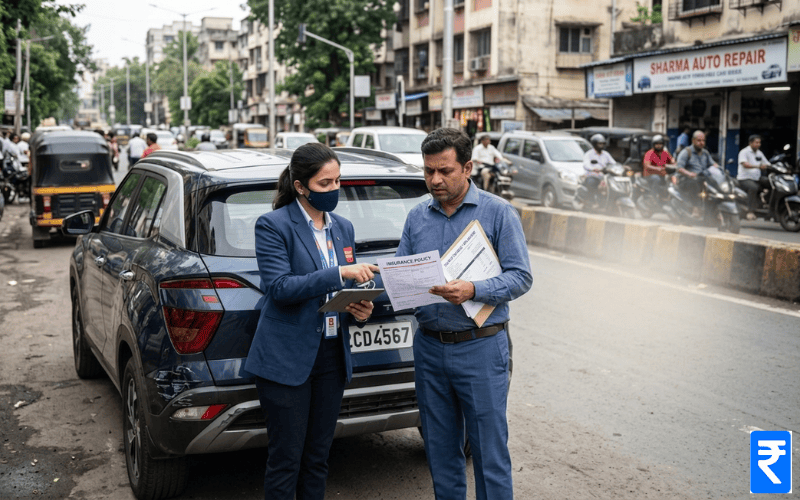
Motor insurance is essential for vehicle owners in India, providing financial protection against losses arising from various situations. As per the Indian law, every vehicle should have third-party motor insurance. This type of insurance helps in covering the costs of damages or injuries to third parties. A lot of owners choose to get comprehensive insurance, which protects their own vehicle as well.
Comprehensive plans are not perfect, though. One problem is that the insurance companies reduce the amount of money they pay out as the vehicle gets older and its value goes down. This is called depreciation. There is a way to get around this problem, it is called Return to Invoice cover.
This guide has all the information you need to know about the return to invoice in car insurance. We’ll explain how it works, what the benefits are, how much it costs and what you need to do to make a claim.
Table of Contents
- Car Insurance Essentials in India
- What RTI Cover Means for Your Car Insurance
- What Is Insured Declared Value (IDV)?
- How Return to Invoice Cover Works
- Example Scenario
- Benefits of Return to Invoice Cover
- Protection Against Depreciation
- Financial Support for Loan Repayment
- Better Replacement Value
- Peace of Mind
- Suitable for High-Value Vehicles
- Who Should Consider RTI Cover?
- Limitations of RTI Cover
- Availability Restricted to New Cars
- Applicable Only for Total Loss or Theft
- Must Be Purchased with Comprehensive Insurance
- Policy Conditions Apply
- Cost of Return to Invoice Add-On
- Claim Process for RTI Cover
- Required Documents
- Key Terms to Know
- Constructive Total Loss
- Comprehensive Insurance
- Invoice Value
- Factors Affecting RTI Claim Settlement
- Helpful Advice Before Purchasing RTI Coverage
- Conclusion
- Frequently Asked Questions (FAQs)
Car Insurance Essentials in India
Legally, you can’t drive any car in India without third-party insurance. It steps in to cover injuries, loss of life, or damage to other people’s property if your accident causes it.
Car owners can upgrade it to a comprehensive insurance policy, which offers own-vehicle coverage besides third-party liability. Comprehensive policies protect against:
- Accidents
- Theft
- Fire
- Weather-related events such as floods, cyclones, and storms
Insurance Regulatory and Development Authority of India (IRDAI) regulates the insurance industry to ensure that the insurance companies have fair practices, clear policy conditions, and easy claims procedures. National regulatory norms exist to safeguard the policyholders in India.
What RTI Cover Means for Your Car Insurance
Return to invoice in car insurance is an optional add-on that is available with comprehensive car insurance. The feature of return to invoice gives the policyholder the benefit of the original purchase price of the car when the car is totally lost or stolen, instead of the depreciated Insured Declared Value (IDV).
The IDV is paid out as a standard insurance claim, and every year, the amount is reduced to reflect the age of the vehicle. Return to invoice in car insurance fills this gap by compensating the original invoice price, which implies that a depreciation effect does not affect the amount of the settlement.
Each insurer might have different policy terms, vehicle age restrictions, and availability.
What Is Insured Declared Value (IDV)?
IDV is the current market value of the vehicle and represents the maximum claim amount payable for total loss or theft.
IRDAI provides standard depreciation schedules used to calculate IDV:
- Up to 6 months: 5% depreciation
- 6 months to 1 year: 15%
- 1–2 years: 20%
- 2–3 years: 30%
- 3–4 years: 40%
- 4–5 years: 50%
Because depreciation significantly reduces IDV, return to invoice in car insurance may help vehicle owners recover a higher amount in case of total loss.
How Return to Invoice Cover Works
When you purchase return to invoice in car insurance, the insurer agrees to reimburse the original invoice value instead of IDV if:
- The vehicle is stolen and not recovered
- The vehicle suffers a total loss
- Repair cost exceeds about 75% of IDV (constructive total loss)
Example Scenario
Original price: ₹12 lakh
IDV after 3 years: ₹8 lakh
Without RTI → Claim payout ≈ ₹8 lakh
With RTI → Claim payout ≈ ₹12 lakh
This difference can be substantial, especially for financed vehicles.
Benefits of Return to Invoice Cover
1. Protection Against Depreciation
Vehicles lose value quickly, especially in the first few years. Return to invoice in car insurance protects against this loss by reimbursing the invoice price.
2. Financial Support for Loan Repayment
Many buyers finance their vehicles. If the car is totaled early, the outstanding loan may exceed the IDV payout. RTI may reduce this financial burden.
3. Better Replacement Value
RTI helps policyholders purchase a similar new vehicle without significant additional expense.
4. Peace of Mind
Knowing that the full invoice value may be reimbursed can reduce financial stress after a major loss.
5. Suitable for High-Value Vehicles
Premium vehicles depreciate rapidly in monetary terms, making the return to invoice in car insurance potentially useful.
Who Should Consider RTI Cover?
Return to invoice (RTI) cover can be a wise choice for certain individuals looking to strengthen their car insurance. It suits:
- New car owners: Full value recovery is a priority for them as they have recently acquired a vehicle.
- Owners of expensive vehicles: High-value car owners who are the most affected by depreciation.
- Individuals with car loans: Finance borrowers who require a payout equal to the outstanding loan amount.
- People living in high-theft areas: People living in high-burglary areas are at a greater risk of vehicle theft.
- Drivers seeking enhanced financial protection: Anyone prioritizing complete safeguards against total loss.
Note that most insurance providers limit RTI to cars aged 3 to 5 years or younger at the time of policy purchase.
Limitations of RTI Cover
While beneficial, the return to invoice in car insurance has limitations:
1. Availability Restricted to New Cars
Typically available only during the initial years of ownership. The majority of the insurers limit the eligibility to 3 to 5 years after the purchase date, after which this add-on might not be offered at renewal.
2. Applicable Only for Total Loss or Theft
Partial damage claims are not covered under RTI. Scratches, minor repairs or damages which do not amount to the total loss are paid under the normal own-damage section of a comprehensive policy.
3. Must Be Purchased with Comprehensive Insurance
Not available with third-party-only policies. A base comprehensive policy with own-damage cover is a prerequisite for purchasing this add-on.
4. Policy Conditions Apply
Claims may be rejected if policy terms are violated (e.g., drunk driving, invalid license). Claims may also be denied in case of non-disclosure of material facts or misrepresentation of the vehicle usage.
Cost of Return to Invoice Add-On
The premium for return to invoice in car insurance depends on:
- Vehicle value
- Location of registration
- Age of vehicle
- Insurer pricing
Add-ons generally increase the own-damage premium. Exact rates vary among insurers because own-damage premiums are risk-based.
IRDAI regulates third-party premiums but allows insurers to determine own-damage pricing within guidelines.
Claim Process for RTI Cover
Here’s the step-by-step procedure given below
- Inform the insurer immediately: Call your insurer and report the incident. To prevent complications, most insurers need to receive the notification within 24 to 48 hours of the incident.
- File an FIR in case of theft: File an FIR (First Information Report) at its closest police station. This is a mandatory document for theft-related RTI claims and must be submitted to the insurer.
- Submit the claim form: Finish the official claim form of the insurer and make sure that all information is found in the policy records.
- Provide the required documents: Be sure to file all the documents listed, as failure to do so can slow down processing and settlement.
- Insurer assesses loss: A licensed surveyor may be appointed to inspect damage and confirm whether total loss criteria are met before the claim is approved.
- Settlement based on invoice value: Once approved, the payout is calculated on the original invoice amount, less applicable deductibles and salvage value.
Required Documents
- Insurance policy
- Vehicle registration certificate
- Purchase invoice
- Driving license
- FIR (for theft)
- Claim form
Timely reporting is essential for smooth processing.
Key Terms to Know
Constructive Total Loss
When repair costs exceed 75% of IDV, the insurer declares the vehicle a constructive total loss. RTI cover may apply in such cases, allowing settlement at the original invoice value rather than the depreciated IDV.
Comprehensive Insurance
A policy covering own damage and third-party liability. It covers accidents, fire, theft, and natural disasters, and permits policyholders to add covers such as return to invoice in car insurance.
Invoice Value
The original purchase cost of the vehicle, including ex-showroom price, taxes, and registration charges. This amount forms the basis for RTI payout calculations and is referenced from the original dealer invoice.
Factors Affecting RTI Claim Settlement
The amount you ultimately receive under return to invoice (RTI) cover in car insurance can vary based on several key elements, even when the add-on applies:
- Deductibles: These are the fixed sums you must pay out of pocket before the insurer covers the rest.
- Salvage value: Insurers often subtract the worth of any recoverable wreckage or parts from the total payout.
- Outstanding loan adjustments: For financed vehicles, payments may first settle any remaining bank dues.
- Policy exclusions: Certain situations or damages outlined in the terms may disqualify the claim entirely.
To avoid surprises, make it a habit to review your policy paperwork in detail before signing up or filing a claim.
Helpful Advice Before Purchasing RTI Coverage
Take these actions for a well-informed decision on return to invoice (RTI) add-ons:
- Get familiar with terms across insurers: Look through different insurer offerings to find the perfect fit for protection and pricing.
- Make a note of the qualification period: Determine constraints on vehicle age and other stipulations.
- Know what the invoice covers: Be certain that taxes, registration fees and purchase add-ons are part of the deal.
- Decide between cost and value: Put the additional premium side by side with possible returns from a total loss scenario.
- Protect purchase documents: Keep bills, ownership deeds and proofs properly for quick claim retrieval.
Conclusion
Car insurance’s return to invoice (RTI) option works as a targeted extension, guarding owners against value drops from wear in cases of theft or full vehicle write-offs. It holds strong appeal for buyers of fresh automobiles, premium rides, or financed ones.
Remember, RTI brings added fees, firm qualification standards, and precise conditions. Spend time studying your policy papers closely and following updates from bodies such as IRDAI. Such steps promote wise selections and confirm your coverage meets personal demands effectively.
Frequently Asked Questions (FAQs)
1. Is Return to Invoice cover mandatory?
No. Return to invoice is an optional car insurance add-on. All vehicles are legally required to have only third-party insurance under the Motor Vehicles Act, 1988. Although not legally specified, RTI can be a feasible option if the owner of new or high-value vehicles intends to receive the full value of the purchase in case of a total loss or theft.
2. Can RTI be purchased later?
RTI must generally be purchased at the time of buying a new policy or during renewal, provided the vehicle meets the insurer’s age eligibility criteria. Adding RTI mid-policy term may not be permitted by all insurers. It is advisable to opt for this add-on at the initial stage of policy purchase to ensure uninterrupted coverage.
3. Does RTI cover partial damage?
No. Return to invoice in car insurance is only applied in the case of total loss or theft. Smaller repairs, dents, and damages which fall below the total loss requirement are covered by the basic own-damage component of a comprehensive policy, and cannot be paid out under RTI.
4. Is RTI useful for old cars?
It may be less relevant because most insurers restrict RTI availability to vehicles up to 3 to 5 years old. As a vehicle ages, the gap between its IDV and the original invoice value narrows, reducing the financial advantage of this add-on. For older vehicles, standard comprehensive coverage may be sufficient.
5. Does RTI include road tax and registration?
Many policies include road tax and registration charges as part of the invoice value for RTI payouts, but this varies by insurer. Certain policies can exclude add-on accessories or first insurance payments from the settlement value. It is best to go through the policy document carefully and clarify with the insurer which items of the invoice are included.