

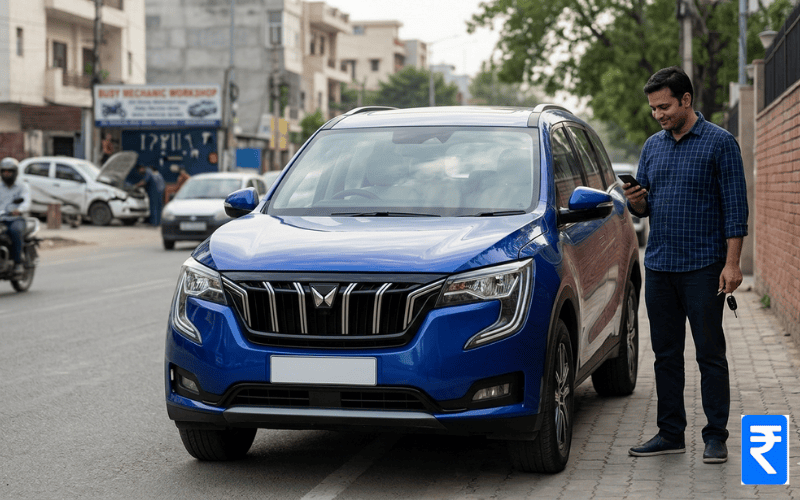
Car damages incurred in accidents or natural disasters can lead to significant spending on repairs and replacements. Car insurance is considered an essential financial protection for car owners. A standard policy usually has a depreciation factor that applies when making a claim. This depreciation can lead to out-of-pocket expenses that risk compromising your future financial savings. Zero depreciation cover can be the solution.
What is zero depreciation car insurance? This article explores what zero depreciation is and how it can help reduce extra expenses that arise from depreciation. It explains how zero depreciation works, what the repair costs it covers, and the limitations and conditions under which it is covered.
Understanding Depreciation in Car Insurance
Before diving into what zero depreciation is in car insurance, it is important to understand what IDV and depreciation are in car insurance.
Depreciation
Any car ages over time, and the value of the car also decreases with every passing year. This drop in the value of the car over time is called depreciation. Depreciation applies as soon as a car is purchased and can go up to 15% in the first year of purchase, as per standard depreciation rates.
IDV
Insured Declared Value is the market value of the car and also the sum the car is insured for. As the vehicle ages, the value of the car drops, and with this value, the insured amount also decreases. IDV is the maximum amount the insurer will cover if the vehicle gets stolen or damaged in an accident, and it does not apply to partial claims or repairs. Insured Declared Value is calculated annually with the depreciation percentage to determine the renewable premium.
Depreciation Rates for Car Parts and Accessories
The following table contains details on the depreciation rates that apply to different car parts as per the Insurance Regulatory and Development Authority of India.
| Vehicle Part | Depreciation Rate |
| Rubber | 50% |
| Nylon | 50% |
| Plastic parts | 50% |
| Tyres and Tubes | 50% |
| Batteries and Air Bags | 50% |
| Fiberglass Components | 30% |
| All parts made of Glass | NIL |
Standard Depreciation Rates used by Car Insurance Companies
The Insurance Regulatory and Development Authority of India has a standard depreciation percentage for cars based on their age. Insurers use this standard percentage to calculate depreciation for four-wheelers across India, which directly affects the Insured Declared Value of the car. The following table covers the depreciation amount for the entire car
| Age of Vehicle | Depreciation Rate |
| <6 months | 5 % |
| 6 months -1 year | 15% |
| 1 year -2 years | 20% |
| 2 years – 3 years | 30% |
| 3 years to 4 years | 40% |
| 4 years to 5 years | 50% |
| 5 years < | Decided between the policyholder and the insurer. |
What is Zero Depreciation Car Insurance?
Zero depreciation, also known as Nil depreciation, is an optional add-on offered to policyholders that helps them get full coverage on repairs and replacements without depreciation. In a standard car insurance policy, a policyholder will be required to bear the depreciation amount. But with this add-on, the claim will be settled in full without any depreciation.
Example of How Zero Depreciation Works in Car Insurance
| Vehicle parts | Estimates repair costs | Depreciation percentage | With a standard policy | With Zero Depreciation |
| Front bumper (plastic) | ₹2000 | 50% | ₹1000 | ₹0 |
| Door handles | ₹2000 | 50% | ₹1000 | ₹0 |
| Metal | ₹1500 | 50% | ₹750 | ₹0 |
| Labour charges | ₹2000 | 0% | – | ₹0 |
| Compulsory deductible | ₹1000 | – | +₹1000 | ₹1000 |
| Out-of-pocket expenses | – | – | ₹3750 | ₹1000 |
Note: These numbers and percentages are assumptions and are used as examples.
In a standard policy, a policyholder will be required to cover the depreciation costs of the repaired or replaced parts. From the table above, it is understood that a policyholder with a base policy will have to pay ₹3750 from their own pocket, and a policyholder with zero depreciation cover will pay only the compulsory deductible amount, which is ₹1000. Zero Depreciation can help a policyholder save ₹2750 that would be coming from their own pockets.
Car Insurance Plans and Zero Depreciation Cover
The following section explains to which plans zero depreciation applies, so it can be helpful to understand what car insurance policy zero depreciation can be purchased with.
There are three types of car insurance plans.
- Third-Party Only: A third-party only policy is mandatory for car owners to drive legally in India. This policy covers damages incurred to a third-party vehicle involving the insured car. Zero depreciation cannot be purchased with a third-party policy, as it covers only the repair costs of the insured vehicle.
- Own-Damage: An Own-damage policy can be bought when a policyholder already has an active third-party policy. This policy covers the damages incurred to the insured vehicle caused by accidents, fire, or natural disasters. A zero depreciation add-on can be purchased with this policy, as it covers the repair and replacement costs of the insured vehicle.
- Comprehensive Plan: A comprehensive car insurance policy combines third-party policy and own-damage policy into a single package. This policy covers third-party liabilities and the damages incurred to the insured vehicle. Zero depreciation add-on is commonly bought with a comprehensive policy, as it helps the policyholders get comprehensive repair coverage for their vehicle without depreciation.
Who Should Consider Zero Depreciation?
After understanding what zero depreciation is in car insurance, it is essential to know who should consider purchasing a zero depreciation add-on.
- New Car Owners: New car owners can consider purchasing zero depreciation, as the car value depreciates rapidly. A depreciation of 5% will be applied to a car after 6 months of its purchase, and will continue to increase as years pass, so it can be helpful for new car owners since the expenses can be significantly higher.
- Residence of Metro Areas: Car owners living in metropolitan cities can consider buying a zero depreciation cover since the risk of minor accidents is more likely to be higher in areas with traffic issues.
- Individuals Seeking Total Protection: Policyholders who are seeking better and broader coverage can opt for zero depreciation, as it helps them cover significant out-of-pocket expenses.
- Luxury Car Owners: Repairs and replacement costs for luxury cars are generally much higher, so it can be beneficial to have a zero depreciation cover to avoid spending from your own pockets.
Limitations and Conditions of Zero Depreciation Cover
Zero depreciation cover can help save, but it is an add-on cover and has its limits, like:
- No Coverage for Benefit for Older Cars: Cars that are older than 10 years are not covered under zero depreciation, as they will have a lower market value and higher wear and tear damage.
- No Coverage for Mechanical Breakdown: Mechanical breakdowns that are caused by engine damage or wear and tear are generally not covered under zero depreciation.
- No Coverage for Repair of Certain Parts: Repair of certain car parts, such as tubes, tyres, or consumables like oils, nuts, and bolts, is usually not covered under zero depreciation cover. The excluded car parts might vary depending on the policy terms.
- No Coverage for Total Loss or Theft: Zero depreciation only applies to partial claims, like repair or replacement costs. If repair costs exceed 75% of the IDV, the insurer will declare total loss, leading to a full claim payment based on the IDV of the car. In such cases, zero depreciation will not be applicable. The same goes for stolen cars as well.
Conclusion
A zero depreciation cover is not mandatory. However, it is an optional add-on cover that can be beneficial, especially for new car or luxury car owners, since the repair or replacement costs can be significantly higher. It adds to the premium but offers a significant benefit. It is important to evaluate your car’s age, usage, and risk exposure before opting for it. Choosing the right balance between premium and coverage ensures better financial protection and fewer surprises at the time of claim settlement.
FAQs
What is zero depreciation car insurance?
Zero depreciation is an optional add-on offered to policyholders that helps car owners get full coverage on repairs and replacements without depreciation.
Is zero depreciation cover only applicable to new cars?
It is an add-on that is usually offered to car owners with a vehicle age under 5 years, since older cars will have a lower market value. However, it may vary depending on the insurer’s policy terms and conditions.
How many claims can I make under zero depreciation cover?
Most insurers allow a limited number of zero depreciation claims per year (commonly 2), but this can vary depending on the insurer and policy terms.
What is the role of zero depreciation during claim settlements?
During claim settlements under a standard car insurance policy, a certain percentage of depreciation applies based on the car’s age, which should be paid by the policyholder. But with a zero depreciation add-on, a policyholder can avoid out-of-pocket expenses and get a claim amount with almost 0% depreciation.
What is not covered under zero depreciation cover?
Engine damage caused by water ingress or oil leakage, and repair of certain car parts like consumables, tyres, and tubes are generally not covered under zero depreciation. It only applies to partial claims arising from repairs and replacements and does not cover total loss or stolen cars.