

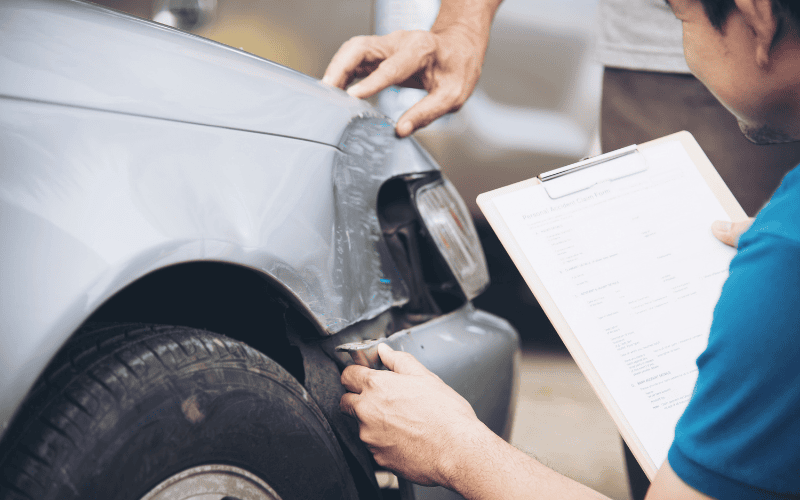
The Motor Vehicles Act, 1988, requires all vehicle owners in India to purchase car insurance; accordingly, all vehicle owners in India are required to have some sort of car insurance. Although buying your policy is easy, knowing the car insurance claim process might be just as important. Many policyholders experience delayed claims or denial of their claims due to a lack of knowledge about how to file for a claim, including timelines or paperwork.
This article provides an overview of the car insurance claim process in India, common reasons for delays and denials, and recommendations to ensure a pleasant claims process. The goal is to provide objective, impartial, and thorough information so vehicle owners can make informed decisions.
Understanding Car Insurance in India
Before diving into the car insurance claim process, it is important to understand the types of car insurance policies available in India:
-
Liability Insurance for Third Parties
The Motor Vehicle Act of 1988 requires all vehicles to carry liability insurance, which covers both bodily injury and death to others, as well as damage to their property. The policy will not cover any damage to your own vehicle.
-
-
Comprehensive Car Insurance
-
Comprehensive insurance covers third-party liability, any damage done to your car, and loss of your car due to theft, natural disaster, fire, or accident. You can purchase additional coverage, such as complete replacement value of your car after an accident and/or engine protection.
Understanding your policy coverage is the first step in navigating the car insurance claim process correctly.
Types of Car Insurance Claims
The car insurance claim process differs depending on the nature of the claim. In India, there are two primary types:
-
-
Cashless Claim
-
In this form of payment:
-
- You will have your car serviced at a network shop approved by your insurance company.
-
- Your auto insurance company pays the shop directly, so you do not need to send a check.
-
- You only have to pay for any deductible and/or out-of-pocket expenses.
-
-
Reimbursement Claim
-
Under this system, you:
- May select any shop for service on your vehicle (i.e., no shop restriction).
- Are required to pay for repairs out-of-pocket (i.e., with a credit card).
- Have your claim amount processed after the repair is completed.
Choosing the appropriate claim route influences how smoothly the car insurance claim process unfolds.
Step-by-Step Car Insurance Claim Process in India
Below is a detailed breakdown of the car insurance claim process:
Step 1: Notify Your Insurance Company Without Delay
Most insurance companies require you to alert them as soon as possible after an incident; usually, they require notification within 24–48 hours of an incident. Delaying your report may result in your claim being denied by your insurance company.
You must provide your insurance company with the following information when notifying them of your loss:
- Your policy number
- The date and time of the incident
- The location of the incident
- A brief description of any damage caused by the incident
Step 2: File an FIR (If Required)
You must file an FIR in the following incidents:
- Theft
- The liability of another party for bodily injury
- A major accident
- Any damage to property
- The occurrence of a fire
Failure to file an FIR in required cases may disrupt the car insurance claim process.
Step 3: Do Not Start Repairs Prior To Review
A surveyor must be designated by the insurer to determine the extent of loss or damage. Pursuant to the terms of the IRDAI, insurers must therefore appoint a surveyor within 72 hours after receiving a claim notification.
Repairs should not progress until the surveyor completes the inspection and the insurer issues his/her written approval.
Step 4: Obtain Necessary Documentation Prior To Claim Submission
Typical documentation needed includes:
- Duly completed claim form
- Copy of insurance policy
- Vehicle registration certificate (RC)
- Driver’s Licence (of driver at time of accident)
- Copy of FIR (if applicable)
- Repair estimate from the repair garage
Accurate documentation is essential for a smooth car insurance claim process.
Step 5: Assessing and Approving Claims
The insurer will examine the damage level, validate the insurance claim, and determine if it’s covered by the terms and conditions of the insurance policy to determine if the claim is eligible.
Once the insurer has determined an eligible claim, they may approve it fully or partially.
Step 6: Payment Stage
For cashless claims, the insurer will pay all benefits directly to the garage. However, with a reimbursement claim, the insured will have to pay all the repair costs before receiving any payment.
The IRDAI states that they expect the insurer to settle all claims that have been submitted by the insured within 30 business days of receiving all the required documentation.
Special Situations in the Car Insurance Claim Process
-
-
Claims for Total Loss
-
If the estimated cost of repair is more than 75% of the Insured Declared Value (IDV), then it can be classified as a Constructive Total Loss.
-
-
Claims for Theft
-
After the police have confirmed that the vehicle cannot be traced, a payment will be made as a claim due to theft.
-
-
Claims for Third-Party Injuries
-
Third-party injury claims are processed through the Motor Accident Claims Tribunal (MACT).
Documents Required for Car Insurance Claims
For clarity, here is a consolidated list of documents commonly required during the car insurance claim process:
Necessary documentation for accident claims includes:
- Claim form
- RC copy
- A copy of your driving license
- A copy of your insurance policy
- A copy of your repair estimate (if available)
- An FIR (First Information Report), if needed.
If making a theft claim, the documentation you will need to provide will be:
- An FIR
- A final police report (untraced report),
- All car keys
- An RC
- A copy of your insurance policy
- A subrogation letter.
Submitting incomplete documentation is one of the main causes of delays in the car insurance claim process.
Common Reasons for Claim Delays and Rejections
If you understand these possible situations that can present challenges, you will be in a better position to resolve them.
-
-
Late Notification
-
When you report an accident after the time limit stipulated in your policy, your claim will be denied.
-
-
Driving without a current licence
-
If there is no valid licence at the time of your accident, your claim will be declined. Also, if the licence has expired and you had an accident before receiving the new one, your claim will be declined.
-
-
Driving under the influence of alcohol
-
If you were intoxicated at the time of the accident, your claim will be declined.
-
-
Expiring policy
-
When your insurance policy has expired, the insurance company has no obligation to pay your claim.
-
-
Failing to disclose essential information
-
If you’ve given false information when applying for insurance or have withheld any necessary details, your later claim will be declined.
-
-
Repairs made without approval
-
Repairing your vehicle without getting approval from your insurance company before the vehicle is inspected by a surveyor could result in you only receiving part of the settlement amount or possibly not receiving any settlement amount for your claim.
-
-
Damages that are not covered
-
The general exceptions found in the average car insurance policy are as follows:
- Mechanical breakdowns
- Wear and tear
- Depreciation (unless a zero-depreciation add-on is bought at the time of the policy)
In order to fully understand the limitations of your coverage, you need to read your written policy word-for-word.
Tips to Avoid Delays in the Car Insurance Claim Process
These are practical methods to help you process your claims more easily:
-
-
Understand your insurance policy completely.
-
Learn about your:
- Insurance deductible
- Insurance add-ons
- Insurance exclusions
- Insured Declared Value (IDV);
Having a good understanding of your policy will help prevent misunderstandings with the claims settlement process.
-
-
Forward all the correct documentation when making a claim.
-
Make sure you have:
- Your Insurance Policy Documentation
- Your Registration Certificate Documentation (RC)
- Your License Documentation;
The faster you submit your documents, the faster your claim will be processed.
-
-
Take pictures right away.
-
Make sure you take pictures of:
- Your Vehicle Damage
- Your accident scene
- Third-party vehicle (if applicable)
This evidence will assist in the claims settlement process.
-
-
Use your network garages.
-
Cashless claim payments at your authorised network garage generally get processed faster.
-
-
Fully Co-Operate with your Insurance Company’s Surveyors.
-
Give access and documents to your surveyors as quickly as possible.
-
-
Renew your Insurance policy on time.
-
This step eliminates all issues when making a claim.
Understanding Deductibles and Depreciation
Your total claim payment will depend on:
-
- What amount is the mandatory deductible IRDAI has required you to have (on a motor vehicle, based upon the engine size)
-
- What amount of the deductible was selected voluntarily by you, remembering that the higher the deductible selected, typically, the lower your premium will be.
-
- The depreciated value of the item(s), such as rubber, plastic, and metal, is applied to policy terms unless the no depreciation add-on is purchased.
These three items affect the final payout to you in relation to your car insurance claim payment.
What to Do If Your Claim is Rejected?
In case a claim is declined, there are five ways you can escalate your situation:
- Ask for a written explanation of the reason for the denial.
- Review your policy carefully for terms and coverage (e.g., deductibles).
- Contact your insurance company’s grievance cell to file a complaint about the denial.
- Use IRDAI’s Integrated Grievance Management System (IGMS) to escalate the issue with the insurance company.
- Contact the Insurance Ombudsman to assist you.
Understanding the process of escalating your claim will help you navigate the claim process successfully.
Timeline for Claim Settlement in India
IRDAI Regulations state the following:
-
- The surveyor should be appointed within 72 hours of being notified.
-
- Settlement of claims should occur within 30 days after all necessary documentation has been received.
-
- Completion of any investigations should occur within 90 days of the surveyor’s appointment.
Any delay beyond these timeframes may result in interest payments being due.
Conclusion
In India, there is a structured process for filing a car insurance claim, with the need for timely action, accurate documentation, and adherence to your policy’s terms and conditions. Insurers must settle valid claims within a specified period (under the regulations of the Insurance Regulatory Development Authority of India (IRDAI)); however, policyholders must also comply with certain duties.
By knowing the coverage of your policy, reporting a loss quickly, cooperating with the surveyor, and keeping proper documentation, you can reduce your risk of delays and denials. Knowing how to file a claim properly will help to ensure that your insurance affords you the benefit for which it was designed, providing you with financial protection after an unexpected event has occurred.
FAQs
1. How long does the car insurance claim process take in India?
On condition that all documents are submitted correctly, insurers are required to settle claims within 30 days. Complex cases requiring investigation may take up to 90 days under IRDAI guidelines.
2. Is FIR mandatory for every accident claim?
No. FIR is generally required in cases involving theft, third-party injury, fire, or major damage. Minor own-damage claims may not require an FIR.
3. Can I choose any garage for repairs?
Yes, but reimbursement claims may take longer. Using a network garage simplifies the car insurance claim process under a cashless settlement.
4. What happens if the repair cost exceeds the car’s IDV?
Provided that repair costs exceed 75% of IDV, the insurer may declare it a constructive total loss and settle based on IDV after deductibles.
5. Can a claim be filed after policy expiry?
No. The incident must occur during the active policy period. Claims arising after expiry are not covered unless the policy was renewed without a break.