

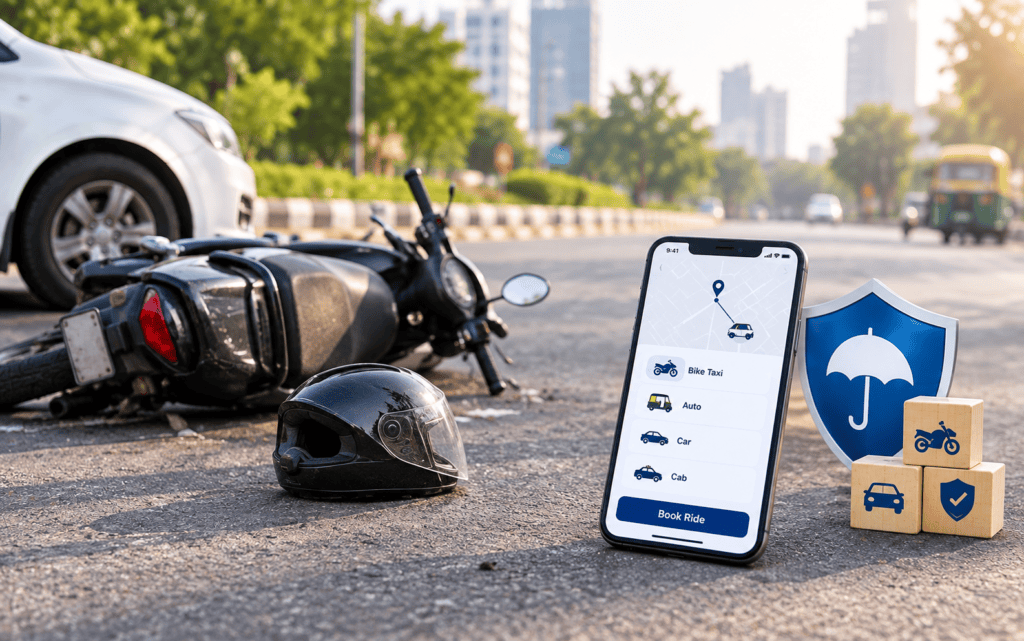
The Chandigarh State Transport Authority (STA) suspended the licences of Uber India Systems and Rapido for six months from September 8, citing alleged non-compliance with the Union Territory’s Motor Vehicles Aggregators Rules, 2025. The violations cited included insurance, fare and other regulatory requirements. The suspension has resuscitated the often-neglected question about ride-hailing coverage in app-based rides.
Insurance-Related Vehicle Aggregator Guidelines in India
For passengers across India, the answer isn’t simple because not every ride booked through an app carries the same insurance cover. The Motor Vehicle Aggregator Guidelines 2020, formerly issued by the Ministry of Road Transport and Highways, created a national framework for app-based aggregators, while states and Union Territories retained an important role in licensing and implementation.
Under the 2020 guidelines, aggregators had to ensure that every integrated driver received health insurance of at least ₹5 lakh, based on 2020-21 and increased by 5% annually, and term insurance of at least ₹10 lakh, also based on 2020-21 and increased by 5% annually. These provisions were directed at driver welfare.
The 2025 Motor Vehicle Aggregator Guidelines retain the ₹5 lakh health insurance and ₹10 lakh term insurance requirements for drivers, while changing the mechanism for future annual increases to percentages notified by the Central Government. This doesn’t mean that passengers automatically get coverage of an equivalent amount.
Implications for Passengers
Passenger protection can instead arise through the vehicle’s applicable motor insurance, third-party liability provisions, and any separate passenger or rider insurance offered with a particular platform or ride.
A passenger should first establish what insurance policy applies to the particular ride and what it covers. For example, Uber currently offers an optional Rider Insurance product in India. Its official rider information says enrolled passengers pay ₹3, including GST, per eligible ride and that the cover is provided by IndusInd General Insurance Company, not Uber itself. Uber also states that the rider must be enrolled before the eligible trip for coverage to apply.
Also Read: How To Read Your Insurance Policy Document
A ride being booked through an app does not, by itself, tell you the complete insurance cover available to the passenger. Enquire,
- Whether the vehicle has the required motor insurance
- The opt-in is a platform-specific rider policy
- The individual policy’s exclusions, limits, and claim conditions
The Chandigarh action underscores why insurance compliance is not merely an internal matter for ride-hailing companies. Regulators can take action against aggregators when prescribed safety and insurance requirements are not met.
Passengers should be wary that an app ride does not automatically guarantee a fixed compensation amount after an accident. In such cases, independent insurance experts at MyRupia can guide you through the fine print of insurer terms and conditions. Understand motor insurance in India and your rights as a policyholder with ease before committing.
Disclaimer: This MyRupia article provides information based on publicly available government, regulatory and industry sources. It does not constitute investment, financial, tax, insurance or legal advice. Information, examples, market data and expert views may change over time and do not represent a recommendation to buy, sell, invest in or surrender any financial product. Readers should consider their individual circumstances and consult a qualified financial professional before making financial decisions.