

What Does Comprehensive Cover in Car Insurance Mean
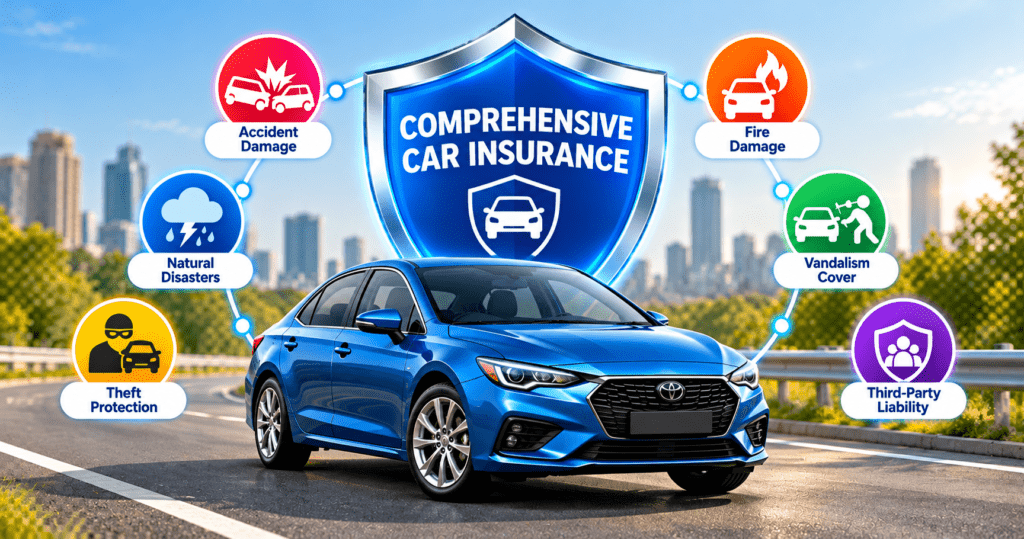
Wondering what comprehensive cover in car insurance means is a common question. You get this thought especially when you are a first-time buyer. It refers to a policy that covers:- Damage to your own car
- Damage to another person
- Loss from things like fire, theft, floods, etc
How Comprehensive Car Insurance Works
A comprehensive policy has two parts. They are:- Third-party liability cover: Covers damage caused to others
- Own damage cover: Covers damage to your car
What is Included in Comprehensive Car Insurance
Knowing what comprehensive car insurance covers helps you understand what protection you are paying for.1. Damage from an Accident
If your car gets damaged in an accident, the policy helps you to pay for repairs.2. Theft of the Vehicle
If your car is stolen and not found, the company may pay the insured declared value (IDV).3. Natural Disasters
Your car is covered if it gets damaged due to things like:- Flood
- Cyclone
- Earthquake
4. Fire and Explosions
If your car is damaged because of fire or lightning, the policy can cover it for you.5. Man-Made Events
If your car is damaged during riots, fights or by someone on purpose, it may be covered.6. Third-Party Liability
This is required by law. It covers:- Injury or death of another person
- Damage to someone else’s property
7. Personal Accident Cover
Most policies also give you a basic personal accident cover for the owner-driver.Add-Ons You Can Get With Comprehensive Cover
Comprehensive insurance can be extended with add-ons. These increase coverage but also increase premiums. These are some of the common add-ons:- Zero Depreciation Cover: You get full money for your claim, and no value is reduced
- Engine Protection Cover: Helps protect your engine and is very useful in floods
- Roadside Assistance: You get help if your vehicle breaks down on the road
- Consumables Cover: Pays for small items like nuts, bolts and engine oil
- Return to Invoice Cover: You get the full price you paid for the vehicle if it is totally lost
What is Not Covered in Your Car Insurance
Even though your policy is wide, it does not cover everything. These are some exclusions:- Normal damages
- Electrical breakdown
- Driving without a licence
- Driving under any influence
- War or nuclear risks
- Using the car for illegal purposes
Benefits of Comprehensive Car Insurance
Comprehensive cover offers you many benefits. These include:- Wider Protection: It covers more risks compared to basic third-party insurance
- Financial Support: The insurance reduces your repair or replacement costs, which can be high
- Legal Compliance: Includes mandatory third-party cover
- Peace of Mind: Knowing that multiple risks are covered can reduce your financial stress
Limitations and Risks to Consider
While the cover is useful for you, this insurance also has limits.- Higher Premium: It costs more than basic insurance
- Claim Conditions: You must follow some rules to get the claim
- Depreciation Impact: Your claim amount can be less as your vehicle gets older
- Not All Risks Covered: Some things are not covered at all
Difference Between Comprehensive and Third-Party Insurance
Before choosing a policy, it is important for you to understand the difference between comprehensive and third-party insurance. This way, you can decide what to choose.| Feature | Comprehensive Insurance | Third-Party Insurance |
| Coverage | Own damage and third-party | Only third-party |
| Legal Requirement | Optional | Mandatory |
| Cost | Higher | Lower |
| Protection Level | Wider | Limited |
| Add-ons | Available | Not available |
Who Should Consider Comprehensive Car Insurance
This type of policy may suit:- New car owners: Higher value needs protection
- Urban drivers: More cases of accident risk
- People in flood-prone areas: Risk from natural disasters
- Frequent drivers: More exposure to damage
How Can You Choose the Right Comprehensive Policy
Choosing the right policy is important for you. You should choose one that fits your needs.- Check coverage: Make sure it covers theft and natural disasters
- Compare prices: You should look at different companies and compare plans
- Understand IDV: It decides how much money you get in a claim and how much you pay
- Check add-ons: Choose only what you really need
- Check Claim Process: A simple and fast claim process can be helpful for you
- Look at Network Garages: Cashless repair options depend on the insurer network
Conclusion
Understanding what comprehensive cover in car insurance does is important for you. It becomes clearer when you look at its purpose. It is made to protect your vehicle from a wide range of risks. It is not just from accidents but also from theft, fire and other disasters. But it does not cover everything. You need to understand both the coverage you get and what you will not get before you choose a policy. For many vehicle owners, comprehensive insurance can be a practical option. This is especially useful when the car is new or used regularly. The correct choice always depends on your budget, vehicle value and risks. Checking your needs properly can help you select the right policy.Frequently Asked Questions
Q1. What does comprehensive cover in car insurance include?
Comprehensive coverage includes more than just third-party coverage. It includes protection against:
- Accidents
- Theft
- Fire
- Natural disasters
- Third-party liability
Some policies also give you personal accident cover. You can also get add-ons which can expand this coverage.
Q2. Is comprehensive car insurance required in India?
No. Only third-party insurance is required by law. Comprehensive insurance is optional. But it gives better protection for your own vehicle. It can also help you save money if your car gets damaged.
Q3. Can I customise a comprehensive policy?
Yes. You can add optional covers. You can get:
- Zero depreciation
- Engine protection
- Roadside assistance
These increase your coverage and also raise the premium.
Q4. Does full insurance cover engine damage?
Not always. Engine damage is usually covered only if you take an engine protection add-on. Without it, such claims may not be accepted. So, you may need extra cover for your engine.
Q5. Is comprehensive insurance worth it for old cars?
It depends on how much your car is worth and how you use it. If repair costs are high or there is more risk, it can still be useful for you. If not, you need to choose only basic third-party insurance. You should think about your needs before you decide.