

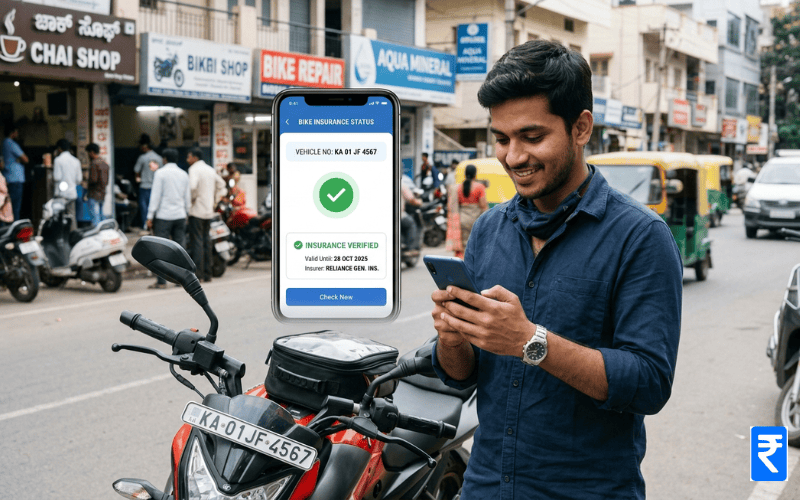
Motorbikes are widely used across India for daily commuting, errands, and in some cases, income generation. Most vehicle owners usually give more attention to aspects such as maintenance and servicing, but there is one very important aspect that they usually miss out on, and that is insurance coverage. It is very important to keep your insurance policy up to date, as it not only gives you financial security but also keeps you away from legal issues. Nowadays, it is a very simple task to find out the insurance status of a bike by just using the vehicle registration number through government-sponsored digital platforms.
Though online portals are available to check one’s insurance, many people don’t know if their vehicle is insured or not, what kind of policy they have, or when it expires. This ignorance often leads to policy going off the air without one even realizing it, which means at that point the vehicle is not covered. If the owner frequently re-checks their insurance status, they will not only be aware of their current protection but also be free of the worry of getting into legal or monetary troubles in the event of an accident.
By leveraging government as well as insurance companies’ official websites, finding out information about the insurance has turned into a straightforward and quick task that demands very little identification. The following article points out the reasons for checking the insurance status of a two-wheeler, the different means of doing so, and the subsequent measures to be taken if the policy expires, thus leaving no doubt in the minds of vehicle owners.
Table Of Content
- What is Bike Insurance Status?
- Why It’s Important to Check the Insurance Status of a Bike
- Legal Requirement
- Avoid Financial Loss
- Prevent Policy Lapses
- How to Check the Insurance Status of a Bike Using the Registration Number
- Through Parivahan Portal
- Through State Transport Department Website
- Through Insurance Company Website
- Through Insurance Apps
- Documents Required to Check Insurance Status
- Role of Government Platforms (VAHAN & IRDAI)
- What Information Can You See
- How to Download Bike Insurance Policy Copy
- Through the Insurer’s Website
- Through DigiLocker
- Through mParivahan App
- What If Your Bike Insurance Has Expired?
- Penalties for Riding Without Insurance in India
- Difference Between Third-Party and Comprehensive Insurance
- Factors Affecting Bike Insurance Premium
- Common Reasons People Forget to Check Insurance Status
- How Often Should You Check the Insurance Status of a Bike?
- Benefits of Digital Insurance Tracking
- Buying a Used Bike? Always Check Insurance Status
- Tips to Never Miss Insurance Renewal Again
- Long-Term Bike Insurance Policies
- Why Insurance Helps
- Conclusion
- FAQs
What is Bike Insurance Status?
The term bike insurance status means finding out the condition of the insurance policy coverage of the vehicle i.e., whether it is available, expired, or lapsed. If the policy is described as active, it means it is accepted by the insurance provider and you have the right to use the insurance cover whenever necessary, whereas if the policy is expired or lapsed, it immediately means that the policy is over, and to get the coverage again, the policy has to be renewed or a new one has to be bought.
One must remember that according to the law of India, you cannot ride a two-wheeler that does not have valid insurance. If the policy does not exist or is inactive, not only will the rider have to suffer the punishment, but also will be deprived of insurance benefits if the accident takes place. It is recommended that one’s insurance status be checked from time to time in order to confirm that the vehicle is not only legally correct but also financially secured.
The insurance status typically includes key details such as the policy validity period (start and expiry dates), the name of the insurer, the type of policy (third-party or comprehensive), and the vehicle’s registration details. These details help confirm that the insurance is correctly linked to the vehicle and remains valid.
Why It’s Important to Check the Insurance Status of a Bike
It’s easy to assume your insurance is active, especially if you remember paying the premium at some point. But life gets busy. Renewal dates slip by. Emails get missed. SMS reminders get ignored.
Here’s why you should regularly check the insurance status of your bike:
1. Legal requirement
Under Indian law, riding a bike without valid insurance is illegal. At a minimum, you must have third-party insurance. If caught without insurance, you may face:
- Heavy fines
- License suspension
- Legal penalties
A quick check can save you from unexpected trouble.
2. Avoid Financial Loss
If your bike meets with an accident and your insurance policy has expired, you will have to bear all repair costs yourself. Even a small accident can cause a lot of expenses, and if there is serious damage or you need to replace parts, then you may have to make a big payment. Being aware of your insurance status is one of the best ways to ensure that you are not financially exposed in the event of an unexpected incident.
3. Prevent Policy Lapses
Most motorcycle insurance policies are valid for a definite period, generally one year, after which they have to be renewed. In some cases, especially if the policy has expired for a while, the vehicle may need to be inspected for renewal. Regularly checking your insurance status helps you stay aware of the expiry dates and renew your policy on time, thereby preventing any lapses in coverage.
How to Check the Insurance Status of a Bike Using the Registration Number
The process is now completely digital and simple. You don’t need physical documents.
Here’s how you can check insurance status of bike instantly:
Method 1: Through Parivahan Portal
The Government of India provides vehicle-related information through the Parivahan portal.
Steps:
- Visit the official Parivahan website.
- Click on “Know Your Vehicle Details.”
- Enter your bike’s registration number.
- Enter the verification code (captcha).
- View vehicle details, including insurance validity.
Within seconds, you can see whether your insurance is active and its expiry date.
Method 2: Through the State Transport Department Website
Many state transport department websites also allow you to check the insurance status of your bike by entering your registration number.
This is especially useful if the Parivahan portal is slow or unavailable.
Method 3: Through the Insurance Company Website
If you know which insurer covers your bike:
- Visit their official website.
- Go to “Policy Status” or “Renew Policy.”
- Enter registration number or policy number.
- View insurance details.
This method is helpful if you want detailed coverage information.
Method 4: Through Insurance Apps
Many insurers offer mobile apps where you can log in and instantly check insurance status of bike along with policy documents.
Apps make it easy to:
- Download policy copy
- Renew insurance
- File claims
Documents Required to Check Insurance Status
Checking the insurance status of a bike requires the bare minimum of information. Most of the time, you only require the vehicle’s registration number, which is sufficient to obtain the insurance details from official databases.
The policy number or physical insurance papers are not required to confirm the status. A registration number is connected with the vehicle’s data chain, enabling you to access significant elements like policy validity, insurer’s name, and expiry date through online portals. This way, the procedure is very straightforward, rapid, and available to all vehicle owners.
Role of Government Platforms (VAHAN & IRDAI)
Online bike insurance check status confirms information that usually comes from government official systems, which is ensured in the VAHAN database, maintained by the Ministry of Road Transport and Highways. This centralized vehicle registration system in India also contains ownership records and insurance-related data, which is constantly updated by Regional Transport Offices (RTOs).
The Ministry of Road Transport and Highways oversees and coordinates this database so that vehicle information from different states is kept up-to-date and consistent. Due to this integration, checking the insurance status with the registration number results in details being pulled from the official government records, thereby making the process extremely trustworthy
Alongside this, the Insurance Regulatory and Development Authority of India (IRDAI) regulates the insurance sector in the country. It oversees insurance companies, ensures compliance with rules, and works to protect policyholders’ interests. Together, VAHAN and IRDAI play an important role in maintaining transparency and accuracy in insurance verification systems.
What Information Can You See
When you check insurance status of bike, you usually see:
- Policy validity date
- Insurer name
- Policy type (third-party or comprehensive)
- Vehicle details
- Registration details
This ensures transparency and helps you confirm everything is correct.
How to Download Bike Insurance Policy Copy
After you check the insurance status of a bike, you may need a copy of the insurance policy for reference, verification, or official use. In India, policy documents are available digitally through multiple trusted platforms, making the process simple and paperless.
1. Through the Insurer’s Website
Most insurance companies provide access to policy documents through their official websites. Users can access their bike insurance policy details by logging into their account using their registered mobile number or email ID or policy number.
2. Through DigiLocker
DigiLocker provides users with access to verified documents that insurers have issued through its government-backed digital document storage system. Your account will let you access your insurance policy copy through documents that you stored under your Aadhaar or mobile number linkage.
3. Through the mParivahan App
The mParivahan mobile application, developed by the Ministry of Road Transport and Highways, provides users with digital access to vehicle documents. Users need to log in and enter their vehicle registration number to access all bike insurance details and related documents.
What If Your Bike Insurance Has Expired?
When you realize, after checking the status of a bike’s insurance, that it has lapsed, the right thing to do is not to delay action so as not to expose yourself to legal and financial risks.
Renew the policy as soon as possible: Usually, the quickest and easiest way is to renew your insurance online via the insurer’s website or app. If the policy expired very recently, the process of renewal is normally very simple and may not involve additional steps.
Vehicle inspection may be required: In case the policy has been lapsed for a very long time, the insurance company may want to do a vehicle inspection to make sure that it is the same vehicle, and the condition can be checked as well. In this case, issuance of the new policy and the terms of coverage will not be decided until the inspection.
Avoid riding until the policy is active: In India, it is a law that riding a bike without an active insurance is disallowed. Besides the penalties one may face, you are going to be personally liable in case of an accident and thus will be unprotected financially. That is why it is better not to use the bike until you have renewed your insurance and the policy has changed to active status.
Penalties for Riding Without Insurance in India
Driving without a valid insurance coverage is a criminal offence as per the Motor Vehicles Act, 1988. It is a legal requirement to have third-party insurance for every vehicle running on Indian roads.
Penalties:
- ₹2,000 fine (first offence)
- ₹4,000 fine (repeat offence)
- Up to 3 months imprisonment
Legal Impact:
- It is possible to get a fine and imprisonment together
- The vehicle may also be confiscated by the traffic police
- Driving license (DL) or registration certificate (RC) suspension is another option
Being uninsured can cost you a lot. The damages that you are liable for in case of an accident can amount to several lakhs, and it will be paid from your own pocket without any insurance coverage.
Difference Between Third-Party and Comprehensive Insurance
When you check the insurance status of the bike, you might notice the type of policy mentioned.
Third-Party Insurance
- Mandatory by law
- Covers damage to others
- Does NOT cover your own bike damage
Comprehensive Insurance
- Covers third-party liabilities
- Covers own bike damage
- Covers theft, fire, natural disasters
If your policy is only third-party, you may want to consider upgrading.
Factors Affecting Bike Insurance Premium
The premium you pay for bike insurance is not fixed and can vary based on several factors related to the vehicle and the rider. Understanding these factors can help you make better decisions when choosing or renewing a policy.
- Engine capacity: Bikes with higher engine capacity (cc) usually have higher premiums because they are more powerful and may involve higher repair or replacement costs.
- Age of the bike: Newer bikes generally have higher premiums due to their higher market value. As the bike gets older, the premium may reduce, although very old vehicles may have different coverage conditions.
- Location of registration: The city or area where the bike is registered also affects the premium. Bikes registered in metro cities or high-traffic areas may have higher premiums due to increased risk of accidents or theft.
- No Claim Bonus (NCB): If you do not make any claims during the policy period, insurers offer a No Claim Bonus, which reduces your premium at the time of renewal. The higher the NCB, the lower the premium you may have to pay.
These factors are considered by insurers to assess the level of risk associated with the vehicle and determine the appropriate premium.
Common Reasons People Forget to Check Insurance Status
In day-to-day life, insurance is often not a priority unless something goes wrong. Many bike owners unintentionally overlook checking their policy status due to simple, common reasons.
Some of the typical reasons include:
- Lack of immediate need, as accidents or claims are not frequent
- Renewal reminders are getting missed, ignored, or filtered into spam folders
- Assumption that the policy has been auto-renewed
- Dependence on another family member to manage insurance-related tasks
- Busy schedules lead to low attention to policy deadlines
Because insurance does not require daily action, it is easy to forget about it until the expiry date has already passed. However, taking just a few minutes occasionally to check the insurance status of a bike can help avoid legal issues, financial risks, and last-minute inconvenience.
How Often Should You Check the Insurance Status of a Bike?
Ideally:
- Once every 3-4 months
- Before long trips
- Before selling your bike
- Before transferring ownership
- After the renewal payment
Regular checks keep you stress-free.
Benefits of Digital Insurance Tracking
Digital platforms enable users to handle their bike insurance verification process through online methods which eliminate the need for physical document verification. Vehicle owners now find it easier to access their vehicle information because the new system eliminates the need for physical paperwork.
No paperwork: You do not need to carry printed insurance documents, as digital records are accepted and can be accessed anytime when required.
Instant access: Insurance details can be checked within seconds using your bike’s registration number, making the process quick and efficient.
Transparency: Online systems provide clear and updated information about policy validity, insurer details, and coverage type, helping you stay informed and avoid any confusion.
Overall, digital insurance tracking simplifies the process of monitoring your policy and ensures that important information is always readily available.
Buying a Used Bike? Always Check Insurance Status
Check the insurance status when buying a second-hand bike. This is an important step you should not overlook.
Verify whether the bike is insured, check its policy type, and note its renewal date.
Ownership transfer: Transfer the bike’s ownership to your name through the Regional Transport Office (RTO) after purchase. Update all legal records, including insurance, correctly.
Policy transfer: Transfer the existing insurance policy to the new owner along with ownership.
Transfer the policy to your name to avoid claim issues, as it otherwise remains in the previous owner’s name.
Claim risks: Renew or transfer the insurance policy properly to avoid claim rejection by the insurer. This can lead to unexpected financial loss in case of an accident or damage.
Spend a few minutes checking the insurance status before finalizing the purchase. Avoid legal complications and ensure the bike is properly covered from day one.
Tips to Never Miss Insurance Renewal Again
Missing an insurance renewal date is common, but it can be avoided with a few simple habits. Staying organized and using available tools can help ensure your policy remains active.
- Set calendar reminders: Mark the renewal date in your phone or calendar a few weeks in advance so you have enough time to take action.
- Enable SMS and email alerts: Make sure your contact details are updated with your insurer so you receive timely renewal notifications.
- Use insurance apps: Many insurers provide mobile apps that send reminders and allow quick access to policy details.
- Opt for long-term policies: Choosing multi-year insurance can reduce the need for frequent renewals and minimize the risk of lapses.
- Keep a record of renewal dates: Save important dates in notes or documents that you can easily access when needed.
Building a habit of occasionally checking your bike’s insurance status can further help you stay aware and avoid any last-minute issues.
Long-Term Bike Insurance Policies
If you hate yearly renewals, consider long-term policies (2-5 years). They:
- Lock premium rates
- Prevent lapse
- Save effort
Even with long-term policies, occasionally check insurance status of bike to confirm records.
Why Insurance Helps
Insurance may not always feel urgent, especially when everything is going smoothly. However, its importance becomes clear during unexpected situations such as accidents or damage. If a bike is uninsured at that time, the financial burden of repairs or liabilities falls entirely on the owner.
For example, if an accident occurs and the policy has already expired, the rider may have to cover all expenses personally. This can include repair costs, third-party damages, or other liabilities. Regularly checking the insurance status of a bike helps ensure that such situations are avoided and that coverage remains active when needed.
Insurance is not about anticipating negative events, but about being prepared for them. Maintaining an active policy provides both legal compliance and financial security.
Conclusion
In today’s digital environment, verifying bike insurance details has become quick and convenient. With just a registration number, vehicle owners can access policy information through official platforms without the need for physical documents or intermediaries.
Making it a habit to check the insurance status of a bike regularly helps ensure that the policy remains valid and up to date. This not only supports legal compliance but also provides financial protection in case of unforeseen events. A small effort today can help prevent larger issues in the future.
FAQs
1. How can I check the insurance status of a bike using the registration number?
You can check the insurance status of the bike by visiting the official vehicle information portal or your insurer’s website. Enter the bike’s registration number and complete the verification process. The system will display details such as policy validity, insurer name, and expiry date within seconds.
2. Is it mandatory to have bike insurance in India?
Absolutly, it is legally required to have at least third-party insurance for all vehicles in India under the Motor Vehicles Act. If you do not check the insurance status of your bike regularly and your policy expires, you may face fines, penalties, or other legal consequences while riding.
3. What should I do if my bike insurance has expired?
If you find that your policy has expired after you check the insurance status of your bike, you should renew it immediately through your insurer’s website or app. If the policy has been inactive for a longer period, the insurer may require a vehicle inspection before issuing a new policy.
4. Can I check bike insurance status without a policy number?
Yes, you can check the insurance status of a bike without a policy number. The registration number of the vehicle is usually enough to access insurance details through official portals or insurance company platforms, making the process simple and accessible.
5. How often should I check the insurance status of the bike?
It is recommended to check the insurance status of the bike every 3-4 months to stay updated on policy validity. You should also verify it before long trips, renewal dates, or ownership transfer to ensure continuous coverage and avoid any last-minute issues.