

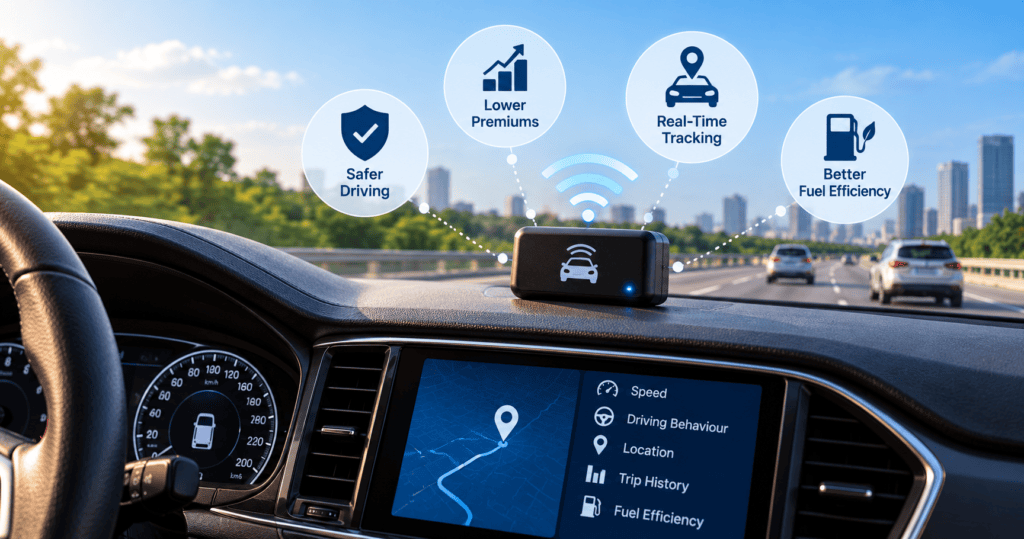
What is Telematics Motor Insurance?
Telematics Motor insurance uses technology to record driving data and help insurers assess risk more closely. The National Association of Insurance Commissioners says usage-based insurance, often called telematics, can track mileage and driving behaviour through a plug-in device, built-in vehicle technology, or a mobile app. In simple terms, the policy does not rely only on broad assumptions. Instead, it looks at how you drive in real life. That is why Telematics Motor insurance can feel more personalised than standard motor insurance, especially for drivers whose habits are safer than average.Why do insurers use it?
Insurers use Telematics Motor insurance to price risk more precisely. Traditional pricing often depends on historical averages, while telematics adds current driving data to the picture. NAIC notes that this can make pricing more individualised and may help insurers align premiums more closely with actual driving behaviour. IRDAI has also recognised the idea in India. Its working group recommended pay-as-you-drive and pay-how-you-drive covers based on the data gathered, which shows that the model is not just a passing trend.How Telematics Motor Insurance Works?
The working model is fairly simple. The telematics system uses data collection from vehicles and phone applications to transmit information to insurers which enables the creation of driving profiles. The resulting profile will determine how premium rates and renewal conditions and driver feedback will be calculated.Step 1: A device or app records the trip
Telematics Motor insurance usually begins with something like a device or a system that is already built into your vehicle. Maybe it is a mobile app that you can use. The NAIC explains that you can install telematics yourself or it can be integrated by the people who made your vehicle or it can even be delivered through a smartphone application. The telematics system may use things like GPS and sensors to keep track of the details of your journey.Step 2: Data is transmitted and analysed
After collection, the data is sent to the insurer or its service partner. The insurer then analyses it and may create a driving score or risk profile. NAIC notes that the data can include hard braking, acceleration, cornering, air-bag deployment, and time of travel. This analysis is what makes Telematics Motor insurance different from a fixed-price policy. The insurer does not only look at who you are. It also looks at how you actually use the vehicle.Step 3: Premiums or discounts may change
Once the insurer has enough information, pricing may be adjusted. Some insurance plans are based on how much you drive. Some give you rewards for driving safely. The Insurance Regulatory and Development Authority of India has talked about both of these plans, which means that India is starting to think that usage-based pricing makes sense. A simple way to think about it is, less risky driving may support lower pricing, while frequent harsh driving may reduce the chance of savings.What Data Telematics Motor Insurance Collects?
The data set is usually broader than many buyers expect. It can include distance travelled, time of day, location, speed, braking style, and cornering behaviour. NAIC lists these as common data points used in usage-based auto insurance.Driving speed and braking
Speed and braking are among the most important signals. Frequent hard braking may suggest rushed or uneven driving. Repeated high-speed driving can also affect the risk score, depending on the insurer’s rules. For many drivers, this is the most practical part of Telematics Motor insurance. It gives direct feedback on everyday habits. That feedback may help a driver spot patterns that are easy to miss in normal driving.Time, distance and route patterns
Telematics can also show when and where a vehicle is used. Late-night driving, peak-hour traffic, and long commutes may all influence risk in different ways. NAIC notes that mileage and time of day are common elements in telematics-based pricing. This is useful because not all driving happens under the same conditions. A short local trip in daylight is not the same as a long trip in heavy traffic at night. Telematics motor insurance tries to reflect that difference.What does it usually not mean?
Telematics does not always mean constant live surveillance of every movement. The exact setup depends on the insurer and the product. NAIC says the data collected reflects the kind of technology used and the policyholder’s willingness to share data. Even so, the privacy issue remains real. Because the system can track location and behaviour, buyers should read the policy terms carefully before giving consent. That becomes even more important when the insurer uses a mobile app rather than a simple mileage device.Benefits of Telematics Motor Insurance
Telematics Motor insurance can offer value, but only for the right driver and the right product. Its main appeal lies in pricing fairness, feedback, and the chance to connect driving habits with policy cost.A more personal pricing model
The biggest benefit is that premiums can reflect actual use. NAIC says UBI can make premium pricing more individualised and precise because it uses current driving behaviour instead of only old statistics. That can matter for drivers who use their vehicle less, drive smoothly, or avoid risky patterns. In those cases, Telematics Motor insurance may create a fairer result than a broad one-size-fits-all method.Feedback that may improve habits
Many telematics systems show driving scores or journey reports. This can help drivers see where they brake too hard, speed too often, or drive at riskier hours. That feedback loop is one reason telematics is often linked with safer driving behaviour. NAIC also notes that some studies have found lower crash risk in UBI programmes. That does not guarantee the same result for every driver, but it does suggest that behaviour-based feedback can influence road safety.Possible support for claims handling
Telematics can sometimes help insurers assess what happened in an accident. NAIC states that telematics data can help estimate accident damage and reduce fraud by giving more context during a claim. This may make the claims process more objective in some cases. However, the exact benefit depends on the policy wording, the device quality, and how the insurer handles data.Costs, Savings and Limits
Telematics Motor insurance drivers can receive financial benefits through their driving behaviour. The final outcome depends on how the insurer scores your driving, how much you drive, and what other rating factors still apply.Where cost savings may come from?
Savings can come from lower mileage, smooth driving, and reduced risky behaviour. NAIC explains that UBI programmes often shift some mileage-based costs from fixed to variable pricing. That means lower use can sometimes support lower cost. IRDAI’s recommendations also show the same direction of travel in India. By referring to pay-as-you-drive and pay-how-you-drive covers, the regulator has signalled that driving patterns may play a larger role in future pricing models.When savings may be limited
Savings may be smaller if you drive long distances, drive in busy traffic, or take trips during higher-risk hours. They may also be limited if the insurer still weighs other factors strongly, such as vehicle type, location, or claim history. In other words, Telematics Motor insurance is not a blanket discount product. It is a pricing method that may reward certain habits, but it can also leave other drivers with little or no benefit.Extra costs to check
Some policies may include a device cost, installation fee, app-linked service charge, or renewal terms that change after the initial period. These items are not always highlighted in marketing material, so buyers should check the final policy schedule carefully. This simple comparison table can help.| Factor | Why Does It Matters |
| Mileage rules | Lower use may support lower cost |
| Night driving | May raise risk in some models |
| Device or app type | Affects convenience and data collection |
| Renewal method | Can change the premium after the first term |
| Data sharing rules | Important for privacy and consent |
Privacy and Data Protection in India
Privacy is one of the most important issues in Telematics Motor insurance. Because the system collects personal driving data, buyers need clear notice, clear consent, and clear purpose limits.Consent and notice matter
India’s Digital Personal Data Protection Act, 2023 sets out a framework for processing digital personal data and recognises both the right to protect personal data and the need for lawful processing. That makes notice and consent central to any telematics-style product. So before choosing Telematics Motor insurance, a buyer should check what data the insurer collects, why it collects it, and how long it keeps it. This is especially important when GPS-based tracking is involved.Data security and access
The main privacy questions are simple. Who can see the data? Is it shared with third parties? Can the driver ask for corrections or deletion where the law allows it? These are the practical questions that matter more than marketing claims. The older legal literature on auto telematics also shows why this remains a live issue. It notes that privacy and ownership rules are still evolving, which is why policy wording matters so much.Questions to ask before buying
Before taking Telematics Motor insurance, ask these questions:- What exact data is collected?
- Is the device always active?
- Can the insurer change the premium mid-term?
- Is the data shared with partners?
- How is consent recorded and withdrawn?
Telematics Motor Insurance is The Best Fit For You If…
You have steady habits, low annual mileage, or a strong interest in tracking your own driving. It may also suit people who want more direct feedback about their road behaviour. Better fit for:- Drivers who cover fewer kilometres
- People comfortable with app-based tracking
- Careful drivers who want behaviour-based pricing
- Buyers who want to see driving scores or journey data
- Drivers who dislike location tracking
- People who drive at irregular hours
- High-mileage users who may not see savings
- Buyers who want a simple fixed-price policy with minimal data sharing
Conclusion
Telematics Motor insurance systems create new methods for vehicle insurance to operate. The system establishes price rates through actual driving behaviour assessment which enables certain drivers to obtain fairer premiums and enhanced feedback. The system enables users to establish safer driving patterns while investigators can perform in-depth crash investigation work. The solution does not match all people who need it. People continue to worry about three main issues which include their privacy rights, how their personal data will be handled, and whether they will actually save money. Indian buyers need to examine the insurance policy details and study the consent documentation before making a decision about the worth of potential savings against their willingness to share personal information.Frequently Asked Questions
Q1. What is telematics motor insurance in simple words?
Telematics motor insurance is a policy that uses driving data to help set premium prices. The data may come from a device, the vehicle system, or a phone app. It can track mileage, speed, braking, and driving time.
Q2. Does telematics motor insurance always reduce premium costs?
No, it does not always reduce costs. Savings depend on how safely and how often you drive, plus the insurer’s pricing model. Some drivers may save more, while others may see little change.
Q3. What data does telematics motor insurance usually collect?
It commonly collects mileage, speed, braking, cornering, location, and time of travel. Some systems may also look at air-bag deployment or other vehicle signals. The exact data depends on the device or app used.
Q4. Is telematics motor insurance legal in India?
India’s insurance regulator has recommended telematics-style motor products, including pay-as-you-drive and pay-how-you-drive covers. At the same time, personal data use must follow India’s digital data protection law.
Q5. What should a buyer check before choosing telematics motor insurance?
A buyer should check data collection rules, premium changes, device or app charges, and privacy terms. It also helps to compare the policy with a standard motor plan before deciding.