

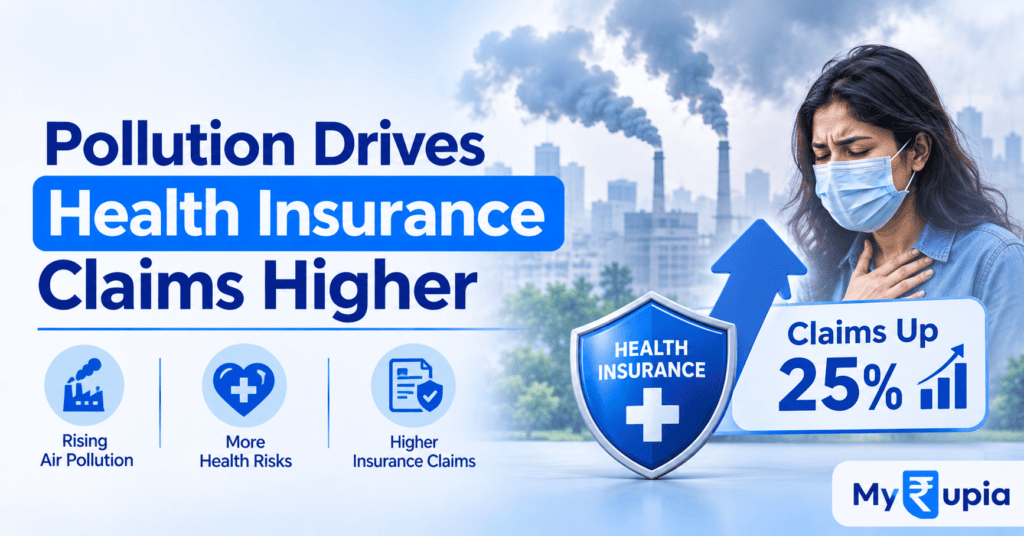
Pollution-related health insurance claims in India increased 4.34 times to 38,554 in FY26 from FY23. Working professionals aged 31–55 accounted for the largest share, while cardiovascular conditions led the claims by illness category, according to Policybazaar data.
Pollution is placing a growing burden on India’s healthcare system, and health insurance data reflects the rising impact. Pollution-associated health insurance claims increased from 8,875 in FY23 to 38,554 in FY26, marking a 4.34-fold rise over three years.
The total claim payout also grew substantially, reaching ₹241.6 crore in FY26 compared with ₹53.4 crore in FY23. Meanwhile, the average claim amount increased to ₹62,662 from ₹60,161 during the same period, according to Policybazaar data.
Heart and respiratory conditions lead claims
Cardiovascular conditions accounted for the largest share of pollution-associated health insurance claims at 43.5%. Other respiratory infections contributed 35%, followed by pneumonia at 11.2% and bronchitis at 6%.
Together, cardiovascular and respiratory conditions represented nearly 78% of the claims. The figures indicate that pollution-related health concerns extend beyond breathing difficulties and also involve conditions that require cardiovascular treatment.
Working professionals account for 59% of claims
People aged 31–55 accounted for 59% of pollution-linked health insurance claims, making working professionals the largest affected group in the data.
Senior citizens aged 55 and above contributed another 31%. Young adults aged 21–30 represented 6.7% of claims, while children below 20 accounted for 3.7%.
The distribution highlights the financial importance of adequate health insurance across working-age and older populations.
Smaller cities contribute more than half of claims
Delhi recorded the highest number of pollution-associated claims at 8,093. Pune followed with 4,927, Bengaluru with 4,736, Mumbai with 3,370 and Hyderabad with 3,169.
However, the trend extends beyond major metropolitan areas. Tier-2 and Tier-3 cities each contributed 27% of claims, taking their combined share to 55%. Ernakulam and Faridabad also featured among the top 10 cities.
Winter months see more claims
October to March accounted for 56% of annual pollution-linked health insurance claims in FY26. The concentration coincides with the period when several parts of India experience deteriorating air quality.
Policybazaar data also shows that 48% of consumers in highly polluted cities opted for higher health insurance coverage.
Rohan Goel, Business Head of Health Insurance at Policybazaar, said cardiovascular conditions accounted for the largest share of pollution-associated claims. He added that the trend across working professionals, senior citizens and smaller cities highlights the importance of preventive healthcare and adequate insurance protection.
As pollution-related health concerns grow, consumers should review their health insurance coverage, including hospitalisation benefits, waiting periods, co-payments and exclusions, to understand the financial protection their policies provide.
How Insurance Works in India: Understand how insurance works, including policy terms, coverage and the claims process. Learn How Insurance Works
Also Read: Global Insurance Cover May Boost Medical Tourism
Disclaimer: This MyRupia article provides information based on publicly available government, regulatory and industry sources. It does not constitute investment, financial, tax, insurance or legal advice. Information, examples, market data and expert views may change over time and do not represent a recommendation to buy, sell, invest in or surrender any financial product. Readers should consider their individual circumstances and consult a qualified financial professional before making financial decisions.