

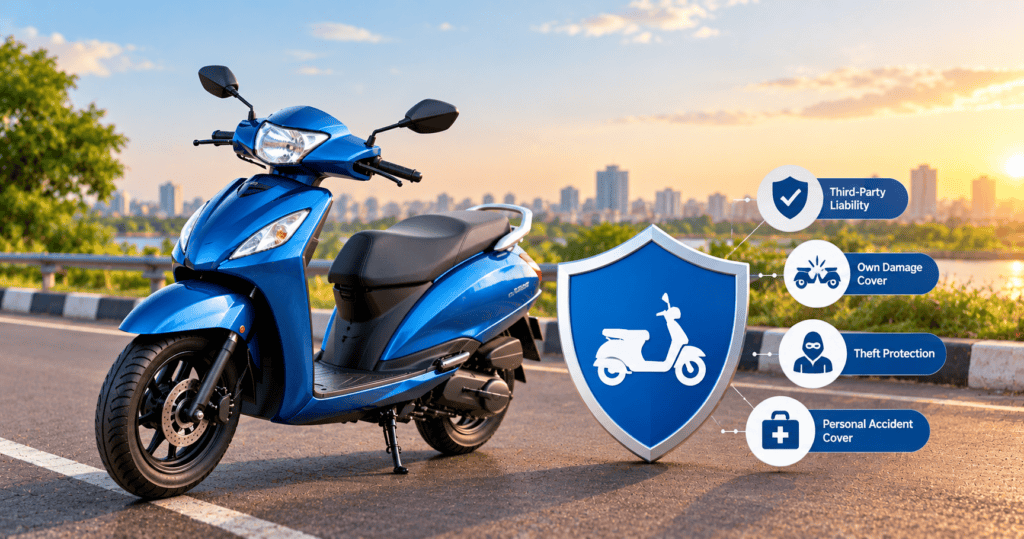
Many Indians prefer to ride a scooter as it is very convenient and cost‑effective. Even with the benefits, they can expose you to risks that can quickly become expensive. A good motor scooter insurance policy can help you manage those risks. It also helps you stay financially protected.
This guide will explain how motor insurance policies work and the different coverage options available to you. It also talks about the key benefits to consider so you can pick coverage that actually fits your scooter and your riding habits.
What Motor Scooter Insurance?
Motor scooter insurance provides financial protection for your two-wheeler in case of any unfortunate event. It protects you against:
- Accidents
- Theft
- Natural disasters
- Man-made incidents
- Third-party liabilities
Types of Motor Scooter Insurance Coverage
Let us take a look at the types of plans for motor scooter insurance:
Third-Party Cover
It protects you financially if your scooter causes any damage to any third-party. The insurer settles the third-party claim directly, and you don’t need to pay anything out of your pocket. You should remember that this cover offers no protection for your own vehicle. If your scooter sustains damage in an accident, this policy won’t pay for any repairs.
Under the Motor Vehicles Act, 1988, having a third-party policy is mandatory for every registered two-wheeler in India. Riding without it can result in a fine of ₹2,000 for a first-time offence. The penalties keep escalating for repeated rule violations.
Comprehensive Cover
A comprehensive motor scooter insurance plan protects both third-party liability and damage to your own vehicle. It protects your two-wheeler from accidental damage, theft, fire, flood, and natural disasters. The premium is higher than a third-party policy. But the protection is meaningfully broader.
Own Damage (OD) Cover
An OD cover only pays for damage to your own bike or scooter, not to others. It is intended to protect you from accidents, fire, theft and natural calamities. Man‑made incidents such as riots or vandalism are also covered. OD cover protects your vehicle from damage without duplicating third-party protection if you’ve already paid for it.
What Motor Scooter Insurance Does Not Cover
Every motor scooter insurance policy comes with exclusions. Knowing them in advance prevents surprises when you file a claim:
- Damage caused while riding under the influence of alcohol or drugs.
- Damage to components from normal wear and tear.
- Riding without a valid driving licence at the time of an accident.
- Electrical or mechanical breakdown caused by a lack of maintenance.
- Riding outside the stated territorial limits.
Third-Party Cover vs Comprehensive Cover vs Own Damage (OD) Cover
Here’s a quick look at the three coverages:
| Coverage Type | What It Covers | What It Does Not Cover | Who Should Consider It |
| Third-Party Cover | Covers injury, death, or property damage caused to a third party due to your vehicle | Damage to your own vehicle, theft, and natural disasters | Mandatory for all vehicle owners; suitable if you want basic, legal compliance at low cost |
| Comprehensive Cover | Covers third-party liabilities + damage to your own vehicle due to accidents, theft, fire, natural disasters, vandalism | Wear and tear, mechanical breakdowns, driving without a valid licence, and add-ons unless included | Ideal for most vehicle owners seeking complete protection |
| Own Damage (OD) Cover | Covers damage to your own vehicle due to accidents, fire, theft, natural disasters, and man-made events | Third-party liabilities, regular wear and tear, and mechanical failures | Suitable if you already have third-party cover and want protection for your own vehicle |
Add-On Covers Available with Motor Scooter Insurance
Add-ons provide a separate layer of protection to your base motor scooter insurance policy. Here are some common add-ons you can consider:
- Zero Depreciation Cover: With this cover, the insurer pays for replacement parts without deducting depreciation. For a new scooter, this can make a significant difference to the final payout amount.
- Return To Invoice Cover: If your scooter is declared a total loss, this pays the original invoice value rather than the depreciated IDV.
- Roadside Assistance: It provides on-spot help if you face any problem in the middle of the road. This includes towing, emergency fuel delivery, flat-tire assistance, etc.
- Engine Protection Cover: This covers the costs of repair or replacement of your engine. Engine damage is mostly caused by water ingress or oil leakage.
- Consumables Cover: This cover reimburses the cost of smaller items for accident-related repairs.
- Key Replacement Cover: This covers the cost of replacing lost or stolen scooter keys, including lock-set replacement if needed.
Key Benefits of Motor Scooter Insurance
A well-structured policy must keep you protected financially. Let us understand the practical financial benefits before selecting a policy:
- Financial Protection: Motor scooter insurance helps you with the expensive bills if your scooter is damaged. It also provides protection against theft.
- Third-Party Protection: If your scooter injures someone or damages their property, compensation to them will be paid by your insurer. That is, you will be safe from any third-party liabilities.
- Theft Protection: A full-cover policy pays the IDV in full if your scooter is stolen and not recovered within a given timeframe.
- No Claim Bonus (NCB): For every claim-free year, you earn a discount on the next year’s own damage premium. Long-term disciplined ownership can reduce your renewal premium substantially over time.
- Add-ons: Your base policy can be with various add-ons, allowing you to enhance your protection based on your scooter’s age and your riding pattern.
How to Choose the Right Motor Scooter Insurance Plan
Selecting motor scooter insurance isn’t complicated, but a few decisions require careful thought.
1. Check Scooter’s Age and Value
Access your scooter’s age and current market value. If it’s less than five years old, a full-cover plan with zero depreciation cover can be worth the additional premium. For scooters older than seven years, a third-party or standalone OD policy may be more cost-effective.
2. Check Insurer’s CSR
Always look for the insurer’s claim settlement ratio before committing. This number is a comparison between the number of claims made and the number of claims settled. IRDAI publishes annual settlement ratios for all registered general insurers. A ratio above 90% is generally considered reliable.
3. Compare Multiple Insurers
Compare the IDV across at least three insurers. Different companies calculate IDV using different methods. A small gap in the IDV can matter significantly if you face a theft or a total loss. Select the policy that will suit your needs well.
4. Look For Add-Ons
Review the add-on options available before you choose a policy. The right add-ons depend on how and where you ride. A commuter in a flood-prone city should consider engine protection cover. Someone who rides long distances will likely find roadside assistance worth the extra cost.
5. Review Documents Before Renewal
Do not auto-renew your policy without reviewing it first. Premiums and IDV calculations can change yearly. Comparing multiple insurance companies at renewal to find a better plan or a lower premium.
Conclusion
Every scooter owner in India needs a valid motor scooter insurance for legal compliance and financial protection. The right policy for you mainly depends on your vehicle and your riding habits. Before buying a policy, you must carefully read all the terms and conditions of the insurance company. A good insurance is a practical safety net that lets you enjoy your scooter rides with peace of mind.
Frequently Asked Questions
Q1. Is motor scooter insurance mandatory in India?
Yes, a third-party motor scooter insurance policy is mandatory under the Motor Vehicles Act, 1988. Riding without valid insurance can result in a fine of ₹2,000 for a first offence, with higher penalties for subsequent violations. A full-cover policy is optional but advisable for newer vehicles.
Q2. What is the difference between third-party and full-cover insurance?
Third-party cover pays for damages or injury caused to another person or their property by your scooter. Full-cover insurance includes this and also covers all damages to your own scooter. The premium for full coverage is generally higher, but the protection is extremely beneficial.
Q3. Can I transfer my NCB if I buy new scooter?
The NCB is linked to you as the policyholder, not to the vehicle. If you sell your old scooter and purchase a new one, you can transfer the accumulated NCB to the new policy. You’ll need an NCB certificate from your current insurance company before making the switch.
Q4. What factors affect premiums of motor scooter insurance?
The premium is determined by several factors. This includes the IDV, the plan you select, as well as any add-ons you select. Your NCB status, age, and the city of registration are also important. Metro cities typically carry higher premiums due to higher chances of accidents and thefts.
Q5. What should I do immediately after a scooter accident?
First, inform your insurer as early as possible, ideally within 24 hours of the incident. Photograph all damages and file an FIR if required. Lastly, you will have to submit the claim form along with the necessary documents to get the process started.