

Does your mind go numb and silent during problems? If yes, preparing yourself for worst-case scenarios might be your solution to handle the situation effectively.
Vehicle theft and accidents are such situations that are best dealt with if prepared beforehand. While you may know you have to file a motor insurance claim, are you aware of what details are required there? Do you know what leads to delays and rejection of claims?
The answer lies below, where we have covered the required documents, actions to take and the ones to avoid when filing the motor insurance claim.
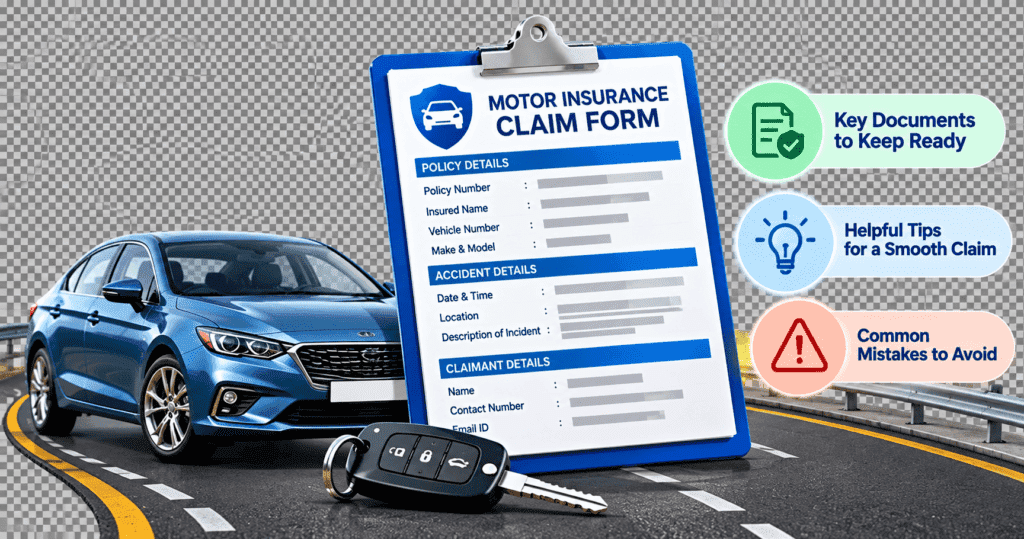
What is a Motor Insurance Claim Form?
A motor insurance claim form is an official document that the policyholder submits to the insurer to report a vehicle-related loss or damage. The insurance company follows the details in the document to process and settle the claim. The motor insurance claim form is generally submitted in situations like natural disasters, third-party accidents, theft, or damage. The claim received after successful processing can be used for medical expenditure or the repair of the vehicle.
Documents Required to Fill the Motor Insurance Claim Form
The documents needed to fill out the motor insurance claim form vary depending on the nature of the event. Here are the common and event-specific required documents:
Basic or Mandatory Documents
These documents are required in almost all claims:
- Duly filled claim form (available at the branch office or can be downloaded from the insurer’s website)
- Copy of insurance policy document
- Vehicle Registration Certificate (RC)
- Valid Driving License (DL)
- Canceled cheque (for claim payment)
Accident Claim Documents
Additional documents that are required when a claim is due to an accident:
- FIR (in case of major damage or injury)
- Repair estimates from the garage
- Original repair bills and payment receipts (for reimbursement claims)
- Photographic evidence of vehicle damage
- Medical reports (if injuries are involved)
Theft Claim Documents
If the vehicle is stolen, here is what else to submit apart from the basic documents:
- FIR report (mandatory)
- Original insurance policy document
- Original purchase invoice (if Return to Invoice cover applies)
- NOC from the finance company (if the vehicle is under loan)
Third Party Claim Documents
These documents must be produced if there is involvement of a third party in the claim:
- Photos of the damage (vehicle/property/injury)
- Legal notice or claim filed by a third party
- Insurance policy document
Tips to Follow When Filling the Motor Insurance Claim Form
Here is what to consider to ensure accurate and complete filling of the motor insurance claim form:
Inform the Insurance Company
Insurers generally have a specific period for accepting the claim from the time of the accident, which may range from 48 hours to 7 days. Post which, the claim may become unacceptable and may even lead to a violation of the policy.
Hence, in the scenario of an unfortunate event where you have to file a claim, immediately call the insurer to inform them about the damage. It ensures that you report the event clearly and correctly without forgetting any details, the omission of which may negatively impact the claim.
File First Information Report (FIR)
FIR is a necessity for motor insurance claim settlement in case of major events. These events include accidents that led to serious damage, injury or death of the involved party and in cases of theft. FIR must be filed at the local police authority, where one copy is to be kept for oneself, and the other is to be submitted when filing the claim.
Note that an FIR is not needed for minor events or small damages to the vehicle.
Photograph the Event
In case of damage to the automobile, the professional from the insurance company will take the images. But, you must also have the same to ensure the process is fair. It supports your claim, ensures transparency and serves as proof to raise concerns during the claim process if required. The images should be clicked immediately after the incident from multiple angles.
Thoroughly Check the Policy Document
While this step should be done when purchasing the policy, it is also recommended to go through the documents again during an event. It helps you clearly argue (if required) about the inclusions and exclusions, claim limits, deductibles and applicable conditions.
The information will also assist you to justify your claim, avoid misunderstandings and know what expenses will be covered. Additionally, it helps in following the complete process and setting realistic expectations regarding approval timelines and settlement from the insurance company.
Know About the Available Claim Options
The claim process requires you to choose between one of the two available options, i.e., reimbursement or a cashless claim.
- Reimbursement involves complete payment of the damage from your end, which will be reimbursed later by the insurer. It allows repair at any garage and requires original receipts to be produced for the claim.
- Cashless claim requires you to get the damage repairs only from the list of network garages of the insurer. Upfront payment is not required from your end, but deductibles will have to be paid.
Common Mistakes to Avoid in the Motor Insurance Claim Form
Rejections of motor insurance claims are common. While it may not always be in your hands, certain actions can directly influence whether your claim is approved or denied. So, here is what to keep in mind and avoid:
Driving Away From the Site
Sometimes it is the reflex action to run away from the site of the accident. Driving away in case of severe damage would lead to more impact on the vehicle, which is often not covered in the claim. Further, severe damage to one’s own vehicle or third-party damage must involve calling the police.
If stopping or waiting at the site of the accident is not possible, drive immediately to the nearby police station. Also, do not begin any repair work on the vehicle until the claim is approved by the insurance company.
Hiding Information From Insurer
One of the common practices among policyholders is conveying specific information or whatever they think is crucial. People may even lie to receive the claim. The consequences of such actions could be:
- Rejection due to a lack of clear information from the policyholder when compared with the facts obtained from the insurer’s investigation
- Policy might be rendered invalid due to hiding details such as previous damages, vehicle modifications or incorrect usage, which breaches policy terms
Settling the Deal In Place of an Insurance Settlement
Settling the deal instead of claiming the insurance is illegal. Further, it has multiple negative impacts on you as well. For instance, bodily injuries may not be evident at the time of the accident. If they develop gradually and require surgery, you can ask the other party to cover the cost of medical expenditure. The same goes for hidden and internal damages in the vehicle, which may go unnoticed initially but may be identified later.
Further, if the other party changes their mind and takes legal action, the cost estimate of proceedings against you would lead to your loss. Also, the insurance policy may require you to report the accidents regardless of fault. Not doing so may breach their terms and may give them the right to deny future coverage.
Signing Anywhere Without Understanding
When dealing with claim-related papers, ensure that you properly understand the details before proceeding to sign. Take your time to go through the document to know about inclusions, exclusions and other critical details. In case of queries, connect with an expert to ensure taking the best decision in your best interest.
Conclusion
In case of an unfortunate event, the first step an insurance holder must take is to inform the insurer. Report in complete detail, gather the required documents and proceed to fill out the motor insurance claim form. Capture clear images of the accident site from multiple angles and also have a clear understanding of coverages and exclusions under the policy.
If you are preparing beforehand for filing a motor insurance claim, we recommend reviewing your policy in advance, saving your insurer’s contact details and keeping essential documents readily accessible for any unforeseen circumstances.
Frequently Asked Questions
Q1. What are the eligibility criteria to claim motor insurance?
To claim motor insurance, you must have an active policy and the required mandatory documents like a driving license, registration certificate and others. Also, the vehicle should be in use for permitted purposes, the driver must be more than 18 years of age and should not be under the influence of alcohol or drugs.
Q2. How long does it take to settle a motor insurance claim?
The motor insurance claim settlement time varies from a few days to weeks, depending on the complexity of the event being reported. While minor claims have minimal settling time, complex cases or theft may take a longer duration.
Q3. Can I claim insurance if someone else is driving my car?
Yes, you can claim insurance if the driver had your permission, as it is treated as ‘permissive use.’ However, claims may be denied if the driver is listed under excluded drivers or lacks a valid license.
Q4. Why is a canceled cheque required with the motor insurance claim form?
The canceled cheque serves as a valid source of information about the bank account details of the policyholder. It informs about the policyholder’s name, account number, IFSC number and branch address.
Q5. Will filing a motor insurance claim affect my premium?
Raising a claim may lead to loss of No Claim Bonus. It increases your renewal premium.