

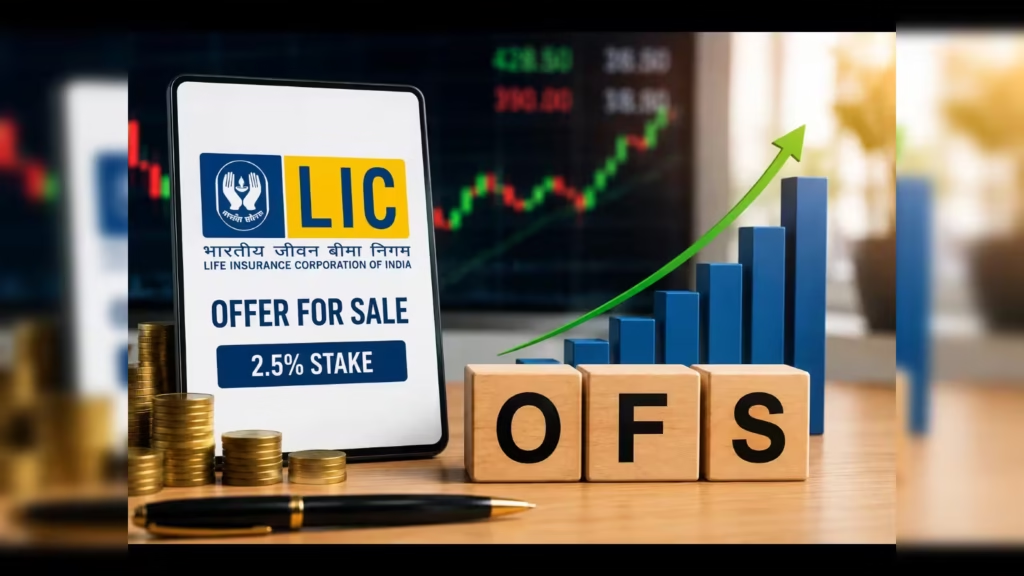
The government’s LIC stake sale sent the stock falling 8%, but policy benefits, declared bonuses and the sovereign guarantee remain unaffected.
Life Insurance Corporation of India shares came under sharp pressure during the government’s August stake sale, falling about 8% in intraday trade on August 4. The decline came as the Centre opened an Offer for Sale, or OFS, to reduce its holding in LIC.
For policyholders, the fall in LIC’s listed share price does not reduce the sum assured, maturity benefit or bonus already declared under an eligible policy. The market price of LIC shares and the benefits payable under an insurance contract are separate.
What happened in the LIC stake sale
An OFS allows an existing shareholder to sell shares through the stock exchange. SEBI’s OFS framework sets out how such sales are conducted, including the floor price and bidding process. DIPAM’s disinvestment data shows that the government sold 6.5% of LIC through the OFS, raising Rs 31,514.89 crore and reducing its holding to 90%.
The transaction involved the government selling part of its existing equity ownership to investors. LIC itself was not raising fresh capital through the sale. The government received the proceeds as the selling shareholder.
The sale also increased public shareholding in LIC from 3.5% to 10%. It changed the ownership of LIC’s listed equity, but does not affect the terms written into existing insurance policies.
Share prices can move for reasons that have little to do with individual insurance contracts, including changes in earnings expectations, valuations and broader market conditions. During an OFS, a large block of shares becomes available to investors at once. This can temporarily affect trading momentum in the stock.
Does falling share price reduce policy benefits
An LIC policy is a contract between the insurer and the policyholder. Benefits are payable according to the terms of that contract, subject to premiums and other applicable conditions.
LIC’s own June 2026 regulatory disclosures separately report investments for shareholders, policyholders and linked business. A fall in the market price of LIC’s listed shares therefore does not mean a policyholder’s sum assured has fallen by the same percentage.
The policy terms determine contractual benefits for traditional non-linked policies. Participating policies may also receive bonuses based on the surplus arising from the participating business and LIC’s bonus declaration process.
There is also a statutory government guarantee. Section 37 of the Life Insurance Corporation Act, 1956 provides that sums assured under LIC policies, including bonuses declared on them, are guaranteed as to payment in cash by the Central Government.
What drives LIC bonuses
LIC’s share price does not directly determine the bonus on a participating policy. LIC considers several factors when deciding discretionary benefits for participating policyholders under its Surplus Distribution Policy. These include Bonus Earning Capacity, Retrospective Earned Asset Share, consistency, smoothing and target solvency.
The policy also states that LIC conducts an annual investigation into its financial condition. Discretionary benefits can include Simple Reversionary Bonus, Final Additional Bonus and Loyalty Addition where applicable.
For a policyholder, this means bonus declarations depend on the experience and surplus of the participating insurance business, not on a single day’s movement in LIC’s stock-market price.
Did the government use policyholder money for the OFS
No. The Offer for Sale involved the government selling part of its existing shareholding in LIC to investors. The proceeds went to the government as the selling shareholder. The transaction did not involve withdrawing money from policyholder funds.
Should you surrender your LIC policy because the stock fell
A fall in LIC’s share price is not, by itself, a reason to surrender an insurance policy. Before exiting, review the surrender value, remaining premiums, policy term, insurance needs and any benefits you could lose. Short-term moves in LIC’s share price do not change your policy terms but surrender or continuation decisions can affect your long-term finances.
When should you review your LIC policy
Review the policy when your financial needs change, such as after a change in income, dependants, liabilities or long-term goals. Checking whether the cover meets your needs and if premiums fit within your budget. Unsure of what your policy means for you? Connect with MyRupia to speak with a financial expert before you decide.
Disclaimer: This MyRupia article is for informational purposes only and is based on publicly available government, regulatory and industry sources. It should not be treated as investment, financial, tax, insurance, or legal advice. Information, examples, market data, and expert views mentioned in the article may change over time and should not be considered a recommendation to buy, sell, invest in, or surrender any financial product. Readers should evaluate their individual circumstances and consult a qualified financial professional before making decisions.