

Buying car insurance is not just a legal requirement in India. It is also a way to protect yourself from financial problems if you are in an accident or if your car gets damaged. A lot of car owners wonder, is third party insurance enough for car or if they should get comprehensive coverage. Well, let’s understand this in detail.
Third party insurance is the insurance you need to have according to the Motor Vehicles Act. This is a difference to think about when you are trying to decide what kind of insurance to get. Keep reading to figure out if third party insurance is enough for you. This article will explain the benefits and shortcomings of third-party insurance and when it might be better to get comprehensive insurance.
What is Third Party Insurance?
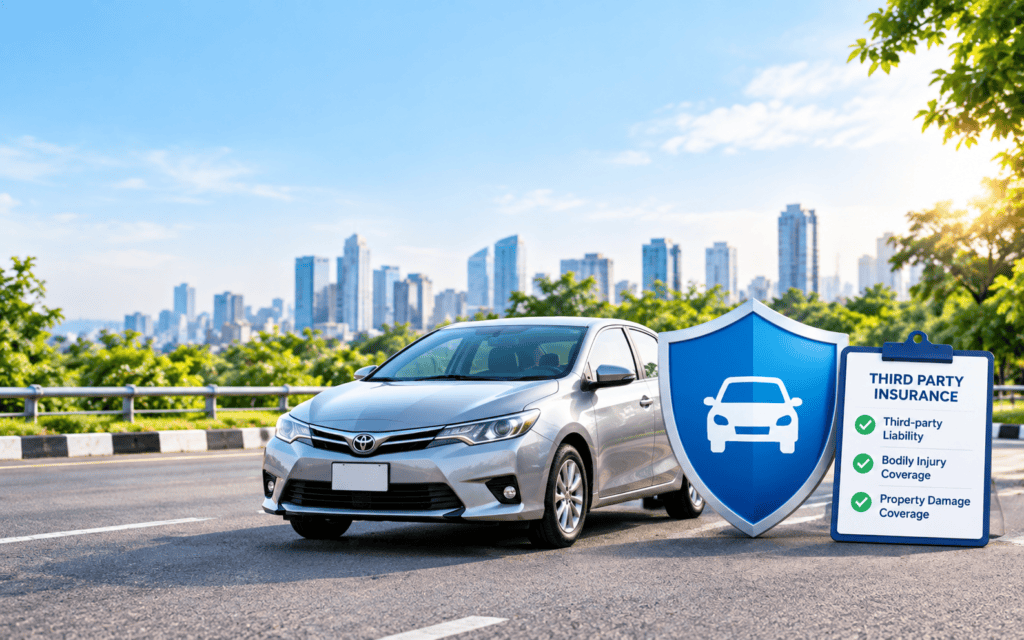
Third-party car insurance is the most basic form of motor insurance. It protects you against legal liability if your vehicle causes injury, death, or property damage to another person. The policy does not insure your own vehicle against accidental damage, theft, fire, or natural disasters. IRDAI describes liability-only cover as “Act Only” cover.
The Motor Vehicles Act requires a valid policy before a vehicle can be used in a public place. The law also recognises the third party as the person who suffers the loss, not the vehicle owner. In practical terms, the policy exists to protect victims and help the owner meet legal liability.
What Does It Cover?
The cover is narrow, but it serves an important legal purpose. It mainly responds when your vehicle causes harm to others.
Under the policy wording approved by IRDAI, third-party insurance generally covers:
- Death or bodily injury to another person
- Damage to property belonging to someone else
- Legal liability arising from the use of the vehicle in a public place
- Costs and expenses the insurer agrees to pay in writing
Pros of Third-Party Insurance
The legal minimum still offers clear benefits, even though the coverage is limited. It can suit certain vehicle owners better than a comprehensive policy.
It Meets The Legal Requirement
The clearest benefit is compliance. Section 146 of the Motor Vehicles Act makes third-party insurance mandatory for vehicles used on Indian roads. Driving without insurance is punishable under Section 196.
That means third-party insurance is not optional if the vehicle is being used on public roads. For many owners, this makes the policy the starting point rather than the final answer.
It Usually Costs Less Than Broader Cover
Since the policy covers only third-party liability, its scope is narrower than a plan that also protects your own car. IRDAI classifies liability-only cover separately from comprehensive or package policies, which offer wider protection. Because of this limited scope, it is often seen as a more affordable way to meet legal requirements.
It Can Suit Low-Value Or Low-Use Cars
A third-party-only policy may fit an older car that is driven rarely and has limited market value. In that kind of case, some owners prefer to keep insurance costs low while still staying within the law.
Cons of Third-Party Insurance
The same features that make the policy affordable also make it incomplete. That trade-off should be clear before any purchase decision.
It Does Not Protect Your Own Vehicle
This is the biggest limitation. If your car hits another vehicle, third-party insurance can help with the other party’s loss, but it will not pay for repairs to your own car.
Even a small accident can lead to a large repair bill. For many owners, that is the main reason third-party insurance alone feels inadequate after a claim.
It Leaves You Exposed To Theft And Natural Events
Third-party insurance also leaves out theft, fire, flood, storm, and similar losses. Those risks can be significant in many Indian cities, especially where parking conditions, traffic density, or weather conditions raise exposure.
It Can Be False Economy For Some Owners
A lower premium may look attractive at the start. However, if the car is new or expensive to repair, the savings from a basic policy may be small compared with the possible loss after an accident. That is why the answer to, ‘is third party insurance enough for car’ depends heavily on the car’s value and the owner’s risk exposure.
Is Third Party Insurance Enough For Car Use?
That question has two different answers. Legally, yes. Practically, not always.
Third-party insurance is enough if the goal is only to comply with the law and cover liabilities to others. It is not enough if the driver also wants protection for the car they own. IRDAI and the Motor Vehicles Act both point to this same split between legal liability and own-damage protection.
So, the better way to ask the question is this: is third party insurance enough for car use in your situation, considering the car’s age, value, and usage pattern? That question is more useful than treating the policy as a one-size-fits-all answer.
When It May Be Enough?
Third-party insurance can be enough when:
- The car is older and has limited market value
- The vehicle is used infrequently
- The owner mainly wants legal compliance
- The budget is tight and full cover is not a priority
In these situations, the risk of paying for broader protection may feel less useful than the peace of mind of simply meeting the legal requirement. That does not make the policy complete, but it can make it practical.
When It May Not Be Enough?
Third-party insurance may fall short when:
- The car is new or expensive
- Repair costs are likely to be high
- The vehicle is used daily
- The owner wants protection against theft, fire, or natural disasters
In those cases, third-party insurance only covers part of the financial risk. The owner still carries the loss on their own vehicle, which can be substantial after even a moderate accident.
When Comprehensive Coverage May Be Better?
The comparison with comprehensive cover matters because it shows where third-party insurance stops. That is where many owners realise they need more.
For New Or High-Value Cars
A new car usually has more financial value to protect. If it is damaged, stolen, or affected by fire or weather, third-party insurance will not help with those losses. A broader policy becomes more relevant in such cases.
For Daily Driving
The more often a vehicle is used, the more often it is exposed to traffic risk. Daily commuting increases the chance of accidents, scrapes, and damage that third-party cover will not pay for.
For Owners Who Want Wider Protection
Some owners simply want fewer gaps in coverage. They may value protection against theft, fire, or natural disasters more than the lower premium of a basic policy. For them, third-party insurance is legally sufficient but practically limited.
How To Decide Based On Your Car And Driving Pattern?
The best option becomes clear when you match the insurance policy to the car and how you use it. This makes the decision based on needs rather than just theory.
- If your car is not very valuable, you do not use it much and you do not mind paying for repairs yourself, then third-party insurance might be enough to meet the requirements.
- If your car is new, you use it a lot. It is costly to fix third-party insurance that might not provide enough protection.
Think In Terms Of Risk, Not Just Price
Price matters, but risk matters more. A lower premium is useful only if the policy still fits the actual exposure. That is the simplest way to judge whether third party insurance is enough for a car in a real-world setting.
Conclusion
Third-party insurance is a must for cars on Indian roads. It covers expenses to others if your vehicle causes damage. IRDAI says that it covers injuries to others and damage to their property up to ₹7.5 lakhs. For cheap or rarely used cars, third-party insurance might be a good basic choice. For costly or often used cars comprehensive insurance is usually better. This is because it covers protection gaps. Third-party insurance has its limits. That’s why comprehensive insurance is an option for many car owners.
Frequently Asked Questions
Q1. Is third party insurance enough for car legally in India?
Yes. Section 146 of the Motor Vehicles Act requires vehicles used on Indian roads to have third-party insurance. Driving without it can lead to penalties under Section 196.
Q2. Does third party insurance cover my own car damage?
No. Third-party insurance covers liability to other people, not damage to your own vehicle. That is the key limitation of this policy type.
Q3. What does third party insurance cover?
It generally covers death or bodily injury to another person and damage to another person’s property. IRDAI also states that third-party injury has unlimited coverage, while property damage is covered up to ₹7,50,000.
Q4. When is third party insurance enough for car owners?
It may be enough for older cars, low-value cars, or vehicles used only occasionally, especially when the owner mainly wants to meet the legal requirement at a lower cost. Even then, it does not cover the owner’s own repair losses.
Q5. When should comprehensive coverage be chosen instead?
Comprehensive cover is usually more suitable for new, high-value, or regularly used cars because it adds protection for the owner’s own vehicle. It is also more relevant when the owner wants cover against theft, fire, or natural events.