

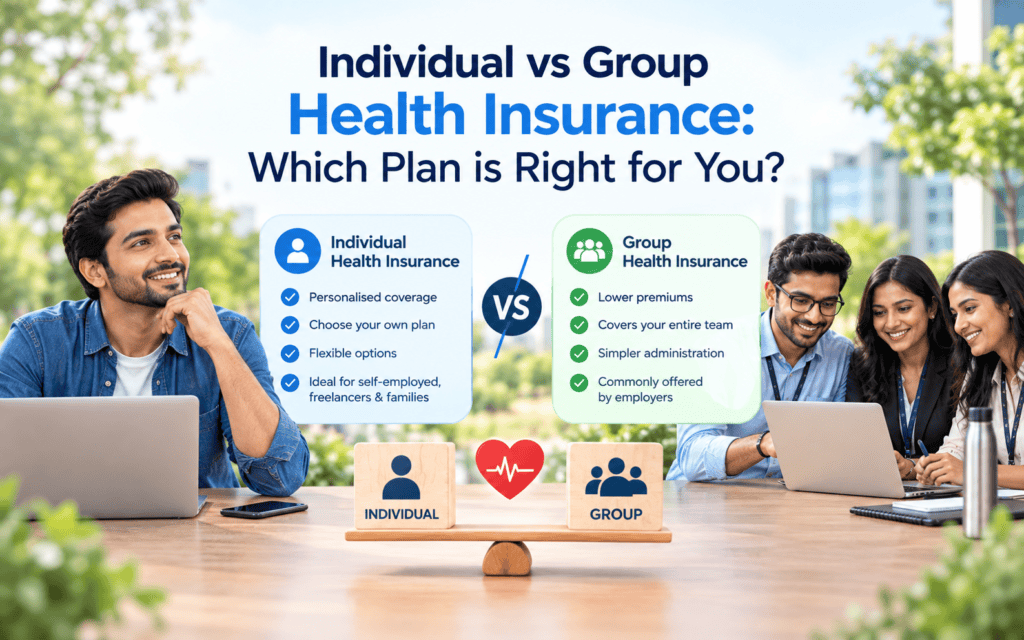
Understanding Individual and Group Health Insurance
The inflation in the medical industry is on the rise, and healthcare treatments are becoming more expensive every year. That is why choosing the right health insurance is a must. Here is the breakdown of the individual and group health insurance plan:What is Individual Health Insurance?
It is a common health insurance plan purchased by a person for themselves or their family member. In an individual plan, the amount of the insurance is applicable to a single person; it means the coverage is valid only for that person’s medical expenses. For example, if you buy an individual health insurance policy for your mother with a ₹15 lakh sum insured, the entire amount of ₹15 lakh can be used only for your mother’s medical needs in the policy year. Further, if your father also needs coverage, then you need to buy a separate policy or a family floater plan.What does this policy cover?
- Hospitalisation expenses
- Pre- and post-hospitalisation costs
- Daycare procedures
- Ambulance charges
- Critical illness
What is Group Health Insurance?
This one is provided by employers, companies, organisations, or associations to a group of people. Yes! Group health insurance is usually considered an employee benefit in workplaces. Thinking about how it works? Here, there is one master policy that covers multiple employees or members. The employer is required to pay a portion of the premium, which makes the health insurance quite affordable for employees. Example – An IT company has 250 employees, and it has purchased a group health insurance policy that offers ₹7 lakh coverage to each employee. In these plans, some insurers allow employees to add spouses, children, and parents as dependents.What are the features?
- Lower premium costs
- Employer-sponsored benefits
- Quick and easy enrolment
- Minimal paperwork
- Coverage for dependents in some plans
Individual vs Group Health Insurance: Major Differences
Choosing the right health insurance plan can be overwhelming and confusing; therefore, below is the difference between individual and group health insurance plans in a simple way.Difference in Coverage and Sum Insured
The sum insured available in both plans varies.- Individual Health Insurance: The entire sum insured is only valid for one person. If the policy is purchased for your brother, and the sum insured is ₹7 lakh, then the ₹7 lakh coverage can only be used for his medical expenses. This is ideal for people with recurring medical needs and chronic illnesses.
- Group Health Insurance: This plan is given to employees by employers. The sum insured is usually decided by the company and is sometimes shared among family members. The coverage is between ₹2 lakh and ₹5 lakh, which is quite low as the healthcare costs are rising.
Premium Costs and Affordability
With respect to affordability, many think group health insurance is budget-friendly, but is it really?- Individual Health Insurance: The premium for these insurance policies is calculated according to age, lifestyle, medical history, and coverage amount. A 26-year-old might pay an affordable premium, while a 54-year-old has to pay more due to pre-existing conditions or old age. The best part? They deliver broader benefits and long-term security.
- Group Health Insurance: Known to have a cheaper premium than individual health insurance, the financial risk is applicable to a large group of employees. The employees are required to pay a partial premium, which makes it an affordable option for working professionals. However, the benefits are limited and may not provide adequate financial protection.
Flexibility and Customisation Options
When it comes to health insurance, people have different lifestyles and needs, and flexibility and customisation are the key.- Individual Health Insurance: Here, policyholders have the advantage of choosing the insurer, hospital network, add-on riders, and coverage benefits. The coverage can also be tailored with maternity benefits, critical illness coverage, OPD consultations, and higher sum insured. This depends on age, family disease history, lifestyle, and more.
- Group Health Insurance: With this plan, employees have limited flexibility; the employer decides the policy structure. The inclusions, exclusions, and coverage limits are predetermined. While it can cover basic healthcare needs, it lacks coverage for life-altering moments.
Policy Continuity and Portability
Many people overlook this aspect, but it is essential to leverage the core value of your policy.- Individual Health Insurance: Irrespective of job changes or retirement, the individual health insurance policy remains active, as long as the premiums are paid. Plus, the policyholders can avail themselves of long-term benefits like no-claim bonuses, increasing the sum insured at the same premium.
- Group Health Insurance: This insurance plan is tied to employment, and once the employment ends, in case of resignation or retirement, the coverage also ends. Some insurers do offer portability to ensure long-term financial security.
Which Health Insurance Plan is Right for You?
Still confused which plan is ideal for you? Please continue reading and understand which plan works best for you.Choose Individual Health Insurance if:
- You want long-term financial protection: Individual health insurance stays with you even if you change jobs or retire.
- You are self-employed, a freelancer, or running a business: You need to obtain your own insurance policy to manage personal medical emergencies and rising healthcare costs.
- You need customised health insurance benefits: Individual health insurance is all about flexibility. You can use add-ons such as maternity coverage, critical illness benefits, room rent upgrades, or OPD coverage.
- You want higher coverage for yourself or your family: Individual health insurance coverage is not limited and can be increased to meet your needs.
- You frequently switch jobs and want uninterrupted coverage: Changing jobs increases the chances of a gap in medical coverage, and this one keeps you protected.
Choose Group Health Insurance if:
- You are employed in a company offering comprehensive employee benefits: These plans often cover employees and sometimes even their family members at little or no additional cost.
- You want affordable or free medical coverage: Employers usually pay a large portion of the premium, and group plans are highly affordable. This makes them a great option for young professionals starting their careers.
- You need immediate insurance without lengthy documentation: Group insurance plans are easier to access and generally require minimal paperwork. Most employees are automatically enrolled after joining the company.
- You have pre-existing conditions and want easier policy approval: Unlike many individual policies, group health insurance often covers pre-existing diseases without long waiting periods.
Why Having Both Plans Can Be Beneficial
Having both individual health insurance and group health insurance can create a stronger financial safety net. Your group insurance can handle day-to-day healthcare expenses, while your personal plan acts as backup coverage during serious illnesses or large medical emergencies.Some additional advantages include:
- Higher total sum insured
- Reduced out-of-pocket medical expenses
- Better protection during critical illnesses or surgeries
- More comprehensive healthcare coverage for your family
Conclusion
Facing a medical emergency without enough financial protection; no one wants to be in this situation. That’s why understanding the difference between individual health insurance and group health insurance is so important. Group health insurance offers affordable employer-sponsored coverage, while individual health insurance provides long-term security and personalised benefits. Both plans serve different needs and come with their own advantages. Before making a decision, consider your healthcare needs, family responsibilities, financial goals, and career plans. For stronger, more dependable medical coverage, combining both plans can be a smart long-term solution.Frequently Asked Questions
Q1. I am confused between individual and group health insurance. What is the difference?
Individual health insurance is for a single person and features personalised benefits. On the other hand, group health insurance is given to employees or members by an employer or organisation.
Q2. My company has offered group health insurance. Will it be enough for long-term medical protection?
Yes! Group health insurance has benefits. However, long-term coverage is limited as it is linked to employment.
Q3. Can I have both individual and group health insurance plans?
Yes, many people combine both plans to increase overall medical coverage and reduce personal healthcare expenses.
Q4. Individual vs group health insurance; which is lighter on the pocket?
Group health insurance is quite affordable because employers pay the portion or the full premium. In individual health insurance, you have to pay the full premium.
Q5. Who should buy individual health insurance?
Freelancers, self-employed professionals, families, senior citizens, and individuals seeking long-term customised healthcare coverage should consider individual health insurance plans.