

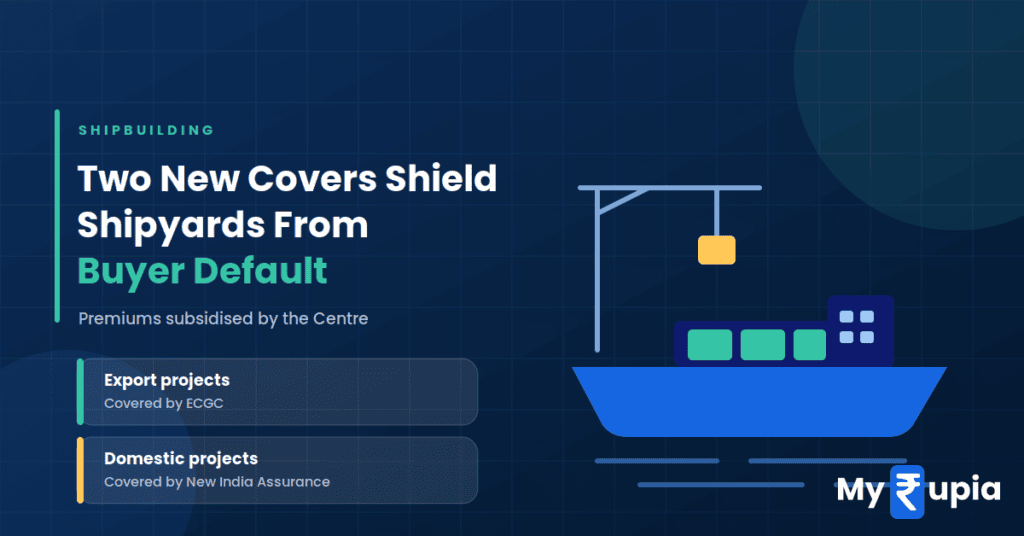
India has introduced two specialised credit risk insurance policies to protect domestic and export shipbuilding projects from payment delays and buyer defaults. The government will subsidise premiums and support insurers when shipyards make eligible claims, aiming to reduce financial pressure and strengthen the country’s maritime manufacturing sector.
India has introduced two specialised credit risk insurance policies to help shipyards manage payment delays and financial uncertainty in large-scale shipbuilding projects. Announced by Union Minister for Ports, Shipping and Waterways Sarbananda Sonowal on October 13, the measures aim to strengthen domestic shipbuilding and improve the industry’s ability to compete in global markets.
The policies fall under the Shipbuilding Development Scheme (SbDS), part of the government’s wider National Shipbuilding Mission. The Centre will subsidise insurance premiums and provide financial support to insurers when shipyards file eligible claims.
Two insurance policies cover domestic and export projects
The government has assigned separate roles to two public-sector insurance organisations:
- Shipbuilding Project Credit Risk Insurance Policy (SbPCP): ECGC Ltd will provide cover for export shipbuilding projects.
- Business Credit Shield Policy–Shipbuilders (BCSPS): The New India Assurance Company Ltd will cover domestic shipbuilding projects.
These products address a major financial challenge for shipyards. Building a vessel often requires substantial spending on equipment, materials, labour and specialised infrastructure long before the buyer makes the final payment. A delayed instalment or buyer default can disrupt cash flow, stall construction and make it harder for a shipyard to meet its obligations.
Credit risk insurance can help protect shipyards against specified non-payment risks, depending on the policy terms. By reducing uncertainty around payments, the new arrangements may also improve confidence among lenders and businesses considering large shipbuilding contracts.
The Directorate General of Shipping’s information on the Shipbuilding Development Scheme identifies credit risk cover as a tool to protect Indian shipyards against risks linked to domestic and export projects.
Government links insurance support with maritime growth
Sonowal said the policies would help shipyards focus on vessel construction without allowing delayed milestone payments or sudden market changes to threaten operations.
The announcement came during the 21st Maritime State Development Council meeting in Mumbai. The Council also called for faster multimodal connectivity projects and the development of port-linked industrial clusters with suitable land, ready-to-use infrastructure and quicker approvals.
The Council’s wider agenda supports India’s efforts to connect ports with road, rail and inland waterways while expanding maritime manufacturing. These measures could help shipyards access supply chains and infrastructure more efficiently.
What it means for India’s insurance sector
The initiative expands the role of insurance beyond conventional personal protection, including health insurance, into industrial credit risk management. Unlike health insurance, which helps cover eligible medical expenses, credit risk insurance focuses on specified financial losses when buyers fail to meet payment obligations.
The policies’ effectiveness will depend on their coverage terms, claims processes and adoption by shipyards. However, the government-backed approach aims to ease a key financing constraint and support India’s long-term shipbuilding ambitions.
Life Insurance Overview: Understand the basics of life insurance and why adequate protection matters for individuals and families.
Also Read: Leadership Changes Loom at Two General Insurers
Disclaimer: This MyRupia article provides information based on publicly available government, regulatory and industry sources. It does not constitute investment, financial, tax, insurance or legal advice. Information, examples, market data and expert views may change over time and do not represent a recommendation to buy, sell, invest in or surrender any financial product. Readers should consider their individual circumstances and consult a qualified financial professional before making financial decisions.