

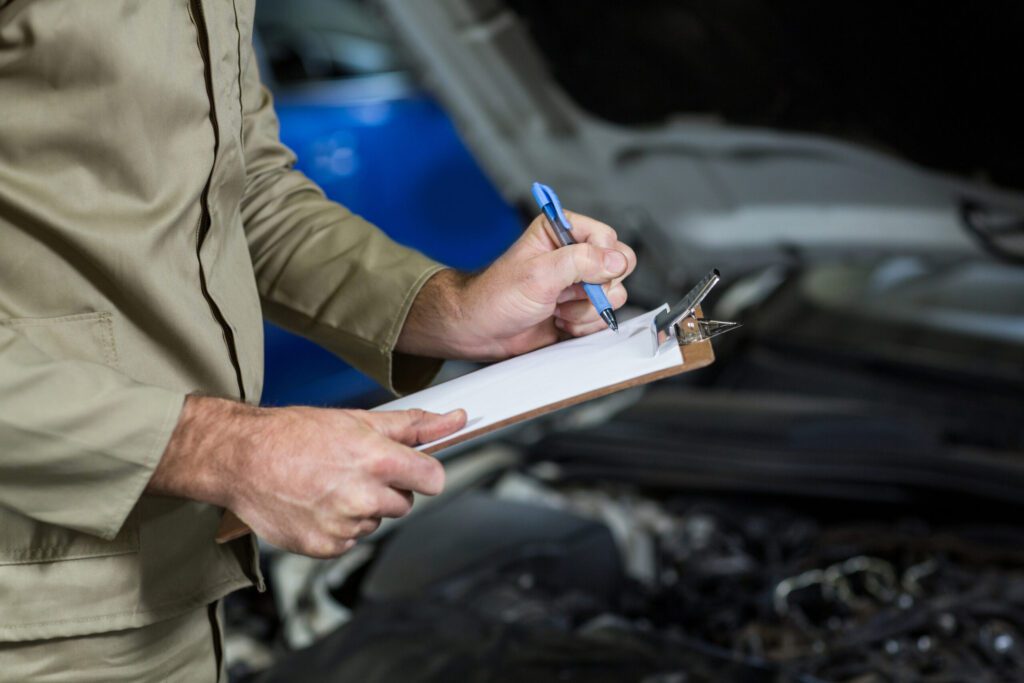
Motor insurance coverage acts as a much-needed financial relief in case of accidents, theft, and even natural disasters. You’re in luck if your vehicle is insured. All you have to do then is make an insurance claim to compensate for your losses. However, before the insurance company covers the damage, they send a motor insurance surveyor to assess the vehicle damage. They play a key role in deciding whether your losses will be covered or not.
This survey is therefore of critical importance in getting monetary aid for repair costs. So, let’s understand how surveyors assess the damage and ultimately finalise the claim.
Who Is a Motor Insurance Surveyor?
A motor insurance surveyor is a professional that inspects vehicle damage after an accident. They are appointed by the insurance company only. The main part of their job is to evaluate physical damage and calculate repair costs. They are also the key person who determines whether the damage claim actually falls under the T&C of the insurance policy.
Also, they are regulated by IRDAI (Insurance Regulatory and Development Authority of India). It is also expected of them to follow the industry standards sincerely and conduct an assessment fairly and free of personal biases.
Usually, surveyors take care of claims related to:
- Road accidents
- Fire damage
- Flood or other natural calamities
- Theft
- Third-party damage claims
- Vandalism or malicious acts
The report submitted by the surveyor turns out to be the most important factor in the final claims settlement process.
Step-by-Step Process of Damage Assessment
Insurance companies rely heavily on the final word of the surveyor. Based on their judgment, the company decides whether the claim is genuine or not. Only after the professional verification is the payment released by the insurers.
Here’s how the process goes:
Claim Intimation
It begins when the policyholder contacts the insurance company and informs them about the accident or some other damage. This is also called ‘claim intimation’.
The insured person has to provide:
- Policy number
- Vehicle registration details
- Date and location of the accident
- Description of the incident
- Photos or videos of the damage
- FIR copy (if required)
Surveyor Appointment
Now, after going through the initial information, the insurer appoints a motor insurance surveyor. The surveyor’s main job is to inspect the vehicle. The surveyor now gets in touch with the policyholder to schedule the date and time of the inspection.
The location of the survey can be:
- At the accident location itself
- At the workshop or garage
- At the policyholder’s residence
- Through digital inspection (in minor claims)
Physical Inspection of the Vehicle
The very next step is the thorough inspection of the damaged vehicle. The motor insurance surveyor examines:
- Exterior body damage
- Engine and mechanical parts
- Suspension and steering system
- Electrical components
- Windshield and glass damage
- Tyres and wheels
- Chassis alignment
The surveyor also takes photos of the vehicle from various angles. They also note the overall condition of the vehicle before the repair work starts.
All this inspection helps to find if the reported damage aligns with the actual accident description.
Verification of Documents
Besides the physical inspection, the motor insurance surveyor also asks to see all the claim-related documents. This generally includes:
- Insurance policy copy
- Registration Certificate (RC)
- Driving license
- FIR or police report
- Repair estimates from the garage
- Pollution certificate
- Previous insurance details
If you’re missing any important documents, the claim approval might get delayed. For instance, the insured may also reject the claim if, at the time of the accident, the driver was carrying an expired driver’s license.
Assessing the Cause of Damage
It is also the responsibility of the motor insurance surveyor to find out how the damage occurred. They check if the damage happened due to:
- Collision with another vehicle
- Self-accident
- Flood or waterlogging
- Fire or explosion
- Theft attempt
- Negligence or unauthorised use
The surveyor verifies if the physical evidence matches the description of the incident provided by the policyholder. If there are any mismatches or discrepancies, then they investigate further.
Estimating Repair Costs
After completing the inspection, the motor insurance surveyor now estimates the cost of repairs.
They do this based on:
- Cost of spare parts
- Labour charges
- Painting expenses
- Mechanical repair costs
- Replacement charges
It’s also the job of a surveyor to determine if the damage parts should be repaired or replaced altogether. This ultimately affects the total repair cost.
For example:
- If there are only minor dents, they only need repair and repainting
- In the case of severely damaged bumpers or headlights, replacement is in order
Finding Depreciation in Claims
A motor insurance surveyor also estimates the depreciation amount. This majorly influences the claim settlement amounts. Unless there’s zero depreciation cover in the policy, many insurance companies usually deduct depreciation.
Surveyors calculate the depreciation based on:
- Vehicle age
- Type of parts replaced
- Wear and tear condition
For example:
- Plastic parts usually have higher depreciation deductions
- Metal components account for lower deductions
- Rubber and nylon parts can cause significant depreciation
However, if there’s a zero depreciation add-on in the policy itself, the insurer might just cover the whole cost of the eligible parts.
Determining Total Loss or Constructive Total Loss
Sometimes the damage to the vehicle is so severe that having it repaired seems super expensive. In cases like these, a motor insurance surveyor evaluates which of the two criteria the vehicle falls under:
Total Loss
This is considered when the vehicle is completely destroyed. It is also the case when the vehicle is stolen and has little to no chance of ever being recovered.
Constructive Total Loss (CTL)
CTL happens when repair costs turn out to be more than a certain percentage (around 75%) of the IDV (Insured Declared Value) of the vehicle.
If the surveyor decides the vehicle falls under this category, then the insurer compensates based on the IDV rather than the actual repair costs.
Detecting Fraudulent Claims
Motor insurance companies also take fraudulent cases seriously. One of the main aspects of the job of a motor insurance surveyor is to look for suspicious or manipulated claims.
They do this by checking:
- Fake accident reports
- Fabricated theft reports
- Inflated repair bills
- Pre-existing damage
- Multiple claims for the same damage
Surveyors may also work with police authorities and investigators if they suspect fraud. All this helps to prevent misuse of insurance funds. This also protects genuine policyholders.
Preparing the Survey Report
Once the inspection is complete, the motor insurance surveyor prepares a detailed report and submits it to the insurance company.
The report usually contains:
- Accident details
- Nature and extent of damage
- Photos of the vehicle
- Repair estimates
- Policy coverage analysis
- Depreciation calculations
- Liability assessment
- Recommended claim amount
Claim Approval and Settlement
Once the report is submitted by the motor insurance surveyor, the company reviews the report carefully. Now, it’s the insurer who decides whether the claim should be approved or not. Sometimes, they go for a partial settlement. In some cases, they might also reject it completely.
If all goes well, the insurance company proceeds to finalise the claim. The final settlement amount depends mainly on:
- Policy coverage
- Deductibles
- Depreciation
- Repair approval
- Exclusions under the policy
Once the amount is finalised, the funds are released by the insurer. Now, there are two types of settlements:
Cashless Claims
If the repairs are done at a network garage, the insurer would pay directly to the garage owner. The vehicle owner now only has to pay the non-covered expenses.
Reimbursement Claims
If repairs are done at a non-network garage, the insured person has to pay the bill first at the workshop. Later, they get reimbursement from the insurer once they show the bills.
Conclusion
A motor insurance surveyor plays a central role when it comes to the approval of insurance claims. They have a very important job of inspecting damaged vehicles and identifying fraudulent claims. They verify the document and prepare a report, which they then submit to the insurance company. Policyholders are advised not to start the repair work until the inspection is done, and also to cooperate during the process.
Proper documentation and a sincere claim are the way to go to cover the cost of your damaged vehicle.
FAQs
1. What does a motor insurance surveyor do?
The job of a motor insurance surveyor entails inspecting damaged vehicles after accidents. They determine the extent of loss and calculate repair costs. They also verify the related documents.
2. Is vehicle inspection mandatory for motor insurance claims?
Yes, inspection is mandatory as it helps to prevent fraudulent claims. It also protects the insurance company’s funds. The inspection also helps to determine whether the damage is covered under the policy terms.
3. How long does a motor insurance survey take?
The inspection by the motor insurance surveyor might take a few hours. The whole process, starting from intimation to report submission to the very last step of claim approval, can take a few days.
4. Can a surveyor reject an insurance claim?
A motor insurance surveyor does not reject claims directly. What they do is provide negative recommendations to the insurer, in case they detect fraud or policy violations.
5. What documents are needed during a motor insurance survey?
Some common documents needed for the motor insurance survey are an insurance policy copy, a vehicle registration certificate, and a driving license. In some cases, FIR is also required.