

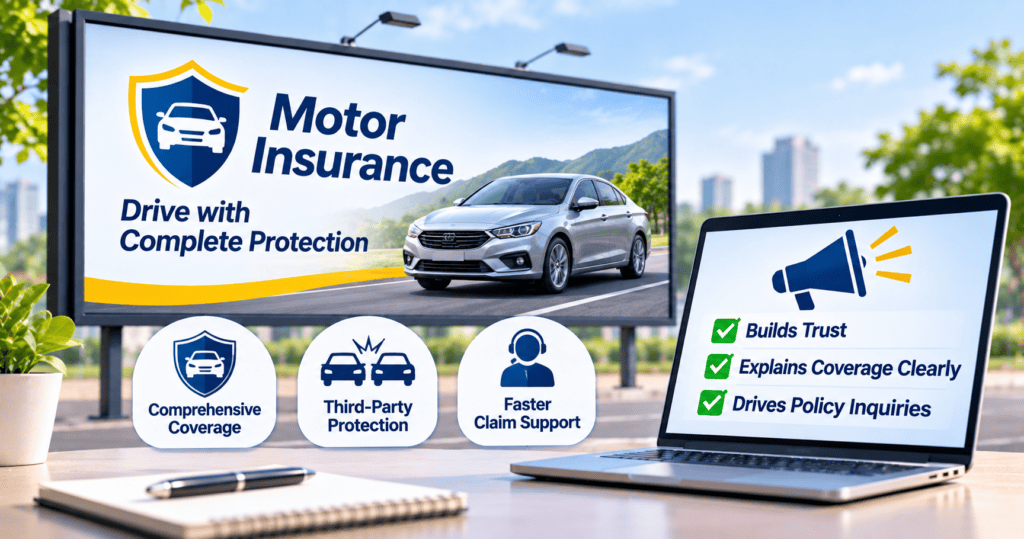
A person is thinking of buying a vehicle for their personal needs. This is where they may start looking for ways to protect it and insurance becomes an important part of that decision. A motor insurance advertisement helps them here. In India, many people first come across insurance through advertisements. That is why these messages need to be clear, honest and easy to follow.
Think about it. When someone sees an ad, do they understand what the policy actually covers? Or does it feel confusing? A good advertisement answers these questions quickly. It helps them see how the policy may be useful in real life.
Here, you will explore how these advertisements work, why they matter and what makes them effective. You will also learn how they build trust and help people towards making the correct decisions.
What is a Motor Insurance Advertisement
A motor insurance advertisement is a message that tells people about a motor insurance plan. These ads are used by insurance companies to share useful information.
Customers may see a motor insurance advertisement in many places, like:
- Television
- Social media
- Websites
- Newspapers
- Mobile apps
The goal is simple. It helps them know:
- What the policy covers
- Show why it may be useful
- Show the benefits
- Take action, like checking plans
- Encourage people to learn more or buy
These advertisements should not confuse the customers. Instead, they should give clear and correct information.
Why Motor Insurance Advertisement Matters
A motor insurance advertisement plays an important role in helping customers make decisions. Many buyers do not fully understand insurance terms. So, your ads help them learn in a simple way.
Here is why it matters:
- Creates awareness: Many may not know what motor insurance covers
- Builds trust: Clear ads help people feel safe while choosing a policy
- Supports comparison: People can compare different options easily
- Encourages action: Ads guide users to explore or buy
The advertising campaigns that clearsly show support and real-life help can help you improve trust among users.
Understanding Customer Intent in Motor Insurance Advertisement
Before making a motor insurance advertisement, it is important for you to understand what your customers are looking for.
Types of intent:
- Informational: They want to learn about insurance
- Commercial: They compare plans before choosing
- Transactional: They are ready to buy
A good advertisement should match these needs. For example, a beginner may need simple explanations. A buyer may need clear pricing and benefits.
Important Elements of a Motor Insurance Advertisement
A strong motor insurance advertisement includes a few important parts. Each of them should be clear and useful.
1. Clear Headline
Your headline should quickly tell what the ad is about. It should be simple and direct.
2. Policy Benefits
Explain what the policy covers:
- Accident cover
- Theft protection
- Third-party liability
3. Easy Language
You should avoid using difficult words. Use easy sentences that anyone can understand.
4. Call to Action
A good ad tells people what to do next. For example:
- Get a quote
- Compare plans
Using clear call-to-action phrases like ‘Compare Plans Today’ or ‘Get Your Free Quote’ can increase your customer response.
5. Visual Elements
Images and videos make your advertisements easier to understand. They should match the message.
How Motor Insurance Advertisement Explains Coverage Clearly
This insurance advertisement should help people understand what the policy covers. Many find insurance confusing. So, your ad must explain coverage easily.
These are the types of coverage:
- Third-party cover: This covers damage caused to another person or their property
- Own damage cover: This covers damage to the customer’s own vehicle
- Comprehensive cover: This includes both third-party and own damage cover
When advertisements explain these clearly, people can understand their options better.
Add-ons
Some policies offer extra features called add-ons. Your insurance advertisement should explain them in an easy way.
Common add-ons include:
- Zero depreciation cover: Helps reduce repair costs
- Roadside assistance: Helps during breakdowns
- Engine protection: Covers engine damage
Regulatory Disclosure RequirementsMotor insurance advertisements must clearly communicate important policy information. According to the Insurance Regulatory and Development Authority of India, advertisements should disclose: ● Key benefits and major exclusions ● Applicable terms and conditions ● Grievance redressal channels ● Important policy limitations Clear disclosure helps customers make informed decisions. |
What is Not Covered
A clear motor insurance advertisement should also explain what is not covered.
For example:
- Damage due to drunk driving
- Normal wear and tear
- Driving without a valid licence
When your ads show both coverage and exclusions, they help you build trust and help users make better decisions.
Types of Motor Insurance Advertisement
You can use many types of formats for your motor insurance advertisement. Each has its own purpose.
1. Television Ads
These ads use stories to explain benefits. They often show real-life situations like accidents or repairs.
2. Digital Ads
Digital ads are widely used today. They include:
- Social media posts
- Search engine ads
- Website banners
Digital advertisements help insurers reach a wider audience quickly. However, all digital and social media advertisements must follow the same regulatory standards set by the Insurance Regulatory and Development Authority of India. Insurers are responsible for ensuring that content shared on websites, apps and social media platforms complies with advertising rules.
3. Print Ads
Print ads appear in newspapers and magazines. They are useful for readers who prefer offline content.
4. Outdoor Ads
These include billboards and hoardings. They are placed in busy areas to attract attention.
How to Build Customer Trust Through Motor Insurance Advertisements
Trust is very important in a motor insurance advertisement. Your advertisement should focus on honesty and clarity. Customers want to feel safe before choosing a policy.
Ways to build trust:
- Show real benefits: Explain what the policy actually covers and what is not covered
- Avoid false promises: Do not guarantee or promise results
- Use simple and real examples: Help people understand real situations
- Show claim process: Explain how claims are handled
Your ads should focus on transparency and clear coverage details. It helps users feel more confident.
How Motor Insurance Advertisements Drive Policy Inquiries
A motor insurance advertisement should not only inform people. It should encourage them to take action. This action is called a policy inquiry.
A policy inquiry means:
- Asking for more details
- Requesting a quote
- Comparing plans
Customer Journey from Advertisement to Inquiry
An insurance advertisement should guide your customers every step of the way.
The journey usually looks like this:
- User sees the ad
- User clicks on the ad
- User visits a website
- User fills a form or checks plans
If this process is simple, more people may complete it.
Importance of Landing Pages
When your customers click on an advertisement, they should reach a clear and simple page.
A good landing page should:
- Show the important benefits
- Explain coverage briefly
- Have a simple form
- Load quickly
If the page is confusing, users may leave without taking action.
Using Trust Signals to Increase Inquiries
Trust signals can help you improve results.
These include:
- Customer reviews
- Claim support
- Clear policy details
When users feel confident, they are more likely to make an inquiry.
Testing and Improving Performance
You should test advertisements regularly. Insurers often test different headlines, visuals and calls to action to improve campaign performance. However, every advertisement variation must receive prior approval under the insurer’s internal advertising governance framework before it is released publicly.
Write Clear and Simple Advertisement Messages
Your advertisement should always be easy to read and understand. Many customers may not know insurance terms correctly.
When writing messages:
- You need to use short sentences
- Avoid complex words
- Explain terms like premium and deductible
- Always use examples
For instance, instead of saying comprehensive coverage, you can explain what it includes in simple words.
Role of Digital Media in Motor Insurance Advertisement
Digital platforms have significantly changed how insurance advertisements are delivered and measured.
These are the benefits of digital advertisements:
- Wider reach: Ads can reach many users quickly and easily
- Target audience: Ads can be shown to specific groups only based on their interactions
- Instant response: Users can click, take action and respond easily
- Tracking results: Companies can measure performance and understand user interests
Social media helps your insurance company to talk to more people and get noticed. It also helps you stay connected with customers and answer their questions easily.
Legal and Ethical Considerations
Following legal and ethical considerations and rules is very important in your advertising. These rules protect your customers.
Important guidelines you need to follow:
- Give only the correct information
- Do not hide important terms
- Avoid misleading claims
- Clearly explain all the conditions
In India, insurance advertising is governed by the IRDAI (Protection of Policyholders’ Interest, Operations and Allied Matters of Insurers) Regulations, 2024 issued by the Insurance Regulatory and Development Authority of India.
These regulations require insurers to ensure that advertisements are clear, fair and not misleading. They also mandate internal approval processes before any advertisement is released to the public.
Advertisement Approval Requirements
Under current regulations from the Insurance Regulatory and Development Authority of India, insurers must follow a formal approval process before releasing advertisements.
The main requirements include:
- A Board-Approved Advertisement Policy (BAAP)
- An Advertisement Committee that reviews marketing communication
- Written approval before releasing any advertisement
- Oversight of advertisements created by distributors or partners
This process ensures that advertisements remain compliant and do not mislead customers.
Common Mistakes You Should Avoid
Some advertisements do not work due to simple mistakes.
These are the mistakes you need to avoid:
- Using complex language: This is hard to understand and confuses users
- Too many promises: This reduces customers’ trust
- Ignoring claim details: People want clarity and not missing details
- Weak call to action: Users may not respond
A motor insurance advertisement should always focus on clarity and honesty.
Prohibited Advertising Practices
Advertising rules from the Insurance Regulatory and Development Authority of India prohibit several practices, including:
- Making misleading or exaggerated claims
- Hiding important terms and conditions
- Using illegible text or unclear disclaimers
- Presenting benefits that go beyond what the policy actually provides
- Making unfair comparisons with competitors
Advertisements that violate these principles may face regulatory action.
Tips to Improve Your Motor Insurance Advertisement Performance
You can improve your advertisement by making small changes and making it more effective.
Here are the tips you need to follow:
- Focus on user needs: Think about what your customers want to know
- Use real examples: clearly show how the policy works
- Test different ad formats: Try videos, banners and posts
- Improve visuals: Only use clear and relevant images
- Track results: Check what works and improve
You need to do regular testing. This way, you can improve ads regularly, which leads to better results.
Real-Life Examples
Many advertisements explain their services in simple and clear ways. For instance, you can see that some advertisements show how claims are settled quickly. These ads focus on real-life problems and simple solutions.
These kinds of ads help people feel more sure and comfortable. They focus on quick help and support, which works better. Also, simple messages work better than complicated ones. People like ads that are easy to understand.
Regulatory Compliance in Insurance Advertising
Insurance advertisements in India operate within a regulated framework. The Insurance Regulatory and Development Authority of India requires insurers to ensure that marketing communication is fair, transparent and not misleading.
Advertisements must clearly present benefits, disclose key limitations and avoid exaggerating policy performance. Insurers are also responsible for advertisements issued by agents, brokers and digital partners.
These requirements aim to protect policyholders and maintain trust in the insurance sector.
Summing Up
A motor insurance advertisement plays an important role in helping people understand and choose the right policy. Your advertisement should be clear, simple and honest. When your ads explain coverage properly and avoid confusion, they build trust. It helps your users to take action.
Planning an advertisement should be done carefully. You need to focus on giving correct information and meeting all your customers’ needs. This approach can help you improve your work. It can help your customers understand it better and they can make the correct decisions.
Frequently Asked Questions
Q1. How can I know if a motor insurance advertisement is true?
You can check if the ad gives you complete and clear details about the policy. It should not hide any important terms or use confusing words. Also, reliable ads usually come from known insurers. They guide you to official sources for more information.
Q2. Do these ads change my final decision?
Yes. Advertisements can influence your first impression and help you find and have some final options. But you should always read the full policy details clearly. You should only make a final decision after understanding every detail. Ads are helpful, but they should not be your only source of information.
Q3. How do visuals help in a motor insurance ad?
Visuals help you understand the message faster. It makes the advertisement more engaging. Simple images or videos can explain situations more clearly. It can be like accidents or claims. Good visuals also help you remember the advertisement for a longer time.
Q4. When should an advertisement be updated?
Your advertisements should be updated regularly. It should show the current features and rules. This helps to make sure that the information stays accurate and useful for customers. Updated ads also keep the message fresh and relevant.
Q5. Can this advertisement help new buyers?
Yes. It can guide first-time buyers. They do this by explaining basic concepts in simple ways. It helps them understand what to expect from a policy and what to look for. This makes it easier for them to take the next step with confidence.