

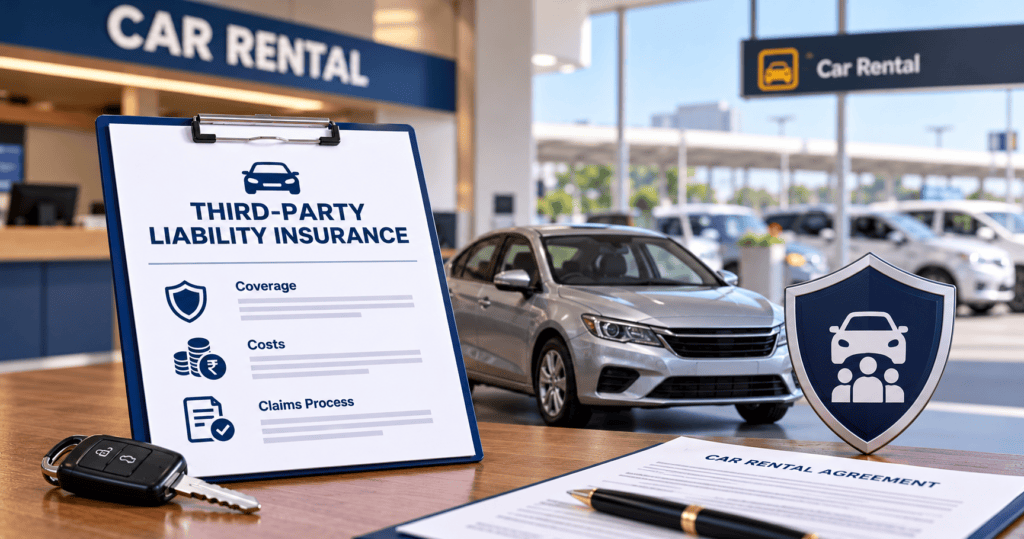
Car rental can be a great way to get around if you are planning a holiday, going on a business trip, or just need a car for a few days. Nevertheless, before you rent a car, you should be aware of the type of insurance included in the rental.
Third party liability insurance car rental coverage is generally included as a standard feature when renting a car in India. But it is often this kind of insurance that people wrongly think covers everything. Benefit coverage, points of exclusion, and differences with other travel protection plans will help you remain financially safe and make decisions based on facts.
What is Third Party Liability Insurance Car Rental?
Third-party liability insurance is a compulsory form of motor insurance that safeguards you in case you unintentionally cause harm or death to another person or their property while operating a vehicle. Here, the “third party” means anyone besides the driver and the insurance company.
In case of renting a car, third party liability insurance car rental coverage is generally provided by the rental company as part of the rental contract. If there is an accident in which another vehicle is damaged, public property is affected, or someone gets injured because of it, the policy will support covering the legal compensation to the other party, according to the terms and conditions.
Nevertheless, third-party liability insurance will not pay for the damage to the rental car itself. If you desire to cover the rented car against accidents, theft or other losses, you might need to purchase Collision Damage Waiver (CDW) or other protection plans. Hence, it is vital to check the insurance cover that comes with your rental agreement before your trip.
Is Third Party Liability Insurance Car Rental Mandatory in India?
Yes. It is a legal requirement; along with every other vehicle on the road in India, a rental vehicle must have valid third-party liability insurance as per the Motor Vehicles Act, 1988.
Mostly, rental car companies that offer self-drive or chauffeur-driven cars will have this mandatory insurance cover in the rental price. Usually, for renting a vehicle, the customer is not obliged to buy a separate third-party liability policy.
That being said, even if the insurance is included, it is a wise decision for a renter to do insurance due diligence by checking:
- Whether the third-party liability insurance is part of the rental agreement or not.
- The limits of coverage under the insurance policy.
- Are there any exclusions or special conditions that can impact the ability to make a claim?
- Are there optional protection plans for extra coverage?
Blindly trusting that “the car is insured” can be a recipe for misunderstandings and financial loss in case of an accident.
How Does Rental Car Insurance Work?
It is a myth that rental car insurance is a standalone policy. Practically, it is a combination of different types of coverage that protect you from different risks while you are driving the rented car. The precise level of protection will be decided by the rental company and the plan you have chosen.
Generally, a rental car company will have included third party liability insurance car rental coverage within the rental price as the legally required insurance.
Nevertheless, options for additional cover such as Collision Damage Waiver (CDW), theft protection, and personal accident insurance are available for an extra fee.
Before purchasing extra coverage, check whether your existing motor insurance policy or credit card already offers rental car benefits. Understanding the available options can help you choose the right level of protection and avoid paying for unnecessary coverage.
What Does Third Party Liability Insurance Car Rental Cover?
Third party liability insurance car rental specifically focuses on compensating people who suffer losses because of an accident caused by the insured vehicle.
Coverage generally includes:
Bodily Injury to Third Parties
If another person is injured in an accident caused by the rental vehicle, the insurance helps pay the legally determined compensation.
Death of a Third Party
In unfortunate cases involving fatalities, third party liability insurance car rental provides compensation to the victim’s legal dependents in accordance with applicable laws and tribunal decisions.
Property Damage
The policy also covers damage caused to another person’s property, including:
- Cars
- Motorcycles
- Buildings
- Boundary walls
- Shops
- Traffic signals
- Public infrastructure
The extent of compensation depends on the policy terms and legal provisions applicable at the time of the accident.
Legal Liability
Motor accidents may result in legal proceedings. Third-party liability insurance helps protect the insured against financial liabilities arising from valid third-party claims, subject to policy conditions.
What Does Third-Party Liability Insurance Not Cover?
One of the biggest misconceptions among renters is assuming that third-party liability insurance protects every aspect of the rental experience. In reality, its scope is limited.
Typically, third party liability insurance car rental insurance does not cover:
- Damage to the rented vehicle
- Theft of the rental vehicle
- Engine or mechanical failure
- Tyre or wheel damage
- Windshield or glass damage
- Personal belongings left inside the vehicle
- Medical expenses of the driver
- Damage caused by unauthorised drivers
- Driving under the influence of alcohol or drugs
- Traffic fines or penalties
- Intentional or reckless driving
If you want protection against these risks, you’ll generally need optional coverages such as Collision Damage Waiver (CDW), Theft Protection, or Personal Accident Insurance.
Why is Third-Party Liability Insurance Important for Rental Cars?
No matter how careful a driver one is, sometimes unforeseen circumstances arise on the road. If you ran into an accident while driving a rental car and someone got hurt or another person’s property was damaged, third-party liability insurance is the one that will cover you from facing hefty financial and legal responsibilities. Here is why it matters:
Legal Mandate
Third-party liability insurance is a must-have for all vehicles, including rental ones. Hence, if you are caught driving without it, you will be subject to legal sanctions and fines.
Protects Against Financial Liability
Your third-party liability insurance limits the amount you have to pay for damages or injuries inflicted on a third party by your car.
Offers Legal Protection
The policy helps manage legal liabilities arising from valid third-party claims, subject to the policy’s terms and conditions.
Provides Peace of Mind
You will be able to enjoy your trip more when you trust third-party liability insurance for rental cars because, financially, in case of accidents, you will be covered; thus, there is no need to worry about unforeseen costs.
Complementary Optional Covers
When combined with add-ons like Collision Damage Waiver (CDW) or Theft Protection, it offers more comprehensive protection during the rental period.
Third-Party Liability Insurance vs Collision Damage Waiver (CDW)
Many renters confuse third-party liability insurance with Collision Damage Waiver (CDW). Although both relate to rental car protection, they serve entirely different purposes.
| Feature | Third-Party Liability Insurance | Collision Damage Waiver (CDW) |
| Mandatory in India | Yes | No |
| Covers injury to third parties | ✔ | ✖ |
| Covers third-party property damage | ✔ | ✖ |
| Covers damage to rental vehicle | ✖ | ✔ |
| Covers theft of rental vehicle | ✖ | Usually available as a separate protection |
| Covers driver medical expenses | ✖ | ✖ (Requires Personal Accident Cover) |
| Included in rental cost | Usually Yes | Usually Optional |
| Purpose | Protects others from losses caused by your driving | Protects you from repair costs for the rental vehicle |
Things to Check Before Purchasing Rental Car Insurance
Although most rental companies include third-party liability insurance, you should always review the insurance details before confirming your booking.
Confirm the Insurance Included
Ask the rental company exactly what insurance is included in the rental price. Don’t assume that comprehensive coverage comes as standard.
Understand the Coverage Limits
Every insurance policy has limits. Knowing the maximum compensation available under the policy can help you understand your financial exposure.
Check the Deductible
Some optional protection plans require you to pay a deductible before the insurance becomes applicable.
A lower deductible generally means better financial protection but may increase the rental cost.
Read the Exclusions Carefully
Insurance policies often exclude claims arising from:
- Drunk driving
- Reckless driving
- Driving outside permitted areas
- Unauthorized drivers
- Racing or illegal activities
- Violation of rental agreement terms
Understanding these exclusions can help prevent claim rejection.
Inspect the Vehicle Before Driving
Before leaving the rental location:
- Inspect the exterior and interior carefully.
- Take clear photographs and videos.
- Report scratches, dents, broken lights, or other existing damage.
- Ensure all damage is documented by the rental company.
This can prevent disputes when returning the vehicle.
Verify Authorised Drivers
Only drivers listed in the rental agreement should operate the vehicle. Allowing an unauthorised person to drive may invalidate both the rental agreement and insurance coverage.
Consider Additional Protection
Depending on your travel plans, optional coverages may be worthwhile, including:
- Collision Damage Waiver (CDW)
- Theft Protection
- Personal Accident Insurance
- Roadside Assistance
- Zero Liability Protection (where available)
Cost of Third-Party Liability Insurance for Rental Cars in India
For most self-drive rental cars in India, third party liability insurance car rental coverage is included in the rental cost, so renters usually don’t pay separately for this mandatory cover. However, optional protection plans are available at an additional cost.
The cost of these add-ons depends on factors such as:
- Type of vehicle
- Rental duration
- Coverage selected
- Deductible amount
- Rental company
Choosing the right level of protection can help minimise unexpected repair or liability expenses during the rental period.
How to Claim Third-Party Liability Insurance for a Rental Car
In case of a car accident with a rental vehicle, taking quick action can help make the insurance claims process much easier.
Step 1: Ensure Everyone’s Safety
Check if anyone is physically hurt. If so, call a doctor right away. When everyone is okay, move out of the way to avoid more accidents.
Step 2: Call the Police
If the accident has caused injuries, major damage, or if you think you will be taken to court, then you have to go and inform the police station nearest to you and also get the police report or FIR if it is applicable.
Step 3: Gather Material for Proof
To record the occurrence, take the following:
- Take photos of all the cars involved
- Pictures of the surroundings of the incident scene
- Get the vehicle numbers of the involved vehicles
- Note down the road condition type
- Take a look at the damage to figure out what damage can be seen
Step 4: Exchange Information
Get details of the other party such as:
- Gets the name
- Contact number
- Vehicle registration number
- Insurance details (if available)
Step 5: Inform the Rental Company Immediately
You should call the rental company immediately, even if you think the damage is very small. If you wait, by the time you call, you might lose your right to claim or even break the rental contract.
Step 6: Complete the Required Documentation
The rental company or insurer may ask for:
- Driving licence
- Rental agreement
- Police report (where applicable)
- Claim form
- Photographs
- Other supporting documents
Make sure to submit all the documents correctly and on time.
Step 7: Do Not Repair the Vehicle Without Approval
Don’t do any repair work on the car if the rental company hasn’t given the green light. You might waste money or even break the rules if you go ahead without their permission.
Tips to Reduce Your Financial Risk When Renting a Car
Implementing some of the most efficient practices may help you avoid exposing yourself to additional expenses:
- Go through the terms and conditions of the rental agreement thoroughly before you sign them.
- Check the insurance protection that goes with your booking.
- Get extra cover if you are going to be travelling long distances.
- Examine the car both before and after the rental time.
- Don’t let any unauthorised drivers use the car.
- Keep to all traffic regulations and drive with care.
- Accidents must be reported without delay.
- Retain copies of all rental and insurance paperwork until the rental is over.
Conclusion
Third party liability insurance car rental coverage is mandatory and necessary when renting a car in India. It covers the expenses and legal responsibility that the driver may have to pay if they cause injury or damage to someone else. Therefore, it is a crucial component of a rental agreement.
However, this insurance policy does not cover the rented car itself, damages caused by theft, or medical expenses for the insured. So, be sure to review the insurance terms, understand what is excluded, and consider adding extra coverage such as CDW or Theft Protection for better financial safety.
Frequently Asked Questions
Q1. Is third-party liability insurance mandatory for rental cars in India?
Yes. Every vehicle driven on Indian roads, including rental cars, must have valid third-party liability insurance under the Motor Vehicles Act. Most rental companies include this mandatory coverage in the rental cost.
Q2. Does third-party liability insurance cover damage to the rental car?
No. Third-party liability insurance only covers injury or property damage caused to others. Damage to the rented vehicle usually requires additional protection, such as a Collision Damage Waiver (CDW).
Q3. Is third-party liability insurance car rental coverage included in rental charges?
In most cases, yes. Self-drive and chauffeur-driven rental companies generally include mandatory third-party liability insurance as part of the rental agreement. However, it’s always advisable to confirm the coverage before booking.
Q4. What is the difference between third-party liability insurance and CDW?
Third party liability insurance car rental covers compensation payable to third parties for injuries or property damage, whereas Collision Damage Waiver (CDW) helps reduce your financial responsibility for damage to the rented vehicle.
Q5. Does third-party liability insurance cover theft of the rental vehicle?
No. Theft protection is generally offered as a separate optional coverage and is not included under standard third-party liability insurance.