

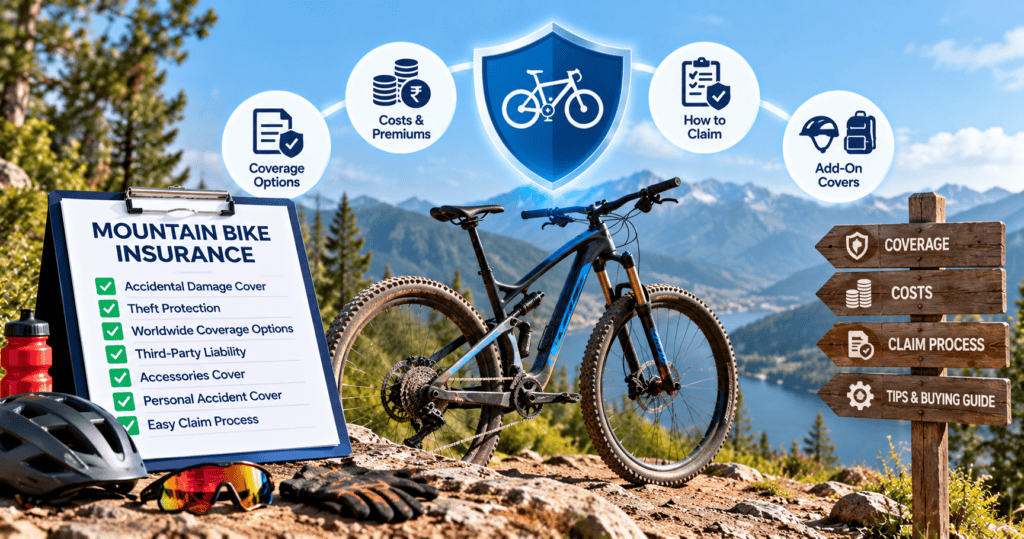
Mountain bikes have found a huge audience in the Indian subcontinent. The terrain comes with such a variety, including forest trails, mountain roads, and rough paths. Now that people are more into exploring, they need the right equipment too. A standard bicycle does not do that. As a result, the demand for high-performance mountain bikes has gone up significantly.
Since these bikes happen to be a huge investment, be it entry-level models or premium-priced ones, it is wise to get them insured. There are considerable risks associated with off-roading, and mountain bike insurance is a practical way to manage any potential financial losses that you may face. This guide will explain everything there is to know about mountain bike insurance. This includes coverage options, cost factors, and how to file a claim.
Understanding Mountain Bikes and Why Insurance Matters
Mountain bikes are different. This is specifically for rough terrain and off-roading. The difference is in the construction. The frame of these bikes is typically made with materials like aluminum alloy or carbon fiber. These are high-strength materials that make the bike lightweight but also sturdy. Along with that, a mountain bike frame is made using a specific geometrical configuration. It has a slacker head tube angle, which gives more stability when riding downhill.
The suspension system is also different. Some of these have a hardtail suspension, which means only the front fork absorbs shock. Others have a full suspension. This means both the front and rear suspension absorb impact from rocks or uneven ground. The tires are also different. They are wider and have a deeper tread pattern as compared to road bikes. These give a better grip on loose or muddy ground.
Hydraulic disc brakes are also used because they’re more powerful, and in wet or dusty areas where mud can trap the tire, they prove to be most reliable. These bikes also use a 1x drivetrain system with a single front chainring. This is to reduce the chance of chain drops while riding.
Since these bikes come with a very specific use case, the cost is also high accordingly. Plus, since you’re already venturing off into a dangerous environment with them, there is a high chance that at some point, they will need some repairs that might be too costly for you to give out of your own pocket.
Here’s why insurance becomes essential with this commodity:
- Accidents
- Theft
- Natural events such as floods, landslides, or fires
For motorized bikes or electric mountain bikes, legal regulations require at least third-party liability coverage under the Motor Vehicles Act.
Who Should Consider Mountain Bike Insurance
Mountain bike insurance may be especially useful for:
- Riders who own high-value mountain bikes
- People who frequently ride on rough trails or remote terrains
- Riders who travel with their bikes for adventure trips
- Owners of electric or motorised mountain bikes
Types of Mountain Bike Insurance Coverage
There are three main types of mountain bike insurance policies that we will cover here. This includes comprehensive coverage, standalone damage cover, and additional protection via add-ons:
Third-Party Liability Insurance
Third-party liability insurance is the most basic form of motor insurance available for motorcycles. It covers legal liability arising from injury, death, or property damage caused to another person due to an accident involving the insured bike. This type of policy protects the rider from having to bear compensation costs that may arise if a third party files a claim after an accident.
Third-party liability insurance is the most basic form of motor insurance available for motorcycles. It covers legal liability arising from injury, death, or property damage caused to another person due to an accident involving the insured bike. This type of policy protects the rider from having to bear compensation costs that may arise if a third party files a claim after an accident.
Comprehensive Coverage
The most extensive form of mountain bike insurance is comprehensive insurance. It includes own damage protection, which means coverage against bike damage caused by accidents, fire, natural disasters, or vandalism. Theft cover is also included in most of these policies.
If the bike is stolen and cannot be recovered, the insurer may compensate the owner based on the insured declared value of that bike. With third-party liability coverage, the rider is protected in case of injury to another person or damage to someone else’s property. This is especially important if the bike is motorised and operating on roads.
Standalone Own Damage Cover
In the standalone own damage policy, protection is provided only for the bike. This means that the insurance cover is for any damage caused by accidents, natural disasters, or other external events.
This is the policy that is mostly bought by people when third-party liability coverage already exists, but they need broader coverage. It is best for people who want to protect their bike but do not need a full-blown comprehensive policy.
Important Add-Ons for Better Protection
Zero depreciation, engine protection, and roadside assistance are among the motor insurance add-on covers explained by cost, benefit, and eligibility the same add-on logic applies whether you’re insuring a car or a motorised mountain bike.
- Zero Depreciation: This cover means that, while normally an insurer would reduce the claim amount based on the current value of the bike, this cover prevents that deduction. The recoverable amount remains closer to the original value of the bike.
- Engine Protection: It is mainly for motorised or electric mountain bikes. This protects the bike from issues like water entry, oil leakage, or mechanical problems that may occur while riding on rough terrain.
- Roadside Assistance: If the bike breaks down in a remote location, the insurer may arrange towing or technical assistance.
- Personal Accident Cover: Some policies come with personal accident cover, which provides financial compensation if the rider suffers injury or disability during an accident.
What Mountain Bike Insurance Does Not Cover
These exclusions are specified in the policy terms and conditions and should be reviewed carefully before purchasing a policy. Common exclusions include:
- Normal wear and tear
- Mechanical or electrical breakdowns
- Damage during racing, competitive events, or stunt riding
- Intentional damage or negligent use
- Unauthorised modifications
- Damage occurred outside the respective geographical coverage area
Cost of Mountain Bike Insurance and Factors Affecting Premiums
The cost of mountain bike insurance is directly based on a few factors. These include the bike itself, its use case, and the rider’s location:
Insured Declared Value (IDV) and Bike Price
The insured declared value, or IDV, is the current market value of the bike. It is the maximum amount an insurer will pay if the bike is stolen or completely damaged. When calculating the premium, any insurer would take the IDV as a primary factor.
Bikes that have a higher value also have a higher insurance cost. The IDV, however, decreases each year since the bike depreciates. To explain it in simple terms, as it gets older, its value decreases, and therefore, the amount that you will get in return for it in case of a mishap also reduces.
Bike Specifications and Risk Factors
There are characteristics typical of different bikes in the segment. They also affect how much premium you will have to pay for them. For motorised vehicles, the cubic capacity may be taken into consideration. Insurance costs can increase based on engine size, with different third-party premiums applied to different engine categories.
Location & Usage
Where you ride the bike also factors into the risk assessment. Bikes that are used on rough trails or in extreme environments are at a higher risk compared to those used casually. Although where the bike is used is important, where it is stored is also essential. In places where the theft rate is higher, the premium also tends to be higher. Similarly, areas that are prone to floods, landslides, or extreme weather may also require a higher premium.
No Claim Bonus
The no-claim bonus (NCB) is another thing you should know about. This means that riders who do not make any claims during a policy year get a discount when renewing their insurance. If this continues for multiple years, the discount also keeps increasing proportionately.
How to Choose the Right Mountain Bike Insurance Policy
Choosing the right mountain bike insurance can be a hassle. There are a lot of technical and hypothetical considerations that go into it, which can often feel confusing. Here is everything you need to consider before making a decision:
Compare Policies from Different Insurance Providers
To start with, look at a few key factors.
- Claim Settlement Ratio: This is the figure that shows the percentage of claims settled by the company. The higher the claim settlement ratio, the safer it is to buy insurance from that specific company.
- Network Garages: These are another thing that you can look at. These garages are part of the insurer’s network and may even provide cashless repairs. The bills are then settled between the garage and the insurer themselves, which makes the process easier for the policyholder.
- Reviews: Read reviews about the customer service and support of any insurer that you choose to go with. There is nothing more helpful than first-hand feedback from other people who have already experienced their service.
Reading Policy Terms Carefully
Before buying insurance, read the policy documents thoroughly. These are not your standard contracts. They contain all the important information about exclusions, inclusions, and coverage details.
No-claim scenarios are also clearly mentioned in these terms and conditions. Examples include reckless riding, unauthorised modifications, or racing. These situations are usually not covered by the policy.
You also need to understand what deductibles are. These are the portion of repair costs that a rider has to pay before the insurer covers the remaining amount.
Step-by-Step Guide to Filing a Mountain Bike Insurance Claim
If caught in a mishap, here’s what to do next. A step-by-step guide on how to file the claim:
Reporting the Incident to the Insurer
The first step is to inform the insurance company as soon as possible. In case of an accident, the damage can be reported on the insurer’s website, mobile app, or customer service helpline. If the bike has been stolen, a police complaint also needs to be filed, and a copy of the first information report is required.
Documentation and Inspection Process
After the incident is reported, the insurer will request supporting documents. Typically, these include photographs of the damaged bike, repair estimates from a garage, policy documents, and identity proof. When the case is of theft, an FIR and other related police documents may also be required.
The insurer then appoints a surveyor from their end to inspect the bike and assess the extent of damage. The surveyor then makes a report to decide the claim amount.
Repair Settlement or Reimbursement
Now the coverage depends on where you are getting the bike repaired.
- Cashless: If it’s with a network garage, which is in association with the insurer, then they may offer you cashless repairs. Any deductible that needs to be paid goes from your pocket, and then the rest of the amount is settled between the insurer and the garage itself.
- Reimbursement: If the repairs are done in a non-network garage, the rider has to pay first, and then the amount is reimbursed later on. Once the documents are verified and the claim is approved, the insurer issues the funds from their end.
Conclusion
Mountain bike insurance can help riders manage the financial risks associated with accidents, theft, or unexpected damage. Since these bikes often involve a significant investment, the right insurance policy can provide valuable protection and peace of mind. By understanding the coverage options, cost factors, and claim process, riders can choose a policy that suits their riding habits and protects their bike effectively.
Frequently Asked Questions
Q1. What does mountain bike insurance usually cover?
Mountain bike insurance mostly covers damage caused by accidents, fire, natural disasters, and theft, depending on what policy you choose.
Q2. Is mountain bike insurance mandatory in India?
It’s not mandatory for non-motorized bicycles. However, motorized ones that fall under the Motor Vehicles Act may require third-party liability coverage.
Q3. How is the premium for mountain bike insurance calculated?
Premiums for mountain bike insurance depend on factors such as the bike’s insured declared value, engine capacity (for motorized bikes), geographic location, and the rider’s claim history.
Q4. Can I transfer my mountain bike insurance if I sell the bike?
Yes, in many cases, the insurance policy can be transferred to the new owner when the bike is sold. The transfer usually requires notifying the insurer and submitting ownership transfer documents within a specified time.
Q5. Does mountain bike insurance cover theft outside the home?
Yes, many insurers allow used bikes to be insured. The premium and coverage will usually depend on the bike’s current market value, age, and overall condition.