

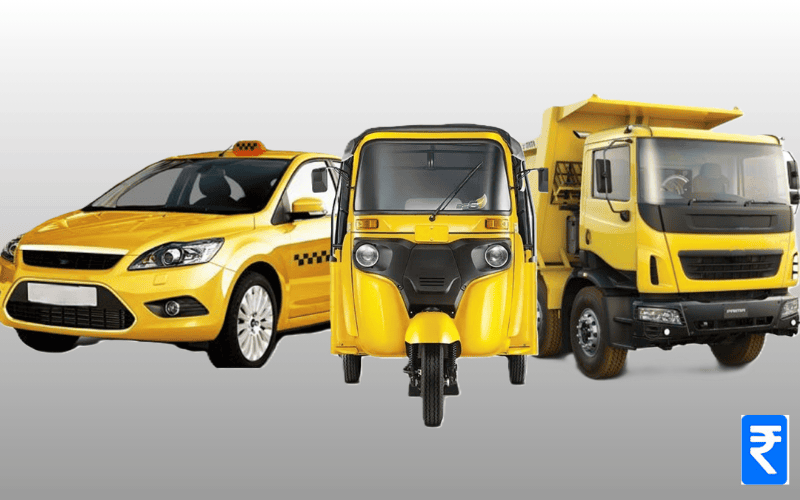
Vehicles used by Indian businesses are essential assets that serve purposes far beyond simple transportation. From taxi services and logistics companies to corporate fleets, these vehicles operate under conditions that expose them to risks very different from those faced by privately owned vehicles. This is where commercial car insurance becomes relevant.
Commercial car insurance provides financial protection for vehicles used in business operations, including passenger transportation and revenue-generating activities. In India, the Motor Vehicles Act, 1988, mandates third-party liability insurance for all commercial vehicles. Beyond meeting legal requirements, understanding the different types of commercial car insurance policies helps business owners manage operational risks and protect their assets more effectively.
What is Commercial Car Insurance?
Commercial car insurance safeguards vehicles that businesses use for their operations instead of personal usage. The policies serve as a financial protection, as businesses use them to manage expenses resulting from vehicle accidents, property damage, and legal matters.
- Passenger vehicles, which include taxis, school buses, cabs, and auto-rickshaws.
- Goods-carrying vehicles, which include trucks, tempos, and lorries.
- Special types of vehicles, which include cranes, ambulances, and construction equipment.
Types of Commercial Car Insurance Plans
The Indian insurance market offers two basic plan options. Business owners can choose a plan based on their budget and coverage needs.
- Third-Party Liability Insurance
The legal requirement makes this the mandatory minimum coverage needed for all vehicles operating on Indian roadways. Absence of third-party cover can lead to legal and monetary penalties.
- What it Covers: The policy provides financial liability for damages that a third-party vehicle or property sustains. It also covers third-party injuries and fatalities from accidents.
- What it Does Not Cover: The policy does not provide payment for any damages that occur to the business owner’s vehicle.
- Comprehensive Insurance Policy
Comprehensive insurance combines third-party liability coverage with Own Damage protection for the insured vehicle.
- What it Covers: The policy protects all losses that result from accidents, theft, fire, and natural disasters that impact the insured vehicle. It further includes personal accident cover for the owner-driver and often for the paid driver.
- What it Does Not Cover: Depreciation of parts unless an add-on is chosen, mechanical and electrical breakdowns, and consequential losses, like loss of income during repairs, are excluded.
- Suitability: Fleet owners who need to control their asset repair expenses typically choose this plan.
Coverage: What is Included?
A comprehensive commercial car insurance policy provides protection against multiple potential liabilities.
- Accidents and Collisions
The policy provides coverage for vehicle repair expenses that result from road accidents. The policy covers all expenses needed to repair the vehicle after it sustains damage through collisions with other vehicles, stationary objects, or animals.
- Theft and Malicious Acts
The insurer provides payment for the Insured Declared Value (IDV) of the vehicle when thieves steal the commercial vehicle. The policy includes protection for all damages that occur because of vandalism, riots, or strikes.
- Natural Calamities
Natural disasters occurring without human interference will protect damaged vehicles. The policy provides coverage for all damages that result from natural disasters, including floods, earthquakes, cyclones, and landslides.
- Fire and Explosion
The policy provides coverage for all damages that result from fire and self-ignition, lightning, and explosions.
- Third-Party Liabilities
This covers legal and financial obligations if the vehicle causes injury, vehicle damage, or property damage to third parties.
Exclusions: What is Not Covered
Understanding policy limits requires knowing what is covered and what is excluded. Insurance companies typically reject claims in the following scenarios.
- Driving Without a Valid License: If the driver does not hold a valid commercial driving license at the time of the accident, coverage will not be available.
- Intoxication: The driver may not be eligible to claim if they drove under the influence of alcohol or drugs.
- Private Use: The claim will be denied because the vehicle insured as a commercial entity was used for personal purposes without proper authorization.
- Consequential Loss: The base policy excludes indirect losses, which include business income loss during vehicle repairs.
- Normal Wear and Tear: The policy does not cover vehicle depreciation, mechanical breakdowns, or standard aging processes of the vehicle.
Key Benefits of Commercial Car Insurance
Businesses use commercial car insurance to handle their operational risks. The following benefits represent commonly cited advantages.
- Legal Compliance: The business uses this system to comply with the Motor Vehicles Act, which protects them from legal fines and penalties.
- Financial Support: The repair costs for commercial vehicles represent a significant expense for businesses. The policy helps cover these costs, which may reduce the strain on the business’s working capital.
- Passenger Safety: The policy protects passengers from injuries, which taxi and bus services must manage as part of their liability obligations.
- Business Continuity: The policy enables organizations to repair vehicles and obtain theft protection, which allows them to operate their equipment during normal business hours.
Understanding Add-Ons (Riders)
To enhance the base coverage, insurers offer additional covers known as “add-ons.” These increase the premium but offer specific protections.
| Add-On | Description |
| Zero Depreciation Cover | In a standard claim, the insurer deducts the depreciation value of replaced parts (plastic, rubber, metal). This add-on waives that deduction, meaning the insurance provider pays the full cost of part replacement. |
| Roadside Assistance | This service provides assistance for vehicle breakdowns through towing services, on-site repair work, flat tire assistance, and fuel delivery service. |
| Engine Protection Cover | Standard policies do not include coverage for engine damage that occurs due to water ingression (hydrostatic lock) and oil leakage. The add-on provides protection for expenses that come from repairing both the engine and gearbox. |
| Return to Invoice | The cover provides payment at the original invoice price of the vehicle in case of total loss through theft or irremediable damage, instead of the reduced market value, which is considered the insured declared value(IDV). |
Factors Affecting Premiums
The premium for commercial car insurance is not fixed and can vary depending on several factors. Insurers examine these factors to determine the risk level associated with both the vehicle and its operational patterns.
- Insured Declared Value (IDV)
The IDV of a vehicle reflects its current market worth. A higher IDV leads to increased potential payout costs, and that is why the insurance providers consider this factor when deciding the premium.
- Vehicle Type and Size
Insurance providers charge truck drivers higher premiums because heavy commercial vehicles operate with more severe risks than light commercial vehicles, like taxis.
- Geographical Zone
Vehicles operating in metro cities (Zone A) often have higher premiums compared to those used in smaller towns (Zone B), mainly due to higher traffic density and accident rates.
Note: Zones are IRDAI-defined and based on city classification
- Claim History
The No Claim Bonus (NCB) recognizes businesses that had no claims during previous policy years, as this benefit decreases their renewal premium.
- Usage
Insurance providers determine premium costs based on three factors, which include the type of goods transported, the distance covered, and the frequency of operations.
How to File a Claim
The procedure for claiming commercial car insurance requires the submission of specific paperwork, which follows a defined sequence.
- Inform the Insurance Provider: The insurance company must be notified about the incident without delay.
- File an FIR: A First Information Report (FIR) must be filed with the police station nearest to the accident. This requirement applies to third-party accidents, theft incidents, and significant damage cases.
- Survey and Inspection: The insurance provider will send a surveyor to inspect the vehicle and assess the extent of the damage.
- Submit Documents: The claimant needs to submit the claim form along with the RC copy, driving license, FIR, and policy documents.
- Repair and Settlement:
- Cashless: The insurance provider settles costs of repair directly with the garage. This option can be available at network garages only.
- Reimbursement: The business needs to pay all expenses after the repairs, which are reimbursed to them at a later time.
Conclusion
Commercial car insurance safeguards businesses against financial liabilities while also fulfilling legal requirements. Businesses have to include premium expenses as operational costs, but they must evaluate their accident, theft, and liability coverage when they assess their business sustainability. By evaluating the requirements and comparing various insurance options, businesses can find a policy that provides sufficient protection for their vehicles.
FAQs
1. Is commercial car insurance mandatory in India?
Yes, under the Motor Vehicles Act, 1988, all commercial vehicles must have at least Third-Party Liability insurance to drive their vehicles legally on public roads.
2. Can I transfer my No Claim Bonus (NCB) to a new commercial vehicle?
Yes, the NCB belongs to the policyholder, not the vehicle. The accumulated NCB from your previous commercial vehicle can be transferred to the new commercial car insurance policy when you purchase a different vehicle of the same type.
3. Does this policy cover goods being transported?
A standard commercial car insurance policy covers the vehicle itself. The policy does not protect goods that are inside the vehicle. For that, businesses usually need a separate Marine Transit or Goods Carrying policy.
4. How is the premium calculated for commercial vehicles?
Insurance premium determination for commercial vehicles uses Insured Declared Value (IDV) together with engine cubic capacity, vehicle age, operational geographical zone, and passenger versus goods carrying commercial use.
5. What happens to the policy if the vehicle ownership changes?
The insurance for a commercial vehicle can be transferred to its new owner when the vehicle is sold. The new owner must apply for the transfer within 14 days of the purchase date to ensure the coverage remains valid under their name.