

Auto insurance is a legal requirement under the Motor Vehicles Act in India for all vehicles operating on public roads. Still, buying a policy isn’t just about meeting legal compliance. The real value of insurance lies in how efficient the coverage is and how effectively the insurer settles claims when an accident or damage occurs.
One important metric that policyholders frequently consider while comparing insurers is the car insurance claim settlement ratio. This number provides insight into how consistently an insurance company honours claims filed by the policyholders.
This comprehensive guide explains what the car insurance claim settlement ratio means, how it’s calculated, why it matters, how to interpret it correctly, and how it should impact your auto insurance purchase decision in India.
Table of Contents
- What Is the Car Insurance Claim Settlement Ratio?
- Why is the Car Insurance Claim Settlement Ratio Important?
- Where to Find Authentic CSR Data
- Types of Car Insurance Claims in India
- What is Considered a Good Claim Settlement Ratio?
- Limitations of Claim Settlement Ratio
- Claim Settlement Ratio vs Claim Repudiation Ratio
- Other Factors to Consider Alongside CSR
- How Impact of Digital Claims Processing is Claim Settlement Ratios
- How Car Insurance Claim Settlement Ratio Impact Policy Selection
- Practical Example: Comparing Insurers
- How to Improve Claim Approval Chances
- Is a Higher CSR Always Better?
- Conclusion
- FAQs
What is the Car Insurance Claim Settlement Ratio?
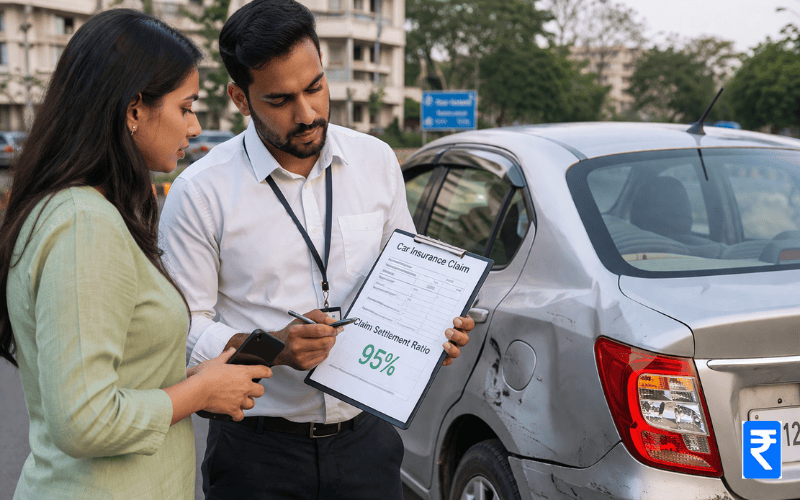
The car insurance claim settlement ratio (CSR) refers to the percentage of claims that are settled by an insurance company compared to the total number of claims submitted during a fiscal year. It is generally reported annually by insurers and published by the Insurance Regulatory and Development Authority of India( IRDAI).
| CSR Formula: ( Number of Claims Settled ÷ Number of Claims entered) × 100 |
For Illustration:
If an insurer received 10,000 car insurance claims in a year and settled 9,500 of them, its car insurance claim settlement ratio would be:
(9,500 ÷ 10,000) × 100 = 95%
This means the insurer settled 95% of the claims it received during that time.
Why is the Car Insurance Claim Settlement Ratio Important?
Automobile insurance is a guarantee to provide you with funds when accidents, theft, fire, or natural disasters occur. You can determine how reliable an insurer is by looking at its claim settlement ratio; the higher the claim settlement ratio, the better track record an insurance provider has of paying approved claims.
Three reasons why this matters include:
-
Represents Trustworthiness
A high claim settlement ratio means that the insurer has the capability of efficiently processing and approving a large number of claims.
-
Indicates Claim Handling Expertise
Insurance companies with a high claim settlement ratio will have organized processes for managing claims and a structure in place for filing those claims.
-
Assists in Comparing Insurers
When evaluating various pieces of information for evaluation purposes, the claim settlement ratio can act as a significant benchmark.
-
Reduces Risk of Claim Rejection
Claim approval is not 100% assured, but a high claim settlement ratio reduces the chances of rejection.
Where to Find Authentic Data on Claim Settlement Ratios
In India, the most authoritative source of performance data related to insurance is the IRDAI annual report:
Enrollment statistics can be found in these reports for all general insurers, as well as for the motor insurance portion of their businesses. Additional statistics may be published by an insurer’s own annual report, located on the insurer’s website.
Types of Car Insurance Claims in India
To understand the car insurance claim settlement ratio, it is important to know the types of claims involved.
-
Own Damage Claims
Covers damage to your own car caused by:
- Accidents
- Fire
- Natural disasters
- Theft
- Vandalism
-
Third-Party Liability Claims
Must have, in accordance with Indian legislation, cover:
- Injury to third parties
- Property damage caused to others
-
Comprehensive Insurance Claims
A comprehensive policy combines both own damage and third-party liability coverage. It allows you to raise claims for:
- Damage to your own vehicle
- Third-party injury or property damage
- Losses due to theft, fire, or natural calamities
- Additional risks if add-ons are included
What is Considered a Good Car Insurance Claim Settlement Ratio?
In general terms,
- A CSR above 95% is generally deemed high,
- 90% – 95% is otherwise considered moderate to reasonably strong,
- And if your ratio is below 85%, then it’s going to require more scrutiny.
Limitations of Using Only the Car Insurance Claim Settlement Ratio
While useful, this metric has certain limitations:
-
No suggestion of Claim Size
The car insurance claim settlement ratio doesn’t reveal:
- Average claim amount paid
- Whether claims were incompletely settled
- Time taken for agreement
-
Does Not Reflect Speed
Fast claim processing is pivotal. CSR doesn’t indicate reversal time.
-
Does Not Show Client Experience
It doesn’t capture:
- Ease of attestation
- client support quality
- translucency in deductions
-
May Include Small Claims
Some insurers may settle a large number of small claims, which boosts the auto insurance claim settlement ratio, even if large claims are disputed.
Claim Settlement Ratio vs. Claim Repudiation Ratio
While assessing insurers, policyholders should understand the difference between the auto insurance claim settlement ratio and the claim repudiation ratio.
The claim repudiation rate represents the chance of claims rejected by the insurer during a fiscal year.
A high claim settlement ratio along with a low claim repudiation rate generally indicates a more reliable claims process. However, it is important to understand why claims are rejected, as common reasons include non-disclosure of information, policy violations, or incomplete documentation. Looking at both metrics together can help you make a more informed and balanced decision when choosing an insurer.
Other Key Factors to Consider Alongside Claim Settlement Ratio
CSR is a crucial metric, but it should be paired with other important factors to correctly evaluate insurance companies.
- Incurred Claim Rate (ICR): This measures the rate of total claims paid to total decorations collected. An ICR above 100 suggests the insurer paid more in claims than it earned in decorations (not always sustainable long-term).
- Network Garages: A wide cashless garage network ensures smoother claim processing.
- Claim agreement Process: Look for:
- Digital claim suggestion
- 24/7 backing
- Minimum paperwork
- Policy Coverage and Rejections: Understand:
- Deductibles
- Deprecation rules
- Add-ons (like zero deprecation cover)
- Solvency Rate: IRDAI authorizes insurers to maintain a solvency rate of at least 1.5. A strong solvency rate indicates fiscal stability.
How Digital Claims Processing is Influencing Claim Settlement Ratios
Digitalization has significantly changed how motor insurance claims are processed in India. In addition to online portals, many insurance companies now offer app-based services. This makes the entire claim process more streamlined and easier for policyholders.
How Car Insurance Claim Settlement Ratio Impacts Policy Selection
When selecting a policy, the car insurance claim settlement ratio can influence your decision in the following ways:
Risk Assessment
A high auto insurance claim settlement ratio may suggest comparatively lower claim rejection chances.
Confidence in Claims Handling
A strong history of managing claims efficiently helps build confidence from the policyholders.
Long- Term Policy Planning
Motor insurance is renewed annually. A consistent, high CSR can encourage policyholders to renew with the existing insurance provider.
Practical Example: Comparing Two Insurers
| Factor | Insurer A | Insurer B |
| CSR | 96% | 91% |
| Network Garages | 4,000+ | 6,000+ |
| Solvency Ratio | 1.6 | 1.8 |
| Premium | Slightly Higher | Lower |
In this case:
- Insurer A seems a better fit here in terms of CSR.
- Insurer B, however, has more network hospitals, easing access to cashless treatment.
- Insurer B is also more affordable.
Here, the final decision should balance reliability, affordability, and coverage adequacy.
How to Improve Chances of Claim Approval
Regardless of the insurer’s car insurance claim settlement ratio, policyholders can improve approval probability by:
- Reading policy terms precisely
- Reporting accidents incontinently
- Furnishing accurate attestation
- Avoiding unauthorised vehicle variations
- Renewing programs on time.
Is a Higher Claim Settlement Ratio Always Better?
While a high car insurance claim settlement ratio may indicate functional effectiveness, policyholders should also estimate:
- Claim processing timelines
- Client reviews
- Fiscal strength
- Policy features
A balanced evaluation is essential.
Conclusion
The car insurance claim settlement ratio is a useful reflection of an insurer’s claim management. It is a common parameter all policyholders should check when comparing different plans and providers.
It is also important to remember that insurance providers report, and IRDAI publishes CSR annually. Check the latest CSR as well as the CSRs over the years to ensure consistency in claim settlement.
FAQs
1. What is a good car insurance claim settlement ratio in India?
Generally, a car insurance claim settlement ratio above 95% is considered strong. However, it should be evaluated along with financial stability, incurred claim ratio, and service quality before making a decision.
2. Is the claim settlement ratio published officially?
Yes. The Insurance Regulatory and Development Authority of India publishes insurer performance data in its annual reports and statistical handbooks.
3. Does a 100% claim settlement ratio guarantee approval?
No. A 100% car insurance claim settlement ratio reflects past performance. Individual claims can still be rejected if policy terms are violated.
4. How often should I check an insurer’s claim settlement ratio?
It is advisable to check the recent annual data before purchasing or renewing your car insurance policy, as ratios can change year to year.
5. Can a claim be partially settled?
Yes. Depending on depreciation, deductibles, and exclusions, insurers may partially approve claims. The car insurance claim settlement ratio does not show whether settlements were full or partial.