

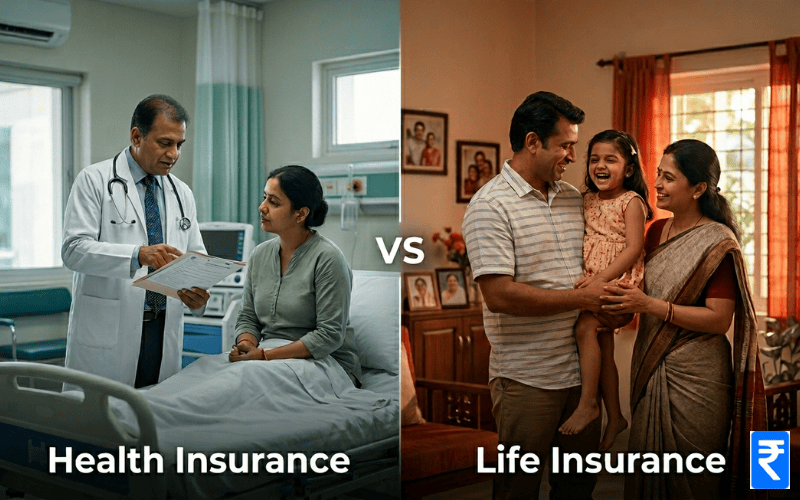
Life insurance and health insurance often get mixed up. But they solve two very different problems. One protects your family’s income. The other protects your savings from hospital bills.
When understanding life insurance vs health insurance, keep this in mind:
- Life insurance protects your family if you are not around.
- Health insurance protects you while you are alive.
In India, this difference is becoming more important every year. Healthcare costs are rising. Families often depend on one main earner. And financial shocks tend to happen suddenly.
According to the Insurance Regulatory and Development Authority of India, insurance awareness and penetration in India have been improving. More households are now adding insurance to their financial planning. Still, many people remain confused between the two. Let’s clear the life insurance vs health insurance confusion.
What is Life Insurance?
An insurance that provides a lump-sum payment (sum assured) to the nominee if the policy holder dies during the policy period.
The idea is simple: If your income stops, your family should still have money to survive.
Common types of life insurance include:
- Term insurance
- Whole life insurance
- Endowment plans
- Unit Linked Insurance Plans (ULIPs)
Example
Rahul earns ₹12 lakh per year and supports his parents and spouse. If Rahul passes away unexpectedly, the family loses that income.
A life insurance policy paying ₹1 crore can help the family manage expenses, repay loans, or fund education. So, that is the role of life insurance: Income protection.
What is Health Insurance?
It covers medical expenses such as hospitalization, surgeries, and treatments. It works through:
- Cashless claims (hospital is paid directly by the insurer)
- Reimbursement claims (you pay first, insurer reimburses later)
The goal is simple: Hospital bills should not wipe out your savings.
Example
A heart surgery in a private hospital may cost ₹4–6 lakh. Without insurance, the entire amount comes from your pocket. With health insurance, the insurer covers most or all of the cost, depending on your policy. So health insurance protects your savings.
Life Insurance vs Health Insurance: Key Differences
| Feature | Life Insurance | Health Insurance |
| Primary purpose | Protects family income after death | Covers medical expenses |
| Who receives the payout | Nominee or family | Hospital or policyholder |
| Trigger event | Death of insured person | Hospitalisation or treatment |
| Type of payout | Lump sum amount | Cashless claim or reimbursement |
| Policy duration | Long term (10–40 years or lifetime) | Usually renewed yearly |
| Premium cost | Lower for high coverage | Higher depending on age and health |
| Coverage use | Income replacement, loan repayment, family security | Surgeries, hospitalization, medical treatment |
| Investment component | Some policies include savings or investments (ULIP, endowment) | No investment component |
| No claim bonus | Not applicable | Available in many policies |
| Tax benefits | Section 80C and Section 10(10D) | Section 80D |
| Ideal buyer | Primary earning member | Every individual |
As both solve different financial risks, that is why comparing them as substitutes does not really work.
When Do You Need Life Insurance?
You should consider life insurance if:
- You have financial dependents
- You have loans or liabilities
- Your family relies on your income
- You want long-term financial protection
Example: A parent with two children and a home loan should almost always have life insurance. Without it, the family may struggle with EMIs and daily expenses.
When Do You Need Health Insurance?
Health insurance becomes important if:
- You want protection from hospital expenses
- Your employer’s coverage is limited
- You live in cities with expensive healthcare
- You want tax benefits under Section 80D
Even young and healthy people benefit from health insurance. Medical emergencies rarely come with a warning.
Can One Replace the Other?
Short answer: No.
Life insurance does not pay hospital bills. Health insurance does not replace lost income after death. They address two completely different risks. A balanced financial plan often includes both.
Tax Benefits Comparison
As stated, insurance policies also offer tax benefits under the Income Tax Act, 1961.
- Life insurance premiums qualify under Section 80C (limit ₹1.5 lakh).
- Health insurance premiums qualify under Section 80D.
Under Section 80D:
- Up to ₹25,000 deduction for individuals below 60
- Up to ₹50,000 for senior citizens
So insurance helps protect both your finances and your taxes.
Risks and Limitations of The Two Insurances
Insurance policies are useful. But they also have conditions.
Life Insurance Limitations
- Policy lapses if premiums stop
- Certain exclusions apply (for example, suicide clause during the initial period)
Health Insurance Limitations
- Waiting periods for certain illnesses
- Some treatments may be excluded
- Co-payment clauses in some plans
Always read the policy document carefully before buying.
Regulatory Framework in India
Insurance companies in India are regulated by the Insurance Regulatory and Development Authority of India. The regulator ensures:
- Standardized product guidelines
- Transparency in policy terms
- Grievance redressal mechanisms for policyholders
This framework helps protect consumers and improve trust in the insurance industry.
Which One Should You Choose?
The answer depends on several factors:
- Your age
- Family responsibilities
- Income level
- Loans or liabilities
- Health condition
In many cases, the ideal approach is simple: Health insurance protects your present. Life insurance protects your family’s future. Together, they form a stronger financial safety net.
Before choosing a policy, review:
- Policy features
- Exclusions
- Tax treatment
- Insurer reputation
- Your ability to continue paying premiums
Insurance works best when it fits your real financial situation.
Which Insurance Should You Buy First?
Many people ask this question. The answer depends on your situation.
In most cases, health insurance should come first. Medical emergencies can happen anytime. A single hospital bill can drain years of savings.
For example, a surgery in a private hospital can easily cost ₹3–5 lakh. Without insurance, the entire amount comes from your pocket.
After health insurance, consider life insurance, especially if you have dependents. Life insurance protects your family’s income if something happens to you.
A simple rule often used by financial planners:
- Young professionals with no dependents: Start with health insurance.
- Working individuals with dependents: Buy both health and life insurance.
- Primary earning members: Life insurance becomes essential.
Both policies address different risks. One protects your health expenses. The other protects your family’s financial stability.
Common Mistakes People Make
Many people buy insurance. But they still make avoidable mistakes. Here are some common ones.
1. Relying only on employer health insurance: Company policies may stop when you change jobs. They may also have limited coverage.
Example: Your employer plan may cover only ₹3 lakh. A major surgery could cost more.
2. Delaying insurance purchase: Insurance becomes expensive with age. Health conditions can also lead to exclusions or higher premiums. Buying early usually means lower premiums and better coverage.
3. Choosing very low coverage: Many people choose the cheapest plan available. This often leads to inadequate protection.
Example: A ₹2 lakh health cover may not be enough in large cities.
4. Confusing investment products with insurance: Some life insurance plans combine insurance and investment. But the core purpose of life insurance is income protection.
Term insurance usually provides higher coverage at lower cost.
5. Not reading policy exclusions: Every policy has conditions. Waiting periods, exclusions, and co-pay clauses matter.
Reading the policy document carefully helps avoid surprises during claims.
Risk Comparison Table
Both policies protect against different financial risks. The table below shows how they differ.
| Financial Risk | Insurance That Covers It |
| Death of the earning member | Life insurance |
| Loss of family income | Life insurance |
| Hospitalisation expenses | Health insurance |
| Surgery and treatment costs | Health insurance |
| Medical emergencies | Health insurance |
| Long-term family financial security | Life insurance |
Why Both Insurances Matter in India
Insurance has become more important in India in recent years.
Healthcare costs are rising steadily. According to the Insurance Regulatory and Development Authority of India, medical inflation remains a major concern for households.
At the same time, many families depend on one primary earning member. If that income stops suddenly, the financial impact can be severe.
Consider this simple situation.
A family depends on a single earner earning ₹10 lakh per year. If that person passes away unexpectedly, the family may struggle to pay loans, education expenses, and daily costs. Life insurance helps protect against this risk.
Now imagine the same person requires emergency surgery costing ₹4 lakh. Without health insurance, the entire cost may come from savings.
This is why both policies matter.
- Health insurance protects you from medical expenses.
- Life insurance protects your family’s financial future.
Together, they form an important part of responsible financial planning.
Conclusion
Life insurance vs health insurance are often compared. But they are not competitors. They are two different tools for managing risk.
Life insurance protects your family’s financial stability if you are no longer there. Health insurance protects you from the financial impact of medical emergencies. In India, where healthcare costs are rising and many households depend on a single income, both forms of protection can play an important role in financial planning.
Instead of choosing one over the other, think of them as two shields protecting different parts of your financial life.
FAQs
1. Is life insurance mandatory in India?
No. Life insurance is not legally mandatory. However, banks may sometimes require it when approving certain loans.
2. Is health insurance mandatory?
Health insurance is not compulsory. But it can significantly reduce the financial burden of hospitalization.
3. Can I claim tax benefits on both?
Yes. Life insurance and health insurance premiums qualify for tax deductions under Section 80C and Section 80D respectively.
4. What happens if I stop paying premiums?
If premiums are not paid, the policy may lapse. Some insurers offer revival options within a certain period.
5. Which should I buy first?
If you have dependents, life insurance is usually prioritized. Health insurance, however, is relevant for almost every adult.