

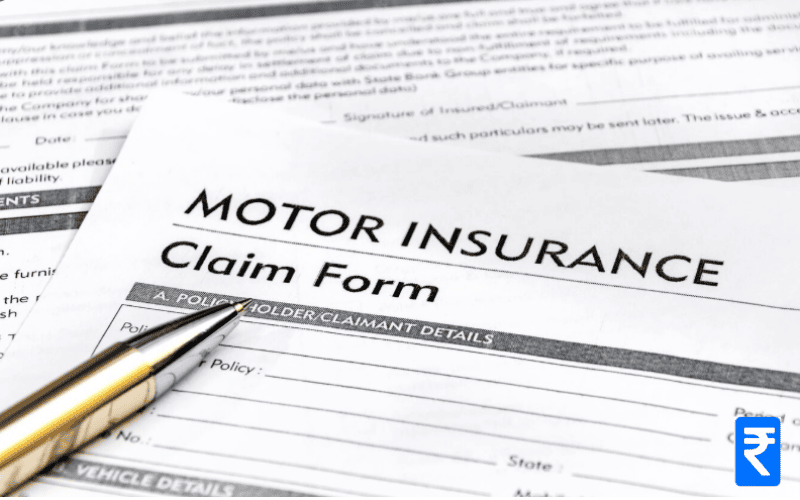
If you own a vehicle in India, motor insurance isn’t really optional. It’s one of those things you need to make sure of before anything goes downhill. And if something really does go wrong, whether it’s a dent, theft, or something more damaging, it is worthwhile to know how the motor insurance claim process actually works. This can determine how quickly you recover financially.
The problem is that most people don’t think about the motor insurance claim process until they’re stranded due to an accident. They are completely unsure what to do next. Because a missed step or a missing document can decide if your settlement is blocked.
So this article walks through the full motor insurance claim process in India. We will see the types of claims, what steps to follow, what paperwork you’ll need, what IRDAI expects from insurers, and some practical tips that actually help.
Table of Contents
- Types of Motor Insurance Claims in India
- Step-by-Step Guide to the Motor Insurance Claim Process
- Documents Required for the Motor Insurance Claim Process
- Cashless vs. Reimbursement Claims
- IRDAI Guidelines and Timelines in the Motor Insurance Claim Process
- Common Reasons for Claim Rejection
- Tips for a Smooth Motor Insurance Claim Process
- Advantages of Knowing the Motor Insurance Claim Process
- Drawbacks and Challenges
- Conclusion
- Frequently Asked Questions (FAQs)
Types of Motor Insurance Claims in India
When it comes to the motor insurance claim process in India, there are basically two types of coverage you’ll come across. The first is third-party liability. This kicks in when your vehicle damages someone else’s property, injures a person, or, in the worst case, causes a fatality. This one isn’t optional. The Motor Vehicles Act, 1988 makes it mandatory for every vehicle on the road, no exceptions.
The second is own damage claims. It covers repairs or replacement for the insured vehicle due to accidents, theft, fire, etc.
Comprehensive policies combine both, thus offering broader protection. Add-ons like zero depreciation or engine protection offer broader coverage but may require additional verification during claims depending on policy conditions. According to IRDAI data, motor insurance accounts for a significant portion of general insurance premiums, contributing 32.21% of total non-life insurance premiums in FY 2024–25, according to data from the Insurance Regulatory and Development Authority of India.
Step-by-Step Guide to the Motor Insurance Claim Process
The motor insurance claim process begins immediately after an incident and concludes with settlement. Here’s a detailed breakdown tailored for Indians:
1. Ensure Safety and Report the Incident
Immediately after an accident happens, your first instinct should be safety and not paperwork. Move away from traffic if possible. Check if anyone’s hurt. If someone is injured or there’s damage to another person’s vehicle, call 100 or 108.
2. Intimate the Insurer
This is where most people may lose their claim without realising it. They wait a few days, sort out the immediate chaos, and then call the insurer. By then, it’s too late or at least complicated. Call your insurer within 24 to 48 hours. Keep your policy number handy and inform them about what occurred. Most companies have apps and round-the-clock helplines now, so this shouldn’t take more than 10 minutes.
3. File a First Information Report (FIR)
If someone else’s vehicle or property was damaged, if there’s an injury, if the car was stolen or vandalised then you need to go to the nearest police station and file an FIR. For a minor dent where it’s just your car and nobody else is in the picture, you might not need to do so. But read your policy before skipping it, because some insurers ask for it regardless.
4. Vehicle Inspection by Surveyor
Your insurer must appoint a surveyor within 24 hours of claim intimation, in accordance with the IRDAI Master Circular on Motor Insurance Claims, 2024. This person assesses the damage and prepares a repair cost estimate that the insurer uses to process your claim. The key thing here is not to get the car repaired before the surveyor sees it. Because repairing before inspection can invalidate your claim entirely. Surveyors are required to submit their assessment report within 15 days of being assigned the claim, as per the Insurance Regulatory and Development Authority of India claim settlement guidelines.
For smaller claims (typically below ₹50,000), insurers may use digital or AI-assisted damage assessment tools, allowing claims to be processed without a physical surveyor visit.
5. Submit Required Documents
Once the inspection is done, you’ll need to submit related documents to the insurer or directly to the surveyor. This step tends to be where the motorinsurance claim process slows down unnecessarily. Missing or incorrect documents cause delays that could otherwise be avoided.
6. Repair the Vehicle
For cashless claims, you may take the vehicle to one of your insurer’s network garages. The insurer can settle the repair bill directly with the garage, and you may only pay the deductible portion. For reimbursement claims, you can take the car to any garage of your choice, pay the full repair cost upfront, and then submit the bills to the insurer for repayment.
7. Claim Approval and Settlement
Once the insurer has reviewed your documents and the surveyor’s report, they’ll approve the claim and process the settlement. Under the IRDAI Master Circular on Motor Insurance Claims, 2024, insurers must take a claim decision within 7 days of receiving the surveyor’s report and all required documentation. Payment is made via bank transfer or cheque. If the repair cost exceeds 75% of your vehicle’s Insured Declared Value, the car is treated as a total loss. In that case, the insurer pays out the IDV minus the salvage value.
In regards to third-party claims, if there’s a dispute, the case may go to the Motor Accident Claims Tribunal. This can stretch the timeline considerably. So it’s worth being patient and keeping all documents intact throughout.
Documents Required for the Motor Insurance Claim Process
Getting your documents wrong or just missing one is probably the most common reason claims get delayed as we discussed earlier. The insurer won’t process anything until the paperwork is complete, so it’s worth getting this done before you submit.
Here’s what you’ll typically need:
-
- Claim form: download it from your insurer’s website and fill it out carefully. Small errors here cause unnecessary back and forth.
-
- Insurance policy copy: the document itself, not just the app screenshot.
-
- Vehicle Registration Certificate (RC): Make sure it’s valid. An expired RC can complicate things.
-
- Driving License: of the driver at the time of the accident, not just the policyholder.
-
- FIR or police report: only where it applies, like third-party damage, theft, or accidents involving injury.
-
- Repair estimates and bills: originals, not photocopies. Keep every receipt from the garage.
-
- Payment receipts: needed specifically for reimbursement claims, where you’ve paid out of pocket.
-
- PAN card and bank details: for the settlement transfer. Double-check the account number before submitting.
-
- For theft cases: you’ll also need the non-traceable certificate from the police, plus the vehicle keys.
If the accident involved a death or serious injury, it is expected that additional documents may be required. This includes medical reports, hospital records, or a death certificate depending on the situation.
The IRDAI Master Circular on Motor Insurance Claims, 2024 also states that insurers should not reject claims purely for want of documents if the required documentation was not clearly specified to the policyholder earlier. So if your insurer keeps asking for new documents every few days after you’ve already submitted everything, that’s not standard practice and you can push back on it.
Cashless vs. Reimbursement Claims
With cashless claims, the insurer settles the repair bill directly with the garage. There are over 10,000 network garages across India tied up with insurers, so availability is decent in most cities. The downside is you’re restricted to those approved garages. Also, deductibles and non-covered parts still come out of your pocket regardless.
Reimbursement gives you the freedom to go wherever you trust. You pay the full repair cost first, submit your bills, and the insurer pays you back. This is usually done within 15 to 30 days. It works well if you have a go-to garage, but arranging that upfront money can be a hefty task, especially after an already expensive incident.
IRDAI nudges insurers toward cashless because it’s cleaner and faster for everyone. That said, before you assume cashless is available, check whether there’s actually a network garage near you.
IRDAI Guidelines and Timelines in the Motor Insurance Claim Process
IRDAI doesn’t just set rules on paper. They also have a set timeline and due diligence to follow through during the motor insurance claim process. Here are the details:
-
- Insurers must acknowledge your claim within 24 hours of intimation.
-
- A surveyor has to be appointed promptly after that and has to submit the report in 7 days.
-
- Once you’ve submitted all required documents, the insurer has 30 days to give you a decision, that is, approval or rejection.
-
- Any deductions from your settlement must be explained clearly and transparently. You shouldn’t be getting a reduced payout with no reason attached.
-
- Insurers are required to follow board-approved claim policies, which exist specifically to prevent them from pressuring or misleading policyholders.
As of FY 2024-25, the average claim settlement ratio across general insurers was about 94.03% in FY 2024–25, though individual insurers may vary significantly. Motor insurance complaints made up 24.8% of total insurance complaints that year, down from 26.18% the year before. Things are improving, slowly but clearly. Still, knowing your rights under these guidelines is what keeps the process honest on both ends.
Common Reasons for Claim Rejection
The most common ones are a lapsed policy at the time of the accident, driving under the influence, modifications to the vehicle that were never reported to the insurer, and delayed notification. Incomplete paperwork and misrepresentation of facts round out the list.
When your claim does get rejected, the insurer is required by IRDAI to give you the reason in writing. If you believe the rejection is unfair, you must first raise a complaint with the insurer’s grievance cell. If the issue remains unresolved, you may escalate it to the Insurance Ombudsman within one year. But this has to be done within a year.
Tips for a Smooth Motor Insurance Claim Process
Following these can minimise hassles in the motor insurance claim process:
-
- Keep your DL and RC valid at all times. An expired license or registration is one of the fastest ways to get a claim denied, even if the accident wasn’t your fault.
-
- Photograph everything at the scene. The damage, the other vehicle, the road, the surroundings. Do it before anything gets moved. These photos can settle disputes that would otherwise drag on.
-
- Don’t admit fault at the spot. It feels like the right thing to do in the moment, but it can work against you legally and with your insurer. Let the investigation determine liability.
-
- Go for comprehensive coverage if you haven’t already. Third-party only sounds cheaper until something happens to your own car and you realise you’re not covered.
-
- Read your policy exclusions. Wear and tear, consequential losses and electrical issues in some cases. These are often not covered, and people find out the hard way. Know what your policy doesn’t cover before you need it.
-
- Use your insurer’s app. Most of them let you track your claim status in real time, which saves you from waiting.
-
- Renew before the policy lapses. Beyond the obvious risk of being uninsured, a lapse means losing your No Claim Bonus.
Advantages of Knowing the Motor Insurance Claim Process
Knowing how the Motor insurance claim process works means you move faster, make fewer errors, and end up with a settlement that actually reflects what you’re entitled to. It also helps when choosing an insurer in the first place. Since settlement ratios are public information, picking one with a strong track record genuinely matters when you’re on the receiving end of a claim.
Drawbacks and Challenges
It’s worth being realistic about the challenges in the motor insurance claim process, too. Third-party claims take longer. Repair costs have gone up significantly in recent years, and if your IDV hasn’t been updated to reflect your car’s current value, you could end up under-compensated even on a legitimate claim. Premiums shift with market conditions, which is why a constant eye on the policy specifics may be necessary.
Conclusion
The motor insurance claim process in India is more structured than most people realise. IRDAI has put guardrails in place to keep things fair. There are timelines, written rejections, and transparent deductions. The policyholders who can get the best outcomes are usually the ones who know what to expect, keep their documents in order, and don’t wait until something goes wrong to read their policy.
Frequently Asked Questions
What is the timeline for intimating a claim in the motor insurance claim process?
Intimation should ideally be done immediately. Reporting the claim within 24–48 hours helps prevent complications or claim rejection.
Is an FIR always required in the motor insurance claim process?
No, FIR is mandatory only for third-party damages, injuries, theft, or major accidents. For minor own damage without external involvement, it may not be needed, but consult your insurer.
How does the cashless motor insurance claim process work?
In cashless claims, repairs at network garages are settled directly by the insurer, minus deductibles. It simplifies payments but limits garage choices; reimbursement allows flexibility but requires upfront costs.
What happens if a claim is rejected in the motor insurance claim process?
Insurers must provide written reasons. Policyholders can appeal to the insurer’s grievance cell or Insurance Ombudsman within one year, providing additional evidence if needed.
How is the settlement amount calculated in the motor insurance claim process?
It’s based on the surveyor assessment, minus deductibles and depreciation. For total loss, it’s the IDV less salvage. IRDAI ensures transparent calculations, with explanations for deductions.