

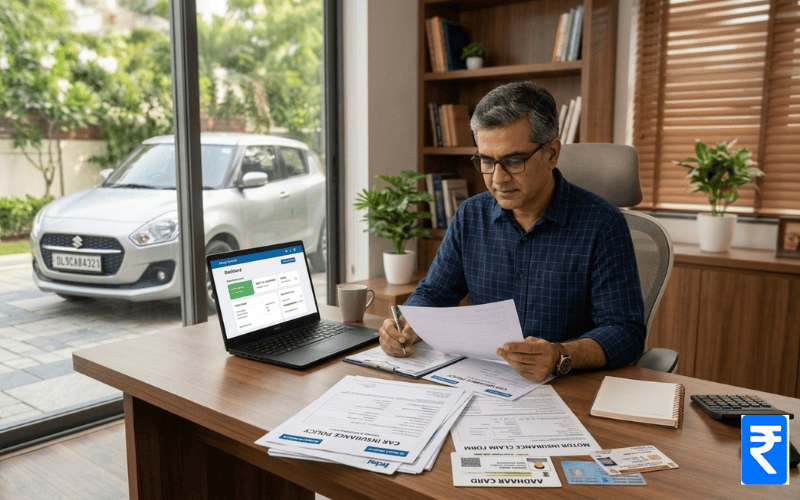
Owning a car in India involves legal and financial liabilities. Among these, maintaining valid motor insurance and keeping the necessary documents readily available is obligatory under Indian law. Yet, numerous vehicle owners are doubtful about what documents they should carry, what each document represents, and why it matters. The confusion frequently arises around the term car insurance paper, which can relate to multiple insurance-related documents issued by insurers.
This comprehensive companion explains every important document associated with motor insurance in India, its legal status, and its practical purpose. Whether you’re buying a new policy, renewing an existing policy, or filing a claim, understanding your car insurance paper requirements ensures you remain compliant and financially defended.
Table of Contents
- Why Car Insurance Documentation Matters in India
- Role of Insurance Regulatory and Development Authority of India in Regulating Car Insurance Documentation
- Key Car Insurance Documents in India
- Insurance Policy Document
- Certificate of Insurance
- Policy Schedule
- Premium Payment Receipt
- Claim Form
- Endorsement Documents
- No Claim Bonus (NCB) Certificate
- Importance of IDV in Car Insurance Documents
- Physical vs Digital Car Insurance Paper
- What Documents Must You Carry While Driving?
- Importance During Accidents
- Renewal and Updated Documentation
- Transfer of Car Insurance During Vehicle Sale
- A Quick Look at the Car Insurance Paper Requirement
- Common Mistakes in Managing Car Insurance Paper
- How to Verify Your Insurance Authenticity
- How Long Should You Retain Insurance Documents?
- What Happens If You Lose Car Insurance Documents?
- Legal Consequences of Driving Without Insurance
- Why Reviewing Policy Wording Matters
- Grievance Redressal and Policyholder Rights
- Conclusion
- FAQs
Why Car Insurance Documentation Matters in India
Under the Motor Vehicles Act, it’s obligatory for every motor vehicle on Indian roads to have at least third-party insurance coverage. Driving without valid insurance can result in forfeitures, penalties, and indeed, imprisonment in certain cases. Having insurance isn’t enough. You must also be able to prove that you have valid coverage when asked (like during a traffic check or after an accident). This is where maintaining proper car insurance paper requirements becomes important. These documents serve as legal evidence of content, help during claim agreements, and cover you during roadside examinations or accidents.
Role of IRDAI in Regulating Car Insurance Documentation
The Insurance Regulatory and Development Authority of India (IRDAI) is the apex body overseeing insurance operations in India. It ensures that insurers follow standardized practices, maintain transparency, and cover policyholders’ interests. IRDAI authorizations clearly display the terms, rejections, premiums, and claim procedures within every car insurance policy issued. It also regulates the digital allocation of programs and sets rules for grievance redressal. By administering compliance and consumer-friendly guidelines, IRDAI strengthens trust in the insurance ecosystem and ensures that policy documents remain fairly valid, transparent, and easy to understand for vehicle owners across the country.
Key Car Insurance Documents in India
The term car insurance paper typically includes the following essential documents:
Insurance Policy Document
The insurance policy document is the most comprehensive car insurance paper issued by your insurer. It outlines:
- Policy number
- Type of content (third-party or comprehensive)
- Policy period
- Ensured Declared Value (IDV)
- Premium paid
- Add-ons (if any)
- Terms and conditions
- Rejections
- Claim procedures
This document is basically the contract between you and the insurance company. It defines what’s covered, what isn’t covered, and under what circumstances a claim may be rejected.
Purpose
- Legal evidence of insurance content
- Reference document during controversies
- Explanation of content limits
Certificate of Insurance
The Certificate of Insurance is a fairly common car insurance paper needed under Indian law. Before, this was issued as a physical document. moment, insurers issue it digitally, and it can be stored on platforms like DigiLocker or mParivahan.
Purpose
- Serves as sanctioned evidence of third- party insurance
- Needed during business checks
- Obligatory under the Motor Vehicles Act
Still, presenting a digital copy is generally accepted, as per guidelines from the Ministry of Road Transport and Highways, if requested by a business officer.
Policy Schedule
The policy schedule is a detailed breakdown of your insurance plan. While part of the overall auto insurance paper, it specifically includes:
- Vehicle details (machine number, lattice number)
- Coverage details
- Add-on covers
- Deductibles
- IDV computation
Purpose
- Clarifies ultra-expensive factors
- Details ensured value
- Useful during claim computation
It’s especially important for comprehensive policies where multiple add-ons are included.
Premium Payment Receipt
The premium damage is proof that payment has been made for the policy. This auto insurance paper is important for account and duty documentation purposes.
Purpose
- Confirms active policy status
- Serves as fiscal evidence of payment
- Useful during controversies regarding policy activation
Insurers regulated by the Insurance Regulatory and Development Authority of India( IRDAI) are required to issue proper documentation upon damage to the premium.
Claim Form
When an accident occurs, the claim form becomes an essential part of the car insurance paper list. It’s submitted to initiate the claims process.
It generally requires:
- Policy number
- Details of the accident
- Date, time, and position
- FIR (if applicable)
- Photos
- Form estimates
Purpose
- Sanctioned request for claim agreement
- Record of incident details
- Base for insurer’s disquisition
Failure to give accurate details may result in claim rejection.
Endorsement Documents
Signatures are variations made to a policy. For example:
- Change in address
- Transfer of power
- Addition of accessories
- Correction of particular details
Each countersign generates streamlined car insurance paper reflecting the revised terms.
Purpose:
- Ensures policy accuracy
- Updates risk profile
- Prevents claim disputes
No Claim Bonus (NCB) Certificate
No Claim perk is a price for not making claims during a policy year. However, you need an NCB instrument as supporting car insurance paper if you switch insurers.
Purpose
- Helps transfer NCB benefits
- Reduces renewal decoration
- Confirms claim-free history
As per IRDAI guidelines, NCB can range from 20 to 50, depending on successive claim-free times.
Importance of IDV in Car Insurance Documents
Ensured Declared Value (IDV) is one of the most critical numbers mentioned in your auto insurance paper. It represents the maximum quantum you can claim if your vehicle suffers total loss or theft. IDV is calculated based on the manufacturer’s listed selling price minus depreciation. An advanced IDV increases decoration costs, while a lower IDV reduces decoration but may result in shy compensation. Reviewing IDV during purchase or renewal ensures accurate fiscal protection. Incorrect IDV selection can lead to controversies at claim time, making it essential to understand this value easily within your policy schedule.
Physical vs Digital Car Insurance Paper
In recent times, India has shifted toward digital documentation. The Insurance Information Bureau of India maintains insurance records electronically.
Digital Insurance Documents are Valid
According to government announcements, digital clones stored in DigiLocker or mParivahan are fairly respectable during business examinations.
Advantages
- No threat of physical damage
- Easy reclamation
- Reduced paperwork
Still, keeping offline access may be helpful in low-network areas.
What Documents Must You Carry While Driving?
In addition to your car insurance paper, Indian motorists must carry
- Registration Certificate (RC)
- Driving License
- Pollution Under Control (PUC) instrument
Business authorities may request any of these during checks.
Importance During Accidents
During an accident:
- Inform the insurer immediately.
- Submit a claim- related auto insurance paper instantly.
- Give FIR dupe if needed.
Detainments or deficient documentation can lead to claim detainments or rejection.
Renewal and Updated Documentation
During renewal, you may need:
- Review IDV
- Check add-ons
- Confirm NCB
- Corroborate the policy period
Always download and store the streamlined car insurance paper after renewal evidence.
Transfer of Car Insurance During Vehicle Sale
When dealing with your vehicle, transferring the insurance policy to the new owner is fairly obligatory under the Motor Vehicles Act. The car insurance paper must be streamlined within 14 days of the power transfer. The buyer must submit a transfer request, revised enrollment instrument, and necessary KYC documents to the insurer. Failure to transfer the policy may produce claim complications, especially in third-party liability cases. Proper countersign ensures that content remains valid and arrears are easily assigned. Both buyer and dealer should retain copies of transfer-related documents for future reference.
A Quick Look at the Car Insurance Paper Requirement
Before you purchase your car insurance, take a quick look at the documents required.
| Buying New Car Insurance | Policy Renewal | Claim Settlement | While Driving | Policy Transfer |
| Registration Certificate (RC) copy | Existing Car Insurance Policy copy | FIR copy from police | Valid Insurance Policy copy | Original Car Insurance Policy |
| Identity & Address Proof (PAN/Aadhaar) | Car RC copy | Policy document | Valid RC copy | RC Transfer Proof (Form 29/30) |
| Vehicle invoice/sale certificate | Valid PUC Certificate | Driving License copy | Valid Driving License | Sale Agreement |
| PUC Certificate (if applicable) | Identity & Address Proof | Photos of damaged vehicle | Valid PUC Certificate | New Owner ID Proof |
| Passport-sized photographs | NCB Certificate (if applicable) | Repair bills/estimates | – | NOC from the previous owner |
Common Mistakes in Managing Car Insurance Paper
While managing car insurance documents, here are some common mistakes to avoid:
- Not Checking Policy Details Thoroughly: Your claim may be rejected if coverage gaps or exclusions are overlooked. Always review inclusions/exclusions before renewal.
- Ignoring Renewal Document Updates: Doing this can cause policy lapses or invalid coverage. As a result, you might be fined or have no protection during accidents.
- Losing NCB: If you lose your NCB, you will have to pay higher premiums on renewal.
- Assuming The Digital Copy Is Automatically Available: Digital dupes may expire or not transfer. This can lead to delays in claims or renewals.
- Not Reviewing Documents Timely: Misses changes in IDV, add-ons, or NCB, can lead to under-coverage or overpayment.
- Missing Renewal Deadlines: A policy lapse beyond the grace period resets your NCB to zero. It also exposes you to legal penalties.
- Not Transferring NCB While Switching Insurers: If you fail to transfer the NCB, you will lose all accumulated discounts.
Regular review ensures fiscal protection and compliance.
How to Verify Your Insurance Authenticity
Vehicle owners can corroborate policy details via:
- IIB portal
- Insurer’s functionary website
- The VAHAN portal is managed by the government
- The Parivahan Sewa Portal
- The mParivahan Mobile App
Always ensure your car insurance paper list reflects the correct vehicle details.
How Long Should You Retain Insurance Documents?
Experts recommend keeping:
- Active policy documents
- At least 2 – 3 times of departed policy clones
- Claim agreement letters
These records may be needed for controversies or NCB transfers.
What Happens If You Lose Car Insurance Documents?
If the physical car insurance paper is lost:
- Download digital dupe from insurer portal
- Access DigiLocker
- Contact the insurer for indistinguishable
Most insurers give online reclamation without fresh charges.
Legal Consequences of Driving Without Insurance
Under the Motor Vehicles Act:
- Fine up to ₹ 2,000 for first offense
- Advanced penalties for reprise offences
- Possible imprisonment
Maintaining streamlined car insurance paper prevents legal complications.
Why Reviewing Policy Wording Matters
Insurance controversies frequently arise from misreading rejections similar to:
- Driving under the influence
- Mechanical breakdown
- War or nuclear pitfalls
Reading your car insurance paper precisely reduces surprises during claim agreement.
Grievance Redressal and Policyholder Rights
Still, detention or incorrect documentation may arise if controversies arise regarding claim rejection. Originally, complaints should be raised with the insurer’s grievance cell. However, matters can be escalated to the Insurance Ombudsman under guidelines framed by the Insurance Regulatory and Development Authority of India, if undetermined. Maintaining proper car insurance paper strengthens your position during disagreement resolution. Policyholders have the right to transparent communication, fair assessment, and time- bound claim agreement. Mindfulness of these rights ensures better protection and responsibility within India’s regulated motor insurance framework.
Conclusion
Car insurance proof is more than a formality; it’s a legal demand and a financial safeguard. Every auto insurance policy serves a distinct purpose, from proving compliance to enabling claim agreement and conserving perk benefits.
Indian vehicle owners should maintain streamlined digital and physical copies, review policy details annually, and ensure delicacy in signatures. Proper document operation minimises legal threat, reduces chances of claim rejections, and supports financial protection.
Understanding these documents empowers policyholders to navigate India’s insurance framework confidently and responsibly.
FAQs
1. Is a digital copy of car insurance valid in India?
Yes. Digital copies stored in DigiLocker or mParivahan are legally valid as per government guidelines. Traffic police generally accept electronic documentation during inspections.
2. What is the difference between a policy document and a certificate of insurance?
The policy document contains complete terms and coverage details, while the certificate of insurance serves as legal proof of mandatory third-party coverage.
3. Can I transfer my No Claim Bonus to a new insurer?
Yes. You must provide the NCB certificate issued by your previous insurer. The benefit applies to the policyholder, not the vehicle.
4. What should I do if I find incorrect details in my policy?
Contact your insurer immediately and request an endorsement. Updated documentation will be issued reflecting corrected information.
5. How soon should I inform the insurer after an accident?
You should inform the insurer immediately or within the timeframe mentioned in the policy document. Prompt reporting helps avoid claim rejection.
Yes. Digital copies stored in DigiLocker or mParivahan are legally valid as per government guidelines. Traffic police generally accept electronic documentation during inspections.
The policy document contains complete terms and coverage details, while the certificate of insurance serves as legal proof of mandatory third-party coverage.
Yes. You must provide the NCB certificate issued by your previous insurer. The benefit applies to the policyholder, not the vehicle.
Contact your insurer immediately and request an endorsement. Updated documentation will be issued reflecting corrected information.
You should inform the insurer immediately or within the timeframe mentioned in the policy document. Prompt reporting helps avoid claim rejection.