

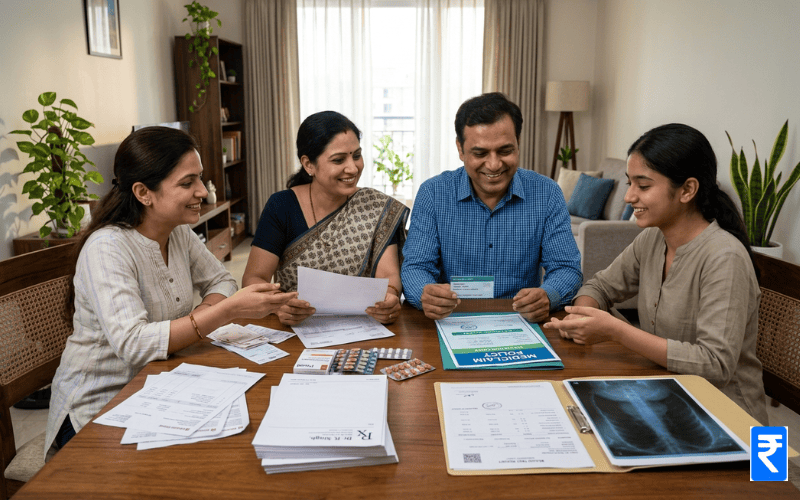
Health insurance featuring OPD cover, in particular, has been a rising trend amongst Indian households as a tool for securing financial safety against the rapidly escalating medical expenses. Most normal health insurance plans mainly cover hospital stays. Because of this, costs like doctor visits, tests and medicines are usually not covered. These are called outpatient expenses. Health insurance with OPD cover goes one step further. It helps pay for these day-to-day medical costs. This makes regular healthcare more affordable and easier to manage.
This write-up introduces OPD cover in an elaborate way, telling its definition, usage, advantages, drawbacks, general exclusions, and tips for selecting a suitable plan. The aim is to help you understand how a health insurance plan customised with OPD cover can reduce your regular healthcare spending.
Table of Contents
- What is Health Insurance with OPD Cover?
- Why is OPD Cover Important in India?
- How Does Health Insurance With OPD Cover Work?
- Reimbursement Basis
- Cashless Facility Through Network Providers
- Benefits of Health Insurance With OPD Cover
- Reduce Your Own Spending
- Motivates Preventive Healthcare
- Helps in Chronic Conditions
- Costs and Considerations
- Typical Exclusions in OPD Cover
- Who Should Consider Health Insurance With OPD Cover?
- How to Choose the Right OPD Cover Plan
- Conclusion
- FAQs
What is Health Insurance with OPD Cover?
Health insurance with an OPD cover gives coverage for the outpatient department (OPD) expenditure.
OPD costs usually comprise:
- Doctor consultation fees
- Diagnostic tests like blood tests, X-rays and scans
- Prescription medicines
- Specialist consultations
- Vaccinations and preventive health checkups
In traditional health insurance plans, these OPD expenses are usually not covered. So, many still spend money from their own pocket even if they have insurance.
With this cover, you can either get money back for these expenses or use cashless services. It depends on your policy.
Why is OPD Cover Important in India?
In India, a large share of healthcare spending goes towards outpatient services. Based on the National Health Accounts statistics prepared by the Government of India, outpatient care constitutes a major portion of the total healthcare expenditure.
OPD cover matters mainly because:
- Many illnesses, like diabetes and high blood pressure, need regular doctor visits
- Test costs and doctor fees are rising, especially in private hospitals
- Early checkups help you detect diseases early and avoid higher costs later
Therefore, health insurance that comes with OPD cover can be a great help in reducing the financial pressure of routine medical care.
How Does Health Insurance With OPD Cover Work?
OPD cover can work in two primary ways:
- Reimbursement Basis
The policyholder pays the OPD bills upfront and later submits bills and prescriptions to the insurer to claim reimbursement up to the OPD limit.
- Cashless Facility Through Network Providers
Some insurers offer cashless OPD services at network clinics and diagnostic centres, where the insurer settles the bill directly with the provider.
Example of typical OPD benefits:
| Benefit Component | What It Covers |
| Consultation Fees | General physician and specialist visits |
| Diagnostics | Blood tests, imaging (X-ray/USG) |
| Medicines | Prescribed medicines up to the policy limit |
| Vaccinations | Routine immunisations, as per policy |
Most health insurance policies with OPD cover specify:
- Annual OPD limit: It can be like ₹5,000 to ₹20,000 per year
- Sub-limits for categories: It can be like for consultations, ₹2,000 and for medicines, ₹3,000
- Co-payment: A percentage of the claim that the policyholder must bear
Benefits of Health Insurance With OPD Cover
Health insurance policies that are customised with an OPD cover can help you save money in many ways:
- Reduce Your Own Spending
Just the costs of regularly visiting the doctor, getting tests done, and buying medicines will pile up very quickly. OPD cover helps you by paying these costs or reimbursing them.
- Motivates Preventive Healthcare
Since tests and checkups are covered, many are more likely to take early care and avoid serious illness later.
- Helps in Chronic Conditions
People with long-term conditions like diabetes or asthma need regular care. OPD cover helps you in managing these ongoing costs.
Costs and Considerations
While OPD cover offers clear advantages, there are also practical considerations:
- Higher Premiums: Policies with OPD benefits generally cost more than basic hospitalisation-only plans.
- Annual and Sub-Limits: OPD benefits typically have annual limits. Once the limit is exhausted, the rest of the costs must be paid by the policyholder.
- Waiting Periods: Some plans impose waiting periods before OPD benefits start. It can be like 30 to 90 days.
- Co-Payment Clauses: Certain policies require co-payments on OPD claims. This means you may need to pay a small part yourself. It can be like 10 to 20%.
- Not a Substitute for Medication Plans: OPD cover is not the same as specialised pharmacy benefit plans. Claim approval requires valid prescriptions and documentation.
Typical Exclusions in OPD Cover
Most health insurance plans with OPD cover do not include:
- Cosmetic treatments
- Non-prescribed medicines
- Alternative treatments not approved by the insurer
- Expenses during the waiting period for pre-existing diseases
It is advisable to skim through the policy documents carefully before you make a decision. It helps you to find out all the correct inclusions and exclusions.
Who Should Consider Health Insurance With OPD Cover?
OPD cover is useful for:
- Families with children who need regular doctor visits
- People with chronic illnesses
- Older adults needing frequent checkups
- People who prefer preventive healthcare
If you are young and rarely visit doctors, the extra premium may not be worth it. The benefits may be of no use.
How to Choose the Right OPD Cover Plan
When selecting a health insurance plan with an OPD cover, you need to check:
- Annual OPD limit
- Sub-limits for each category
- Network hospitals and clinics
- Ease of claim process
- Premium vs benefits
- Waiting period and exclusions
Always compare different plans before you make a decision.
Conclusion
Health insurance with OPD cover is helpful for managing everyday medical costs in India. While normal insurance covers hospital stays, OPD cover helps you with regular doctor visits, tests and medicines. It is especially useful for people with frequent medical needs. However, it comes with higher premiums and limits. So, it is always important for you to check all the details before buying.
Choosing the right health insurance depends on your health needs. It also looks at how often you use medical services. Do a careful comparison, as it can help you save money. This way, you can get easier access to timely outpatient care services.
FAQs
-
What is health insurance with OPD cover?
Health insurance with OPD cover means a health insurance policy that covers your hospitalisation expenses. Along with that, it also covers routine medical costs. It includes doctor consultations, diagnostic tests and pharmacy bills. You get all these up to a specific annual limit.
-
Does OPD cover include prescription medicines?
Yes. In general, the majority of the health insurance plans with an OPD cover allow only prescription medicines to be reimbursed or given cashless up to the limit specified. However, the medicines must be prescribed by a registered medical practitioner, and the correct bills and supporting documents must be submitted.
-
Is OPD cover mandatory in health insurance?
No. OPD cover is not mandatory. Many regular health insurance policies provide only hospitalisation benefits. OPD cover is an optional feature. It can be added to increase your coverage for day-to-day medical needs.
-
How often can I claim OPD expenses?
You can claim your expenses on OPD as many times as you require within a policy year, subject to the annual OPD limit and any other limit set by the insurer.
-
Can I get cashless OPD services?
Certain insurance companies provide cashless OPD facilities through their clinics and diagnostic partners. There, the insurer settles the amount directly. In other cases, you may submit original bills and prescriptions for a reimbursement claim.