

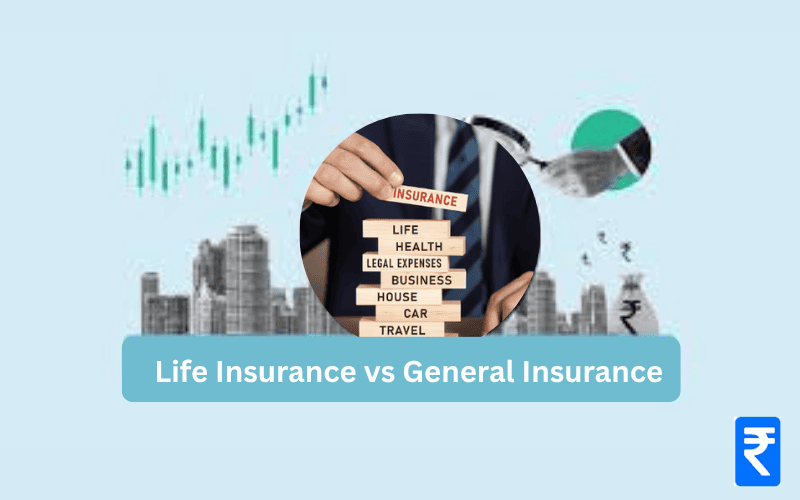
Insurance is a cornerstone of wise money management. It shields you, your loved ones, and your possessions from the financial hits that come with life’s curveballs. In this article, you will see the difference between life insurance and general insurance. You’ll discover their benefits, differences and when you should choose each.
Table of Contents
- What is General Insurance?
- Types of General Insurance Policies
- Health Insurance
- Motor Insurance
- Home Insurance
- Travel Insurance
- Benefits of General Insurance
- What is Life Insurance?
- Types of Life Insurance Policies
- Term Life Insurance
- Whole Life Insurance
- ULIPs (Unit Linked Insurance Plans)
- Endowment Plans
- Money-back Policies
- Critical Illness Plans
- Benefits of Life Insurance
- Key Differences Between Life Insurance and General Insurance
- When to Choose Life Insurance
- When to Choose General Insurance
- What is Claims Process Comparison
- Life Insurance Claim Process
- General Insurance Claim Process
- Documents Required for Claims
- Life versus General Insurance
- Conclusion
- FAQs
What is General Insurance?
General coverage steps up for non-life risks. Think about houses, cars, wellness or vacations. If something unexpected happens, like floods, fires, robberies, wrecks or accidents, it refunds your losses so you can bounce back fast.
This setup shields your finances from surprise hits, giving you real peace of mind. Many policies let you tack on extras, such as third-party liability or protection for unique risks, to boost your safety net even more.
Types of General Insurance Policies
The following are the types of general insurance policies:
- Health insurance
Health insurance coverage can be used to pay for hospital stays and care during health crises. From pre-hospital costs to post-discharge follow-ups, it takes on doctor bills, procedures, prescriptions, and plenty more.
You also get support for your room charges and ICU stays. You can add extras like cover for serious illnesses, cash for hospital stays, maternity help or other options needed.
- Motor insurance
Insurance for autos, lorries, or motorcycles shields you from repair costs or full replacements. You can choose from comprehensive cover, simple third-party or self-damage cover, based on what is needed for your vehicle. There are also special options available for business or company vehicles. Pays for collisions, theft, fires, floods, or civil unrest.
Note: Third-party coverage is mandatory by law for driving on public streets.
The main types are:
- Comprehensive insurance: This plan shields your car from theft, severe weather etc.
- Third-party insurance: It handles damages your vehicle causes to others in an accident, covering injuries, fatalities, or property harm.
- Home Insurance
Defends your residence and possessions against unforeseen damage. With this, you can choose coverage for your building or interiors. Includes safeguards for burglary, flames, water surges, tremors, and additional calamities.
- Travel insurance
Travel insurance helps you handle unexpected costs and problems during your trip. It takes on medical crises, missing luggage, canceled trips, or delayed flights. Different plans offer different levels of coverage, so you can choose what suits your needs and travel.
Benefits of General Insurance
Shield from Surprises
General insurance helps you to reduce the financial hit from sudden shocks like accidents, theft or medical emergencies.
True Peace of Mind
Knowing you’re covered means no massive money drain during emergencies.
Customised Coverage
These policies can be made to fit your life. It can be for health needs, car safeguards, home protection or whatever suits you best.
What is Life Insurance?
Life insurance is a contract between an individual and a company. The person pays regular premiums. In return, the company gives a fixed amount of money to the family or nominee after the death of the policyholder. This amount is called the death benefit.
More importantly, life insurance provides the client’s family with a way to sustain at least a very basic lifestyle. It supports them so they do not face money problems after losing the earning person.
Types of Life Insurance Policies
Life insurance comes in different types. It can be term plans, whole life, universal life and variable options. They differ by time length, payment style, and savings features. These options are made to fit your money goals and situation.
Lots of policy types are out there, each designed for certain needs; for example, here are some top ones:
Term life insurance
Term life offers coverage for a fixed time. It can be like 10, 20 or 30 years. The payout is the lump sum to beneficiaries only if death occurs in that window. These plans carry lower premiums compared to other life options since protection ends after the term.
Whole life insurance
Whole life insurance locks in protection for your entire life. Premiums run higher than term plans since you’re covered no matter what. If you outlive the policy, you pocket a lump-sum payout at maturity. If anything happens to you, your beneficiary gets the full sum assured.
ULIPs (Unit Linked Insurance Plans)
It combines life cover with investment opportunities. They let you secure protection while channeling funds into options aligned with your comfort level for risk, steadily growing your savings and assets.
Part of your premium funds the insurance. The rest fuels investments in equities, bonds, hybrids, or what your mix aims for. After the 5-year lock-in, you can dip into partial withdrawals and switch funds easily. This is especially useful for shifting from high-risk growth options to safer debt funds as your goals come near.
Endowment plans
Endowment plans, much like ULIPs, deliver life coverage while helping you stack up savings for big life milestones. The main difference is that they promise guaranteed returns, with part of your premium securing the death benefit and the rest parked in safe, low-risk spots.
If the policyholder dies, the family gets money. If the person survives the term, they get the full amount with a bonus. It’s a smart way to knock out both insurance needs and steady investing.
Money-back policies
Money-back policies work a lot like endowment plans, but with a twist. They hand over cash at set points during the term. For example, in a 15-year policy, you may receive a portion at the end of the 5th and 10th years.
At the end, you still get the full maturity benefits plus any bonuses. It’s great for regular liquidity without surrendering the whole plan.
Critical Illness Plans
Gives you a big amount of money if diagnosed with something serious like cancer, stroke, or heart attack. Helps you pay doctor bills, cover lost pay, or handle basics.
Benefits of Life Insurance
- Protection for your loved ones: It safeguards your family if you are not there
- Tax perks: Payouts are usually tax-free for the family
- Savings and growth built in: Some plans also help you save and grow money over time
Key Differences Between Life Insurance and General Insurance
Here is a table to understand the difference between life insurance and general insurance clearly; for instance, it highlights key distinctions at a glance:
| Aspect | Life Insurance | General Insurance |
| Purpose | Gives money to the family after death | Covers losses like accidents or theft |
| Payout | Fixed amount | Based on actual loss |
| Duration | Long-term or lifetime | Short-term and renewing yearly |
| Tax Benefits | Death payouts are often tax-free | Some premiums |
| Risk Covered | Life risk | Property, health, travel and vehicle |
| Savings | Some plans include savings | No savings, only protection |
| Renewal | Not needed often | Needs yearly renewal |
When Should You Choose Life Insurance
You should choose life insurance when:
- You have a family that depends on your income
- You want to protect your family’s future
- You want long-term financial support
- You want to plan for future goals
When Should You Choose General Insurance
You should choose general insurance when:
- You want protection from sudden expenses
- You want to cover health, car or home risks
- You want help with emergency costs
- You want short-term protection
What is The Claim Process of Life Insurance and General Insurance
Claims for life and general insurance take different routes; for example, life insurance tends to feel simpler.
Life Insurance Claim Process
- Reach out first: Fill and submit the official claim form.
- Hand over must-haves: Include your policy copy, death certificate (if applicable), and the beneficiary’s photo ID.
- Check and clear: The company reviews everything and approves if all’s good.
- Cash in: Payout lands straight with the beneficiary.
General Insurance Claim Process
- Call them ASAP: Inform the company quickly.
- Bundle your proofs: Submit bills, receipts, FIR and photos.
- On-site check: Insurer’s assessors visit to evaluate and validate the claim.
- Get compensated: The approval amount is paid.
Documents Needed for Claims
Having the correct documents in hand speeds up insurance claims across any policy. Quick look at life vs. general insurance side-by-side; for example, here’s a simple comparison:
Life Insurance Claims
- Policy document
- Death certificate (for death claims)
- Beneficiary’s ID proof
- Any extras the insurer requests
General Insurance Claims
- Filled claim form
- Relevant bills of hospital, repairs, etc.
- FIR (if theft or incident applies)
- Photos of damage
- Policy details, tailored to the claim type
Life versus General Insurance: Rationale for Acquiring Both
Although similar in intent, these insurance categories address different risks.
- Life Insurance
It provides long-term financial security for your family. They help cover daily expenses, pay off debts, support education and meet future goals. Different types of policies often include savings or investment benefits as well. They can be term, endowment, ULIPs etc.
- General Insurance
Addresses contemporary hazards, including medical conditions, vehicular collisions, property impairment, larceny, or travel disruptions. These are annual renewable contracts that cover only the actual loss. It does not include any savings or investment features.
Concise Comparison
- Life: Ensures prospective security for dependents.
- General: Preserves present assets and routine existence.
Rationale for Integration
Use both types of insurance. It gives you complete protection. Life insurance supports your family in the long term; therefore, it helps secure their financial future. General insurance helps you handle sudden and unexpected expenses. Conduct a thorough review of obligations, revenue, exposures, and ambitions, followed by professional consultation. This way, you can stay financially secure now and in the future; therefore, you can handle both present and long-term needs with confidence.
Conclusion
Now you clearly understand the difference between life insurance and general insurance; therefore, you can make a more informed decision. Life insurance protects your family after your death. General insurance protects your money from sudden loss during your life.
Choose insurance based on your needs, income, and risks; therefore, you can ensure better financial protection. For full safety, it is always better to have both.
FAQs
1. What is the main difference between life insurance and general insurance?
Life insurance provides payouts for your family upon death or maturity. General covers actual losses from damage, health, or liability.
2. How do premiums differ?
Life insurance requires regular payments over the years. General insurance is typically a single upfront fee for the policy term, like car or travel. This is how their premiums differ.
3. Do life insurance and general insurance offer the same kind of claim benefit?
No. Life insurance and general insurance do not offer you the same kind of claim benefit. Life insurance typically pays out a fixed sum assured. It is either death or maturity for certain plans. General insurance, though, compensates only for actual losses from covered events, like car repairs or hospital bills, rather than a set payout.
4. Can life insurance include investments, unlike general insurance?
Yes. Some plans combine protection with savings or investments. This means you get returns if you live longer. On the other hand, general insurance is fully about covering losses from unexpected events and does not offer any benefits.
5. Is life insurance long-term while general is short-term?
Yes. Life insurance is meant for the long term. It can last for many years, decades or even your entire lifetime. General insurance is usually short-term. It lasts about a year, then renews for daily risks.