

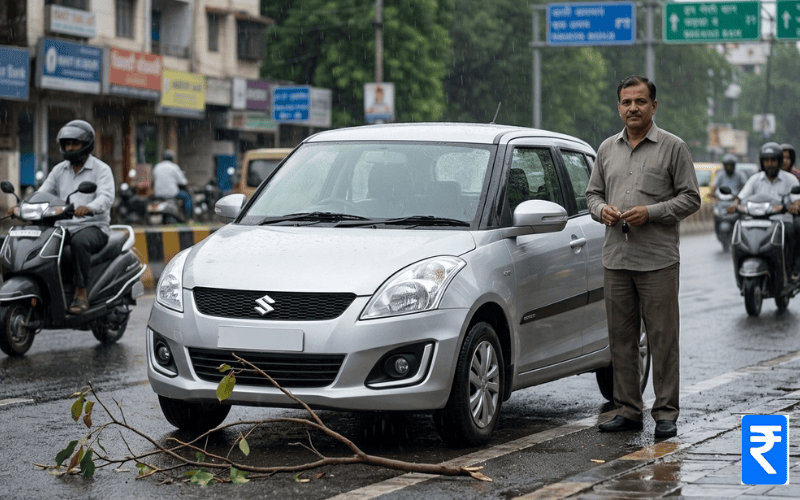
With the increasing number of vehicle users around the country, having car insurance with broader coverage may be a smart investment. It can provide the necessary protection in times of financial loss. There are different types of car insurance policies that cover damages to third parties and the insured vehicle, one of which is comprehensive car insurance.
This article explores the comprehensive car insurance meaning, what it covers, and its benefits. It explains how insurers calculate premiums under a comprehensive car insurance policy. It also covers exclusions and add-on options that enhance protection.
Comprehensive Car Insurance: Complete Guide
A comprehensive car insurance policy is a single package plan that offers coverage to both third-party liabilities and own damages. Unlike third-party only insurance, which is mandatory for car owners in India, this plan, rather than being mandatory, exists as an optional protective net that can help policyholders cover damages caused and incurred without splitting the premium between two different plans.
The coverage under this policy includes third-party damages, including death and disability caused by accidents, and own damage vehicle repair or replacement costs in case of partial and total loss. It also offers personal accident cover for the owner or driver of the insured car for injuries or death due to road accidents. This plan suits car owners who want wider coverage for both third-party and own damage. It combines both protections under one comprehensive plan.
What Does Comprehensive Car Insurance Cover?
Following the brief explanation of comprehensive car insurance meaning the section below discusses the coverage details of this plan.
Third-Party Liability Cover
A third-party liability cover is mandatory under the Motor Vehicles Act for car owners in India. A comprehensive plan provides third-party coverage that includes damages caused to a third-party vehicle involving the insured car, death, and permanent disability to the third-party person.
Own Damage Cover
A comprehensive car insurance plan also covers damages incurred to the insured vehicle apart from the mandatory third-party liability cover. It covers damages sustained by the insured car due to accident, fire, natural disaster, and manmade hazards that include damages caused by strikes, riots, and terrorist activities. The plan also provides compensation in case of total loss arising out of theft or heavy damage when repair costs exceed 75% of the IDV.
Personal Accident Cover
A personal accident cover is also provided under a comprehensive car insurance policy. This cover offers compensation up to 15 lakhs for death or permanent disability of the driver or the insured car owner. The compensation amount may vary depending on the policy terms and the sum insured.
What Does Comprehensive Car Insurance Not Cover?
A comprehensive car insurance plan covers third-party liabilities, own damage, and personal accidents. However, it does not cover certain factors under the policy. The following is a brief explanation of factors not covered under this policy.
- Driving Without a License: Every vehicle owner in India is legally required to possess a license to drive on roads. If neglected, the individual responsible will be fined or might even get imprisonment for up to 3 months. The plan does not cover any damages or losses incurred if the driver is found driving without a valid license.
- Drunk Driving: Driving under the influence of alcohol or any drugs is a punishable offence under the law. Damages or losses incurred by intoxicated driving are not covered under this plan.
- Mechanical or Electrical Breakdown: This policy does not cover repair or replacement costs caused by mechanical or electrical breakdown. The policyholder must pay these expenses.
- Wear and Tear: Normal wear and tear is a common exclusion in car insurance policies. Any repair expenses caused by normal wear and tear should be paid by the insured themselves.
- Consequential Damages: A comprehensive car insurance policy generally does not cover consequential damages. This includes tyre damage during towing or damage caused by driving after an oil leak.
- Depreciation: A certain percentage of depreciation applies to the insured car with usage. This policy does not cover the depreciation value unless a policyholder has a zero depreciation cover.
Add-On Covers to Enhance Protection
Comprehensive car insurance policies also offer add-ons to enhance the policy experience of the policyholders. After understanding the comprehensive car insurance meaning, the next step is to learn about the add-ons offered under this plan.
- Zero Depreciation cover: As the insured car ages, the value of the car decreases. This drop in the value of a car is depreciation. However, with a zero depreciation add-on, the policyholder gets full coverage on repairs and replacements without depreciation.
- Return to Invoice: This add-on allows the policyholder to get the original invoice amount in case of total loss by theft or heavy damage where the repair costs exceed 75% of the car’s Insured Declared Value. You will receive the original amount, including registration fees and road tax. The insurer will not deduct depreciation based on IDV.
- Engine Protection Cover: It is an add-on that covers the damage incurred to the engine due to oil or water ingress.
- Road Assistance: This add-on provides coverage for emergency repairs like a car breakdown in the middle of the road, a flat tyre, and towing services.
- No Claim Bonus Protection: When a policyholder has a claim-free year, the insurer offers No Claim Bonus as a discount on the renewable premium. This add-on helps you protect accumulated NCB from resetting to zero when a claim is made.
- Consumables Cover: This add-on covers all consumables, such as washers, nuts, coolants, bolts, and engine oil, etc.
- Key Replacement Cover: When a policyholder loses their keys, this add-on covers the cost of replacing the keys.
How is the Premium Calculated?
The following section answers the comprehensive car insurance meaning and the factors that affect the policy premium. The factors below determine the premium of a comprehensive car insurance policy.
- Insured Declared Value: This is the market value of the car and also the maximum amount the car is insured for.
- Age and Model of the Car: Car premiums can be higher for new and high-value cars since the repair and replacement costs might be expensive.
- Location: The location where the car is used also affects the premium. Cars driven in metropolitan cities face higher risks due to heavy traffic.
- Add-On: Add-ons cost more than the standard base policy premium. The premium might be higher for policyholders with optional add-on coverage.
- No Claim Bonus: NCB has an impact on the renewable premium as they apply as a discount, reducing the premium cost by a certain percentage.
- Deductibles: Voluntary deductibles mean the insured agrees to pay a fixed amount. This reduces the premium. Since a certain sum of the claim is borne by the insurer themselves.
Benefits of Comprehensive Car Insurance
The following are the benefits of a comprehensive car insurance policy.
- Single package: Comprehensive policy offers coverage to both third-party liability and own damage or loss in a single plan. This can be beneficial to policyholders as it combines both coverages in one plan, offering mandatory cover and personal damage cover for wider protection.
- Cashless Claims: A comprehensive car insurance policy offers the benefit of cashless claims. The insurer facilitates this when repairs are done at network garages.
- No claim Bonus: A comprehensive plan offers no claim bonus to policyholders when they have a claim-free year or years. This helps them have a discounted premium on renewal.
- Add-on: The various add-ons offered under this plan allow policyholders to customize their coverage depending on their financial needs and the extent of protection they are seeking.
Who Should Buy Comprehensive Car Insurance
A comprehensive car insurance policy is suitable for car owners who want broader financial protection beyond the basic legal requirement. It may be a good choice for:
- New Car Owners: New cars have a higher market value, and repair or replacement costs can be expensive. A comprehensive plan helps protect this investment.
- Owners of High-Value or Luxury Cars: Premium vehicles often come with higher repair costs, making wider coverage more practical.
- Frequent or Daily Drivers: If you use your car regularly, the chances of accidents or minor damages increase, making comprehensive coverage more useful.
- Residents of Urban or High-Traffic Areas: Driving in crowded cities increases the risk of collisions, theft, or minor damage.
- Those Seeking Complete Protection: If you prefer peace of mind and want coverage for both third-party liabilities and your own vehicle, a comprehensive plan can be a suitable option.
Claim Process
Filing a claim under a comprehensive car insurance policy involves a few standard steps. Understanding the process can help ensure a smoother experience:
- Step 1: Inform the insurer.
- Step 2: File an FIR, if required, for instance, in case of an accident.
- Step 3: Submit required policy details, vehicle information, and photographs of the damage.
- Step 4: Wait for the insurer to complete the vehicle inspection.
- Step 5: Get repairs done at a network garage for a cashless settlement. Or choose a non-network garage, pay upfront, and apply for reimbursement.
Conclusion
A comprehensive car insurance policy offers broader protection by covering both third-party liabilities and damage to your own vehicle under a single plan. While it is not mandatory, it can significantly reduce financial risk in case of accidents, theft, or unforeseen events. With the flexibility to add extra coverage through add-ons and the benefit of long-term savings through No Claim Bonus, it can be a practical choice for car owners seeking more complete and reliable protection.
FAQs
How long is my comprehensive car insurance policy valid?
A comprehensive car insurance policy meaning a policy that covers third-party liability and own damage, is generally valid for one year, requiring renewal at the end of every year. But, there are insurers who offer a comprehensive car insurance policy valid up to 3 years or more.
Is comprehensive car insurance the same as bumper-to-bumper insurance?
No, a bumper-to-bumper insurance is a zero depreciation cover that covers the depreciated value of the car. Comprehensive car insurance is a policy that offers third-party liability and own damage cover in a single plan.
Is it compulsory to purchase a comprehensive car insurance plan?
Comprehensive car insurance is not mandatory under the law, unlike third-party insurance. But it is widely purchased for its wider coverage under a single policy.
What is covered under a comprehensive car insurance policy?
This plan covers damages from accidents, thefts, natural disasters, vandalism, and third-party liabilities, offering broader protection.
What is the difference between comprehensive car insurance and a third-party only policy?
A third-party policy provides coverage for damages caused to a third-party property or person, and a comprehensive plan covers both third-party liability and own damage losses.