

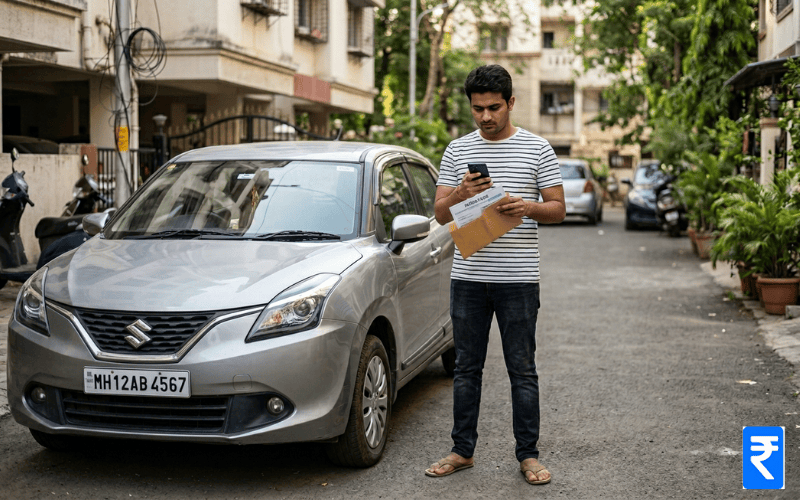
There is a common assumption among people that once an insurance policy is purchased, they become stress free. They believe that the documents are saved, the premium is paid, and the responsibility is mentally checked off. Insurance becomes important when something goes wrong, like an accident, a traffic stop, a claim, or a vehicle transfer. What seems clear on paper can feel confusing when you actually need to use it. When you check car insurance, it is about knowing what is covered, how long the policy is valid, and where the limits apply.
In India, car insurance follows a structured system. On paper, it looks simple. Yet, many details are often overlooked until a real situation brings them up.
This article explains how to check car insurance. It focuses on verifying policy details, coverage, and validity so you know exactly where you stand.
Table of Contents
- Why Checking Car Insurance Status Matters
- Avoiding Claim Rejections
- Preventing Policy Expiry Issues
- Helping During Car Sale or Purchase
- Reducing Fraud and Disputes
- Understand Before Checking Insurance
- Policy Details
- Coverage Information
- Policy Validity Status
- Why These Three Factors Matter
- What to Verify in Your Car Insurance Policy
- Policy Number and Insurer Details
- Policyholder and Vehicle Information
- Policy Type (Third-Party or Comprehensive)
- Add-ons and Coverage Features
- IDV (Insured Declared Value)
- Policy Start and Expiry Date
- How to Check Car Insurance Online
- Through Insurance Information Bureau (IIB)
- Via VAHAN Portal (Parivahan)
- Through Insurer Website or Mobile App
- Using DigiLocker Platform
- Through mParivahan App
- How to Check Car Insurance Offline
- Using Policy Documents
- Visiting Insurance Branch Office
- Through Insurance Agents or Brokers
- Checking via RTO Office
- Common Mistakes While Checking Car Insurance
- Checking Only Validity
- Ignoring Add-On Covers
- Not Reviewing Vehicle Details
- Assuming Automatic Renewal Coverage
- Overlooking IDV
- When Should You Check Your Car Insurance?
- Before Policy Renewal
- After Moving or Lifestyle Changes
- Before Buying or Selling a Car
- After Vehicle Modifications
- During Policy Updates or Market Changes
- Difference Between Policy, Coverage, and Validity
- What Is a Policy?
- What Is Coverage?
- What Is Validity?
- Why Understanding the Difference Matters
- What Happens If Insurance Details Are Wrong?
- Impact on Policy Verification
- Claim Rejection Risks
- Legal and Financial Consequences
- Legal Implications of Invalid Car Insurance
- Fines and Penalties
- Vehicle Seizure Risks
- Claim Rejection Scenarios
- Common Issues in Insurance Verification
- Policy Not Found
- Expired Policy Without Notice
- Incorrect Vehicle Details
- Data Update Delays
- Conclusion
- Frequently Asked Questions (FAQs)
Why Checking Your Car Insurance is More Important Than It Seems?
Insurance is often perceived as a one-time compliance activity. You buy it, save the document somewhere, and forget about it until renewal time. But in real life, things aren’t that static. Policies expire, terms get updated, and sometimes what you think is covered but actually isn’t.
That’s why one should check their insurance once in a while, even if nothing feels urgent. A few minutes of looking at it can save a person from bigger problems in the future.
Some common situations where a quick check really helps:
- If something goes wrong, your claim doesn’t get stuck because of missing or incorrect details.
- You don’t miss renewals and end up paying more than needed next time.
- If you’re selling or buying a car, insurance is one of the first things people usually ask about, anyway.
From a commercial standpoint, insurance verification also reduces disputes between insurers and policyholders, improves claim efficiency, and minimizes fraud.
Understanding the Three Things That Actually Matter
When people talk about checking car insurance, they usually mean one thing. In reality, there are three different things you’re checking, even if you don’t realise it at the time.
- First is the policy itself, which company it’s from, whose name it’s in, and what type it is.
- Second is coverage of what situations it actually supports and where it draws the line.
- Third is validity, whether it’s active right now or quietly expired without you noticing.
Most problems happen when one of these three is ignored. Someone might have a policy but not enough coverage. Or the coverage might be fine, but the validity has lapsed. Looking at all three together gives you a clearer picture of where you really stand, instead of just assuming you’re insured.
What to Verify in Your Car Insurance Policy
Here’s a quick guide on what details to verify:
- Policy number
- Insurer name
- Policyholder name
- Vehicle details (registration, engine/chassis)
- Policy type (third-party/comprehensive)
- Add-ons included
- IDV (Insured Declared Value)
- Start and expiry date
How to Check Your Car Insurance Policy Online
You can check car insurance online in multiple ways:
Through the Insurance Information Bureau (IIB)
Insurance Information Bureau (IIB) maintains a national insurance database. Steps to check car insurance policy online through (IIB) :
- Visit the IIB portal.
- Enter vehicle registration number.
- Submit captcha.
Information provided:
- Insurer name
- Policy number
- Validity period
Through the VAHAN Portal (Parivahan)
VAHAN confirms insurance validity and registration details.
Steps to check car insurance policy online through the VAHAN Portal:
- Visit the VAHAN Portal.
- Select “Know Your Vehicle Details.”
- Enter registration number.
Through the Insurer Website or Mobile App
This gives complete access to policy terms, exclusions, and claim conditions.
Steps to check car insurance policy online through Insurer Website or Mobile App :
- Log in using your mobile number or policy number.
- Download the policy PDF.
- Take a look at the coverage and endorsements.
Through DigiLocker
It is a digital government platform that stores insurance documents. These digital copies are legally valid and accepted by traffic authorities.
Here we will see the steps to Check Car Insurance on DigiLocker:
- Open the DigiLocker app or website. Many people already have it for Aadhaar or a driving licence.
- Log in using your registered mobile number.
- Once done, go to the section where your documents are stored and look for anything related to the vehicle or insurance.
- Search for your motor insurance policy or upload it manually.
- View or download the document for verification.
Through Parivahan
Steps to Check Car Insurance on Parivahan:
- Download the mParivahan app.
- Register using your mobile number.
- Enter your vehicle registration number.
- View insurance validity under vehicle details.
- Save the digital record for compliance use.
How to Check Car Insurance Offline?
The steps to check car insurance offline are:
Through Policy Documents
You can check the policy documents shared by the insurer at the time of purchase or renewal for coverage, add-ons, and validity.
Through Insurance Branch Office
To check car insurance policy one can visit the Insurance Branch Office and carry:
- Registration Certificate (RC)
- Identity proof
Staff can retrieve your policy.
Through an Insurance Agent or Broker
If someone has bought the policy through an agent or broker, then they can approach them, as the agents usually retain records and can provide copies or updates.
Through the Regional Transport Office (RTO)
RTOs can confirm validity through VAHAN but rarely provide full policy details.
Common Mistakes While Checking
Even when people take the time to review their policy, a few small oversights can lead to confusion later. Some of the most common mistakes include:
- Checking only validity
- Ignoring add-on covers
- Not verifying vehicle details
- Assuming coverage remains unchanged after renewal
- Not downloading or reading the policy document
- Overlooking IDV (Insured Declared Value)
When Should You Check Your Insurance
It is important to check your car insurance periodically. Here are some instances when you should perform a check:
- A few days before your annual renewal date
- After major life changes (like moving to a new city)
- Using your vehicle for commercial purposes instead of personal use
- Before and after adding a new member to your policy
- After making significant changes to your car
- If your previous policy needs additional coverage
- During market insurance shifts
Difference Between Policy, Coverage & Validity
Sometimes insurance terms can sound similar, but they don’t mean the same thing. Let us take a look at the differences between the most important terms of your car insurance:
- Policy: This is the main car insurance contract. It contains your personal details, car details, premium, type of plan, terms, inclusions and exclusions.
- Coverage: The coverage lists the specific protections your policy offers. This includes third-party damage, own damage, theft, natural disasters, and any add-ons you’ve chosen.
- Validity: This is the period for which your policy stays active. Once this period ends, your coverage stops until you renew.
What Happens If Details Are Wrong?
If you are not careful and enter incorrect details, then you will not be able to check your car insurance validity online. Here are some details that must be entered correctly:
- Your vehicle registration number
- Your policy number
- Your registered mobile number
- The RTO under which you are registered
- Your personal details (email, name, address), if required
Legal Implications of Invalid Insurance
Driving without active insurance counts as a serious violation. Authorities can impose a fine at the very least, and in some cases they may even seize the vehicle or withhold documents until you arrange insurance. Insurers may also reject claims in such situations.
Therefore, you should regularly check your car insurance to avoid regulatory and financial exposure.
Common Issues in Insurance Verification are:
| Issues | Possible Causes |
| Policy Not Found | Data not updatedRecently purchased policyIncorrect registration number |
| Expired Without Awareness | Missed remindersChange in contact details |
| Incorrect Vehicle Details | Errors in chassis or engine numbers can delay claims. |
Conclusion
Checking your car insurance does not take much time, but it can prevent confusion later. Knowing your policy details, coverage, and validity helps you avoid issues during claims or renewals. Instead of waiting for a problem to arise, a quick review once in a while keeps everything clear and up to date. With online tools easily available, accessing your policy information is simple.
FAQs
What if someone suddenly finds out that their insurance is no longer active?
Sometimes it’s just missed emails or changed phone numbers. The problem is, if something had happened during that gap, there would be no coverage at all. When you renew after a long break, the premium is usually higher.
How often should I check my car insurance policy?
It is advisable to review your policy at least once or twice a year, especially before renewal or long trips, to ensure everything is in order.
Will traffic police really accept insurance shown on my phone?
In most cities, yes. Officers are used to DigiLocker and mParivahan now.
What should I do if my insurance details are not showing online?
This can happen due to delayed updates or incorrect information. In such cases, you should contact your insurer directly or check your policy document for confirmation.
What happens to the insurance if I sell my cart?
Insurance doesn’t automatically shift to the new owner. You can transfer it to the new owner, or it will lapse.