

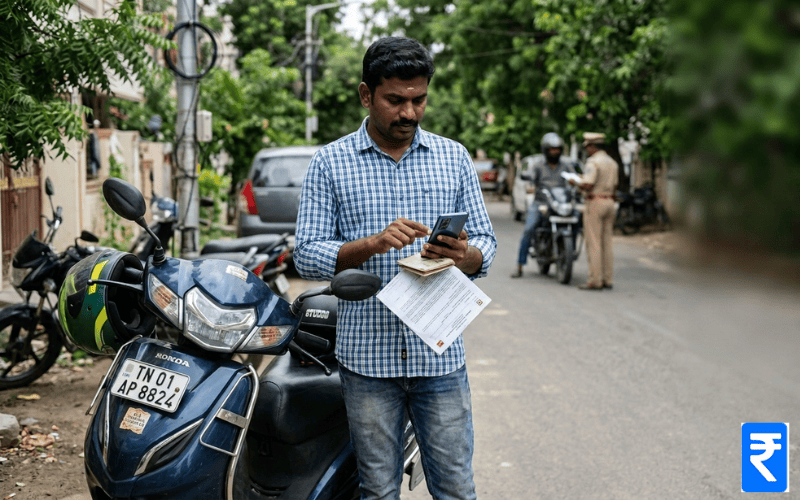
People in India don’t think much before buying a two-wheeler. It is now a daily part of their lives. You ride it to work, to college, to the market, and sometimes for long trips on the highway. When you buy the bike, insurance is taken right away. It is mandatory. After that, very few people actively keep a two wheeler insurance check. The issue usually comes up unexpectedly. It can be when you are stopped at a checkpoint or if there is a minor accident.
Earlier, checking this meant calling the agent or visiting the insurer’s office. Now, things are much simpler. With government systems being digitized, you can do your two-wheeler insurance check online in just a few minutes. You do not have to log into any insurance website or fill out any forms. You only need basic details like your registration number.
This article explains how a two-wheeler insurance check actually works in India, which official platforms show the correct information, and how you should read what appears on the screen. The idea is to make the process clear and practical, so you don’t have to depend on agents or guesswork anymore.
Table of Contents
- Why You Should Do a Two-Wheeler Insurance Check
- The Systems That Make Online Verification Possible
- VAHAN (Parivahan Portal)
- Insurance Information Bureau of India (IIB)
- How to Do a Two-Wheeler Insurance Check Using these Systems
- Method 1: Checking Two-Wheeler Insurance via Parivahan (VAHAN)
- Method 2: Checking Two-Wheeler Insurance via the IIB Portal
- Types of Two-Wheeler Insurance in India
- Third-Party Two-Wheeler Insurance (Mandatory by Law)
- Comprehensive Two-Wheeler Insurance (Most Popular Choice)
- Standalone Own-Damage Insurance (Newer Option)
- Add-Ons That Enhance Your Coverage
- Which One Should You Actually Choose?
- What If No Insurance Record Is Found?
- Accuracy of Online Insurance Data
- How Can You Check Insurance Without a Registration Number
- Legal Validity of Online Proof
- Common Misconceptions
- How Often Should You Do a Two-Wheeler Insurance Check
- Data Privacy
- Authoritative Sources
- Conclusion
- FAQs
Why You Should Do a Two-Wheeler Insurance Check
Most of us only think about insurance when something goes wrong. Otherwise, it’s just one of those things we buy once and then forget about completely. You assume it’s there in the background, doing its job, even if you haven’t looked at it in months or years.
But small situations come up all the time where you suddenly need it. A cop stops you, you want to sell your bike, you’re applying for a new RC, or there’s a minor accident.
Having up-to-date insurance protects you legally and you will have no tension. Checking your insurance status online helps you confirm that your policy is active and valid before it becomes a problem on the road.
The Systems That Make Online Verification Possible
Two main official systems provide you with accurate information for a two-wheeler insurance check:
VAHAN (Parivahan Portal)
VAHAN is managed by the Ministry of Road Transport and Highways (MoRTH). It is India’s national vehicle registry.
It stores:
-
- Registration details
-
- Owner information
-
- Fuel type
-
- Insurance validity
-
- Fitness and pollution status
Traffic police across Indian states use VAHAN for real-time verification. The site shows whether your insurance is valid and its expiry date. But it only has limited policy details.
Insurance Information Bureau of India (IIB)
IIB works under the Insurance Regulatory and Development Authority of India (IRDAI) and maintains a centralised insurance database.
It stores detailed policy information such as:
-
- Insurer name
-
- Policy number
-
- Policy period
-
- Coverage type
When you do a two-wheeler insurance check online, the information usually comes from one or both of these platforms.
How to Do a Two-Wheeler Insurance Check Using these Systems
Let’s see how you can check:
Method 1: Checking Two-Wheeler Insurance via Parivahan (VAHAN)
This is one of the easiest and most common methods.
Follow this process:
-
- Visit the official Parivahan portal
-
- Click on “Know Your Vehicle Details”
-
- Enter your two-wheeler registration number
-
- Submit the request
Information you will see:
-
- Owner name
-
- Vehicle class (bike/scooter)
-
- Registration date
-
- Fuel type
-
- Insurance validity date
-
- PUC status
This allows you to do a two-wheeler insurance check online instantly without creating an account. However, it does not show complete policy details.
Limitations
VAHAN does not show:
-
- Policy number
-
- Add-on covers
-
- IDV
-
- Claim history
It only confirms whether insurance exists and for how long it is valid.
Method 2: Checking Two-Wheeler Insurance via the IIB Portal
The IIB portal gives more policy-level details.
Here’s how to use it:
-
- Visit the IIB V-Seva portal
-
- Select “Policy Status”
-
- Enter:
-
- Registration number, or
-
- Chassis number, or
-
- Engine number
-
- Complete CAPTCHA and submit
Information you will see:
-
- Insurance company name
-
- Policy number
-
- Policy start date
-
- Policy end date
-
- Type of cover
This is the most reliable way to verify two-wheeler insurance online when you need detailed policy data without calling your insurer.
Types of Two-Wheeler Insurance in India
When people talk about bike insurance, it sounds like there are a hundred complicated options. But in India, everything mainly falls into just three basic types. Once you understand these three, you’ll never feel confused again while buying or renewing your insurance.
These are the types of insurance available:
Third-Party Two-Wheeler Insurance (Mandatory by Law)
This is the most basic and minimum required insurance in India. It comes under the Motor Vehicles Act, 1988. You legally cannot ride your bike on Indian roads without having this. This policy protects others, not you or your vehicle.
It covers:
-
- Injury or death of another person caused by your bike
-
- Damage to someone else’s vehicle or property
It does not cover:
-
- Damage to your own bike
-
- Theft of your bike
-
- Your medical expenses
So if you hit another vehicle, their damage is paid. But if your bike is badly damaged in the same accident, you pay from your own pocket. This is why third-party insurance is cheap. It only provides limited protection.
Best for:
-
- Very old bikes
-
- People who ride rarely
-
- Those who just want to stay legally safe at a minimum cost
Comprehensive Two-Wheeler Insurance (Most Popular Choice)
This is what most people actually need, even if they don’t realize it. It covers everything that third-party insurance does.
Comprehensive insurance includes:
-
- Damage to your own bike from accidents
-
- Theft of your bike
-
- Fire, floods, earthquakes, riots
-
- Accidental damage
-
- Optional add-on covers
Basically, it protects you, your bike and others. This is the only type where you actually feel “safe”.
Example:
If your bike gets stolen from outside your house at night, comprehensive insurance will compensate you. Third-party insurance will not pay anything. It costs a bit more, but it can save you from spending a lot of money later.
Best for:
-
- New bikes
-
- Expensive bikes
-
- Daily riders
Anyone who can’t afford sudden repair bills
Standalone Own-Damage Insurance (Newer Option)
This is a slightly newer concept in India. This option covers only damages to your bike, not third-party liabilities. You must have a separate third‑party policy along with it for legal compliance. It can protect your bike against:
It covers:
-
- Accidents
-
- Theft
-
- Natural disasters
-
- Fire
But you must already have a valid third-party policy. But this alone is not legal.
Best for:
-
- People who want to customize policies
-
- Those who already bought third-party separately
-
- Riders who want flexibility
Add-Ons That Enhance Your Coverage
Add-ons are optional, but they make your insurance much stronger. You pay a little extra, but get better protection.
Some common add-ons include:
-
- Zero Depreciation Cover: Get the full claim amount without depreciation cuts
-
- Roadside Assistance: Help you if your bike breaks down in the middle of nowhere
-
- Engine Protection: Very useful during floods or water damage
-
- Return to Invoice: You get the original bike price if it gets stolen or totally damaged
-
- Personal Accident Cover: Financial support in case of serious injury or death
These add-ons are available only with comprehensive policies.
Which One Should You Actually Choose?
Let’s be practical:
If your bike is:
-
- New → Go for Comprehensive
-
- Old & cheap → Third-party is fine.
-
- Medium-priced → Comprehensive with 1–2 add-ons
If you use your bike:
-
- Daily → Comprehensive
-
- Occasionally → Either
-
- Only once in a while → Third-party
The truth:
-
- Third-party insurance keeps your bike legal on the road
-
- Comprehensive insurance protects you and keeps you stress-free
Many people only notice the difference after an accident, theft or paying a big repair bill. Insurance may seem unnecessary until the day it actually saves you.
Here is a real-life example:
Suppose a college student buys a used scooter in Bhopal. The seller claims the insurance is valid for six months.
Instead of trusting blindly, the buyer:
-
- Enter the registration number on Parivahan
-
- Checks the insurance expiry date
-
- Verifies the insurer on the IIB portal
Within minutes, the buyer knows whether the seller’s claim is genuine. This is a practical way to do a two-wheeler insurance check online.
What If No Insurance Record Is Found?
Sometimes an online two-wheeler insurance check might show no results. Possible reasons include:
-
- Policy expired
-
- Insurer’s delay in updating data.
-
- Incorrect number entered
-
- Newly issued policy
What to do:
-
- Recheck after 24-48 hours
-
- Use chassis number
-
- Contact the insurer directly
Driving remains illegal even if the lapse was unintentional.
Accuracy of Online Insurance Data
These systems are legally reliable because:
-
- Insurers are required to report data
-
- Traffic police use the same systems
-
- Courts accept these records
Minor delays may occur for:
-
- Ownership transfers
-
- Rural registrations
-
- Newly issued policies
So online verification is authoritative, but not always.
How Can You Check Insurance Without a Registration Number
You can do your two-wheeler insurance check using:
-
- Chassis number
-
- Engine number
This helps if:
-
- Your number plate is damaged
-
- Your RC is under transfer
-
- The bike is newly purchased
Verification is not possible without identifiers.
Legal Validity of Online Proof
Records from VAHAN and the IIB portal are accepted by traffic police and courts as valid proof. You no longer need to carry physical documents during routine checks. However, carry your digital policy copy on your phone for additional proof.
Common Misconceptions
-
- “Third-party insurance is enough”: Legally, yes, financially risky.
-
- “Policies auto-renew”: Motor insurance never auto-renews.
-
- “Digital proof is unsafe”: Government systems are officially recognized.
How Often Should You Do a Two-Wheeler Insurance Check
It is a good idea to check your policy:
-
- Every six months
-
- Before long rides
-
- Before selling your bike
-
- After renewal
These checks take less than two minutes to complete.
Data Privacy
Public portals show minimal information. It makes sure there are:
-
- No contact details
-
- No payment data
-
- No address
Privacy risk is minimal.
Authoritative Sources
The following are primary regulatory institutions governing two-wheeler insurance in India:
-
- Ministry of Road Transport and Highways (MoRTH)
-
- Insurance Information Bureau of India (IIB)
-
- Insurance Regulatory and Development Authority of India (IRDAI)
-
- Motor Vehicles Act, 1988
These institutions make sure insurance records are correct and official.
Conclusion
Doing a two-wheeler insurance check online is important now. It has become simple, fast and free. It eliminates dependency on agents, reduces legal risk, and provides financial clarity.
Insurance verification is no longer complicated. The information is digitized, regulated, and accessible. All you need is a few minutes to protect both your legal standing and financial security.
FAQs
Can I check someone else’s bike insurance?
Yes. You can do a two-wheeler insurance check online for any bike. You only need the bike’s registration number. Use it to find any vehicle insurance using the sites. This shows whether the bike has valid insurance.
Can I see my claim history with a two-wheeler insurance check?
No. Your claim history is private. It is not shown in VAHAN or IIB. It only shows you if the insurance is valid, the insurer’s name and the policy dates. You cannot find any other data there.
Can I check insurance without a registration number?
Yes. You can use your chassis or engine number for online checks if registration details are unavailable. This is useful if your number plate is missing or if the bike is newly purchased.
Is online insurance verification valid legally?
Yes. VAHAN and IIB records are accepted by traffic police and courts as proof of valid insurance. So they are legally valid.
Can I show the results of a two-wheeler insurance check instead of physical papers?
Yes. The online details from VAHAN or IIB are official. You can show them on your phone during police checks instead of carrying physical documents.