

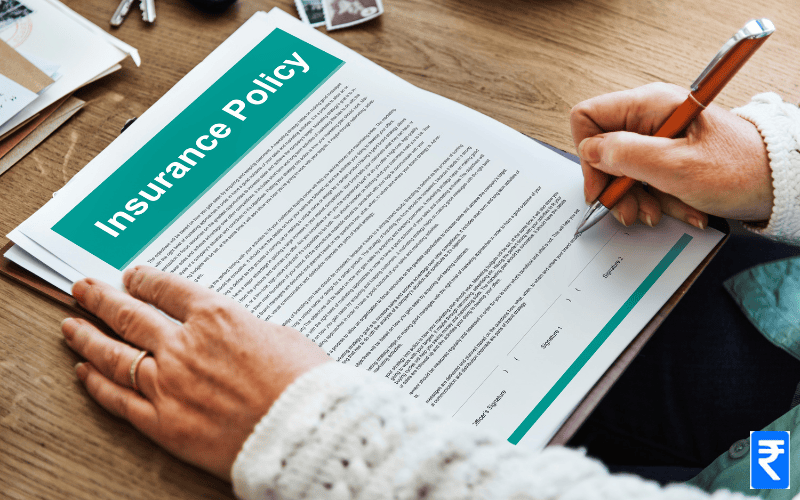
What is an insurance claim? When it comes to understanding this question, the details of your health insurance can feel complex. For Indian consumers, a strong health insurance policy is not just a financial security measure. It has become a necessity in this era of high medical costs.
An insurance claim is a formal request made by a policyholder to their insurance company for payment or reimbursement of expenses incurred as a medical emergency. The emergency is already considered an insured event. Understanding this process is vital in making sure that your claim settlement is smooth and successful.
This comprehensive guide is designed to help you with the process of health insurance claims in India.
Table of Contents
- Types of Health Insurance Claims
- Cashless Claims
- Reimbursement Claims
- Filing a Health Insurance Claim: A Step-by-Step Guide
- Cashless Claim Process
- Reimbursement Claim Process
- Documents Required for Health Insurance Claims
- For Cashless Claims
- For Reimbursement Claims
- How to Track Your Claim Status
- Reasons for Health Claim Rejection
- Ways to Respond If Your Claim Is Rejected
- Partial Claim Settlement & Deductions
- Non-Medical Expenses (NME)
- Proportionate Deductions
- Co-Payment Clause
- Reasonable & Customary Charges
- Timelines Under IRDAI Guidelines
- Grace Period & Policy Lapse Impact on Claims
- Duration of Grace Period
- Coverage During Grace Period
- Impact of Policy Lapse
- Protection of Credits on Renewal
- The No-Claim Bonus (NCB)
- Forms of NCB
- Impact on Claims
- Conclusion
- Frequently Asked Questions (FAQs)
Types of Health Insurance Claims
In India, there are two main categories of claims under health insurance. Both serve the same purpose in providing financial relief, but the operational mechanism is different.
-
Cashless Claims
Under the system of cashless claims, if you receive treatment in a hospital that is part of your insurer’s network, the hospital directly settles the medical bills with your insurance company or its Third-Party Administrator (TPA). This means that you, being the policyholder, do not have to pay out of pocket for the treatment. The question of what is an insurance claim in this scenario is simplified since your insurer is directly covering your medical costs.
-
Reimbursement Claims
Under this system, the policyholder will pay their medical expenses to the hospital and then will claim that amount from the insurance company. This is generally used if treatment is taken at a hospital that is not in the insurer’s network or if the cashless claim request was rejected. Here, what is an insurance claim means you are submitting all original bills and documents to the insurer for a refund of your expenses.
Filing a Health Insurance Claim: A Step-by-Step Guide
Regardless of whether you opt for a cashless or a reimbursement claim, understanding the general steps involved is crucial for a hassle-free experience.
For Cashless Claims
- Intimation: Inform your insurer or TPA as soon as possible, ideally within 24 hours of emergency hospitalization. If hospitalization is pre-planned, you can inform your insurer 2-3 days in advance.
- Pre-Authorization Request: The hospital’s insurance desk will send a pre-authorization request form, along with medical reports, to your insurer.
- Approval: The insurer or TPA reviews the request. They may approve it, raise a query for more information, or deny it. If the request gets approved, a cashless payment will be issued to the hospital directly
- Treatment & Discharge: You receive treatment. At the time of discharge, the hospital sends the final bill and discharge summary to the insurer/TPA for final settlement.
- Settlement: The insurer directly pays the approved amount to the hospital. You pay for any non-covered expenses.
For Reimbursement Claims
- Intimation: Inform your insurer or TPA as soon as possible.
- Pay Bills: Settle all medical bills at the hospital by yourself.
- Collect Documents: Gather all original documents, including the claim form, discharge summary, bills, and medical reports.
- Submit Documents: Submit the complete set of documents to your insurer orTPA.
- Review & Settlement: The insurer reviews the documents. If approved, the claim amount is reimbursed to your bank account. If there are discrepancies, they may ask for further clarification.
Documents Required for Health Insurance Claims
Common documents include:
For Cashless Claims
- Health insurance card
- Valid ID proof
- Pre-authorisation form
- Doctor’s consultation papers
- Diagnostic reports
For Reimbursement Claims
- Duly filled claim form
- Hospital bills (original)
- Payment receipts
- Discharge summary
- Prescriptions
- Diagnostic test reports
- Pharmacy bills
How to Track Your Claim Status
Policyholders can track claim status through:
- Insurer’s website
- Insurer’s mobile app
- Customer care
- TPA portal
- Email updates from insurer
Reasons for Health Claim Rejection
Even if you plan carefully, sometimes some health insurance claims are faced with rejection. Understanding the reason behind it can help you to avoid them. When considering what an insurance claim rejection is, here is what you should keep in mind:
- Non-Disclosure of Facts: If a policyholder does not communicate any pre-existing diseases (PEDs) or other relevant medical history at the time of purchasing the policy, the claim may be denied. However, after 5 years of continuous coverage, a policy and claim cannot be contested on this ground, unless proven fraud.
- Policy Exclusions: Health insurance policies often contain some exclusions which not covered by your insurer. These can include cosmetic surgery, self-inflicted injuries, or specific diseases mentioned in the policy document.
- Waiting Periods: Most policies have different waiting periods for different diseases and pre-existing diseases. If you make a claim within this period, it can be denied.
- Treatment at Non-Network or Blacklisted Hospitals: While reimbursement claims are possible at non-network hospitals, cashless claims are only available at network hospitals. If a hospital is blacklisted by the insurer, your claim might be rejected.
- Late Intimation: Delay in informing the insurer about hospitalization or submitting documents after too long can also lead to rejection.
- Incomplete or Incorrect Documentation: Missing essential documents, submitting photocopies instead of originals, or providing incorrect information in the claim form can result in rejection.
Ways to Respond If Your Claim Is Rejected
Steps a policyholder can take:
- Review the rejection letter carefully
- Submit additional documents if requested
- Contact the insurer’s grievance cell
- Escalate to the Insurance Ombudsman
- File a complaint with IRDAI
Partial Claim Settlement & Deductions
Sometimes, even if the claim is approved, the policyholder may receive only a partial settlement. This can confuse those wondering what an insurance claim settlement amount is and why it is not the full sum. There can be several factors behind partial settlements and deductions:
- Non-Medical Expenses (NME): As part of the health insurance, non-medical expenses are generally not covered. These generally include gloves, masks, syringes, cotton, food, and toiletries. These items can increase the total hospital bill considerably. Unless you have an add-on cover for NMEs, these might be deducted from your claim.
- Proportionate Deductions: Several policies impose a sub-limit on the cost of your hospital room. If you choose a room with a higher rent than you are eligible for, the insurer may deduct all the related medical expenditures of the patient in proportion to the difference in room rent.
- Co-Payment Clause: Some policies, particularly for those senior citizens, might have a co-payment clause. This means that the policyholder is obliged to pay a fixed percentage of the admissible claim amount, and the remaining balance is covered by the insurer.
- Reasonable & Customary Charges: Insurers may have internal benchmarks for medical procedures and hospital charges. If a hospital bill is much more than what is considered ‘reasonable’ for a particular treatment, the insurance companies may only pay up to their benchmarked amount.
Timelines Under IRDAI Guidelines
The IRDAI (Insurance Regulatory and Development Authority of India) has laid down specific timelines to ensure that all claims are settled properly. Knowing these guidelines helps policyholders understand what the insurance claim process is and their rights within it.
- Cashless Authorization: Insurers must decide on a cashless authorization request within 1 hour of receiving all necessary information.
- Final Discharge Authorization: The final authorization for discharge from the hospital shall take place within 3 hours of receiving the discharge request. Should there be a delay, any additional charges incurred by the policyholder will be borne by the insurer.
- Claim Settlement (Reimbursement): Once the insurer or TPA receives the necessary documents for a reimbursement claim, the claim must be settled within 30 days.
- Interest on Delayed Settlement: If the claim settlement is delayed, the insurance company will have to pay interest at a rate of 2% above the bank rate for that financial year.
Grace Period & Policy Lapse Impact on Claims
The concept of a grace period is crucial for policyholders to understand since it directly impacts the continuity of their health insurance coverage. The grace period is a brief period of time provided by the insurance company to the policyholder after the due date of the premium, during which he would be able to pay the premium to renew his policy without forfeiting the benefits of the policy.
- Duration: As per IRDAI guidelines, a grace period is given for 15 days in case of policies that are paid on a monthly basis. For policies with quarterly, half-yearly, or annual premium payments, the grace period usually lasts 30 days.
- Coverage During Grace Period: Another important factor to note is that if the premium is paid in instalments, you might receive some coverage even during the grace period. This means that if anything occurs during this period, the claim will generally be admissible.
- Impact of Policy Lapse: If the renewal premium is not paid during the grace period, the health insurance policy would lapse. Lapsed policy means that all benefits are forfeited. The policyholder essentially would have to start over, including having to serve new waiting periods.
- Protection of Credits on Renewal: If the policy is renewed within the grace period, all accrued credits will be protected and carried forward. This is how important timeline renewal is to ensure ongoing coverage and benefits.
The No-Claim Bonus (NCB)
No-Claim Bonus (NCB) is a reward mechanism provided by the health insurance companies to the policyholders who do not make any claims over the course of a policy year. It boosts policyholders to lead a healthy lifestyle and reduces unnecessary claims. The impact of NCB on what is an insurance claim is indirect but significant, as it enhances the overall value of the policy.
- Forms of NCB: NCB can be offered in two ways:
- Cumulative Bonus: There will be an increase in the sum insured for the next policy year without any corresponding increase in the premium.
- Premium Discount: Some insurers will give a discount on the renewal premium. This discount can gradually be increased with each passing year of no claims, and hence make the policy more affordable.
- Impact on Claims: While NCB rewards claim-free years, it also has an impact when a claim is made. If a claim is filed, the accumulated NCB is generally reduced in the next policy year. However, the original base Sum Insured is not affected.
Conclusion
What is an insurance claim? Understanding this in the context of health insurance in India is important for every policyholder. While the process can seem complex, it is always beneficial to be better prepared to handle any medical emergency. Always remember to read your policy document carefully and maintain accurate records. In case of any medical emergency or hospitalization, promptly communicate with your insurance company to facilitate a smooth claim experience. Your health insurance is a vital safety net. Knowing how to effectively utilize it is key to your financial and medical well-being.
Frequently Asked Questions (FAQs)
Key Differences Between Cashless and Reimbursement Claims
With a cashless claim, you can receive treatment in the insurance company’s network hospital. The insurance company directly pays bills to the hospital. A reimbursement claim means that you will first pay all medical expenses. Afterwards, the insurance company will reimburse you by submitting all original bills and documents.
Can my health insurance claim be rejected after 5 years of continuous coverage?
As per IRDAI guidelines, after 5 years of being covered, your insurance cannot be denied on grounds of non-disclosure or misrepresentation, except in cases of proven cases of fraud.
Why are non-medical expenses deducted from my claim?
Non-medical expenses are charges for items like gloves, masks, syringes, and other administrative costs, which are normally not covered by standard health insurance policies. They are deducted because they are not considered part of the direct medical treatment costs.
How does forgetting to renew your policy affect your coverage?
If your policy lapses by non-payment of premium within the grace period, you lose all the accumulated benefits. This includes the benefits of the No-Claim Bonus. You would have to start a new policy, serving new waiting periods.
How should I respond if my cashless claim is denied at the hospital?
In case your cashless claim is not granted due to incomplete information, submit the required documents. In situations involving denial of coverage, you can pay the bill yourself and later file a reimbursement claim. When your claim continues to be denied, you may raise a grievance with the IRDAI.