

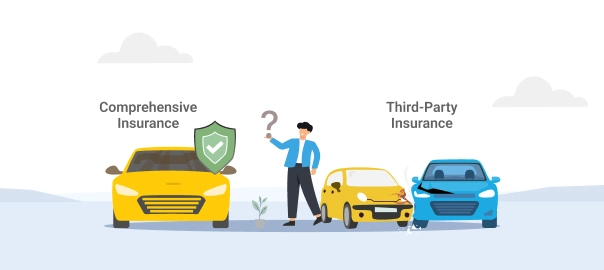
Under the Motor Vehicles Act, driving without a valid insurance coverage can attract legal penalties. This is why it is important to have proper insurance cover when you purchase your own vehicle.
When you look online for insurance policies, you will find many options. Most people look into third-party car insurance policies since it is a mandatory requirement under the Motor Vehicles Act. It is also generally more affordable than its comprehensive policies.
In this guide, we will understand the factors that influence third-party car insurance cost as well as other information to help you choose your policy wisely.
What is Third-Party Car Insurance?
Third-party car insurance covers damage or loss to a third-party vehicle, person, or property. It solely covers harm to the third party and doesn’t protect the policyholder at all.
The Motor Vehicles Act in India has made it mandatory to have third-party car insurance. If you don’t buy third-party insurance, you could face serious consequences, including fines or jail time. Additionally, it protects your money from losses that could happen if your car damages someone else’s car, person, or property.
For instance, if you accidentally damage another car’s side mirror, your third-party car insurance will pay for the damage to that car.
Why Should You Have Third-Party Insurance
There are a few reasons as to why third-party insurance is extremely important:
- Legal Compliance: The law says that everybody who drives on public roads must follow the rules.
- Protection for Third Party: It makes sure that those who are injured, killed, or have their property damaged by the insured vehicle get paid.
- Financial Liability: It protects the owner from having to pay a lot of money in legal fees and damages if they cause an accident.
What Does Third-Party Car Insurance Cover?
Let us first understand the different types of third-party car insurance cost. They are:
Damage to Third-Party Property
If you damage someone else’s property, the insurance coverage will pay for the repairs. The insurance company will only pay out a certain amount of money in damages.
Damage to a Third-Party
If a third party gets injured because of the policyholder’s mistake, the insurance company will pay for their medical bills. The insurance company will cover all costs and losses that arise. If the third party dies, the insurance company will reimburse costs to the third party’s family.
What is Not Covered Under Third-Party Insurance?
Here are some circumstances that third-party insurance doesn’t cover:
- Own Damages: The policyholder and their vehicle are not covered for any injuries or damages, including those caused by fire, natural disasters, war, etc.
- Driving under the influence of alcohol or drugs: The insurance company will not cover damage to a third party if the driver of the insured vehicle was under the influence of drugs.
- Invalid Driving License: Your claim will get rejected if the driver of the insured vehicle has an invalid driver’s license.
- Outside Geographical Limit: No coverage will be given if the accident or third-party damage occurred outside of the geographic limits stated in the insurance policy.
- Undesignated Driver: No coverage will be offered for any third-party liabilities if someone other than the insured car’s owner or the designated driver was operating the vehicle.
- Unauthorised Use: The insurance provider will not offer coverage if the insured vehicle is being used for illicit purposes or if there are third-party liabilities.
Third-Party Car Insurance Premium Rates in India
Companies cannot arbitrarily set the third-party car insurance cost rates for any insurance policy, as they are regulated by the Insurance Regulatory and Development Authority of India, also called IRDAI.
IRDAI Premium Structure Explained
As per the IRDAI rates, which are fixed across all insurance providers, the rates are determined based on:
- Previous claims filed
- Previous accidents (especially in the last year)
- Engine capacity
Electric vehicles (EVs) get unique tariffs that are usually lower than those for gas-powered cars. There are several rates for different battery sizes.
Engine Capacity-Based Pricing Slabs
Based on cubic capacity (cc), private vehicle third-party insurance prices fall into three main categories:
| Type of Vehicle | Engine/Battery Capacity | 1-Year Premium Price | 3-Year Premium Price |
Private Cars | <1000 cc | ₹2,094 | ₹6,521 |
| 1000 cc–1500 cc | ₹3,416 | ₹10,640 | |
| >1500 cc | ₹7,897 | ₹24,596 | |
Electric Cars | <30 kWh | ₹1,780 | ₹5,543 |
| 30–65 kWh | ₹2,904 | ₹9,044 | |
| >65 kWh | ₹6,712 | ₹20,907 |
Factors Affecting Third-Party Car Insurance Cost
Even though prices are regulated by the IRDAI, the final third-party car insurance premium is regulated by certain factors. They are:
Model of the Vehicle
If you want coverage for an expensive car, insurance firms will charge you more. The worth of your car, or the IDV, is what determines the insurance rate. The size and type of the car are also important factors to consider. This is because large cars, such as SUVs, are safer in accidents than smaller vehicles.
Manufacturing and Registration Dates
The year of manufacture and the date of registration are also taken into account when setting insurance prices. So, the older the automobile, the more you will have to spend for insurance. An automobile is an asset that loses value over time. This implies that as your car gets older, repairs cost more because spare parts are harder to find.
Gender & Age
Statistics show that young men are more likely to get hurt than young women. So, young men frequently have to pay more for insurance than young women. Once you turn 25, the premium rates stop changing. But elderly males usually pay less for premiums than women do.
No Claim Bonus (NCB)
A No Claim Bonus, or NCB, is a discount that builds up over years when you have made no claims. Every year that you don’t claim, the money you save adds to the discount you get on your premium.
Type of Insurance Plan
You will have to pay extra for a tailored vehicle insurance plan than for regular coverage. The premium may vary based on the policy’s coverage and benefits.
Top Third-Party Car Insurance Options
Here are some top third-party insurance options which you can check out. They are:
| Insurer | Coverage | Claim Process | Best Suited For |
| ICICI Lombard | Injury/death + property damage | Digital + offline support | Urban users wanting digital servicing |
| HDFC ERGO | Third-party liabilities only | Strong network garages + online claims | Balanced service + network access |
| Bajaj Allianz General Insurance | Legal liability coverage | Fast claim assistance + app support | High-engine vehicles |
| TATA AIG General Insurance | Third-party + legal defence | Assisted claims + call support | First-time buyers |
| New India Assurance | Third-party + MACT-based claims | Mostly offline/manual | Users preferring PSU insurers |
| IndusInd General Insurance | Third-party liability | Digital-first claims | Online buyers |
How to Reduce Third-Party Insurance Costs
While third-party insurance premiums are generally much more affordable than comprehensive counterparts, there are still legal ways to reduce third-party car insurance costs.
- Accumulate No-Claim Bonus (NCB): If you avoid filing small claims, you can earn a no-claim bonus that can reduce your premium by 10-50% at renewal.
- Opt for Higher Voluntary Deductibles: If you agree to pay a higher amount out of pocket (voluntary excess) in the event of a claim, it will reduce the insurance company’s risk and lower your premium.
- Install Anti-Theft Devices: If you install devices like steering locks and GPS trackers, which are approved by the ARAI, it can lead to premium discounts as they reduce the theft risk
- Avoid Policy Lapses: Make sure that you renew your insurance on time, as lapsed policies lose the accumulated discounts, and when you go to renew them, you will be charged a higher premium.
- Avoid Unnecessary Modifications: Let your insurance company know about any changes, but keep in mind that upgrades like engine replacements or CNG kits can raise your premiums, while safe, basic cars usually have lower premiums.
How to File a Third-Party Insurance Claim
Here is a step-by-step guide on how to file a third-party insurance claim, so that you can get the most out of your insurance.
- Step 1: The first step in filing a claim for third-party insurance is to go to the nearest police station and file an FIR. You need to report the offence to the Motor Accident Claims Tribunal, which is a special court.
- Step 2: The third party can file a claim for property damage, health problems, or death in the area where the covered first-party person lives. The court listens to all sides and looks at the evidence before deciding who is responsible.
- Step 3: If there is property damage, the report from the inspection officer, the surveyor, and the original bill are all required to determine the total loss.
If you have suffered losses due to someone else’s mistake, you will need to do the following:
- Step 1: The first thing you need to do is show that the other party made a mistake that caused the damage.
- Step 2: Each side will do its best to show that the other side is to blame, which might make it hard to show that one side is to blame and ask for damages.
- Step 3: The court only decides on the compensation after it gives its ruling.
Documents Needed to File the Claim
These are the documents that you need to file your claim for your third-party insurance.
- Insurance policy copy
- Filled-out claim form
- RC copy of vehicle
- Driving licence copy
- FIR
Pros and Cons of Third-Party Car Insurance
Let us now take a look at the advantages and disadvantages of this type of insurance:
| Pros | Cons |
| Affordable and budget-friendly: This is the cheapest form of car insurance since it only covers damage caused to others, not your own vehicle. | Very limited coverage: It only protects you against damage or injury caused to others, not your own car. |
| Legally mandatory coverage: It helps you comply with Indian law, so you can drive without worrying about penalties. | No cover for your own car damage: Repairs for your vehicle after an accident have to be paid out of your own pocket. |
| Covers injury or death of third parties: If someone gets injured in an accident involving your car, the policy helps handle compensation costs. | No protection against theft: If your car is stolen, this policy offers no financial support. |
| Covers third-party property damage: If you accidentally damage someone’s car, shop, or other property, the insurance helps cover those expenses. | No coverage for natural disasters: Damage due to floods, earthquakes, or cyclones is not included. |
| Easy to buy and renew: You can purchase or renew it quickly online with minimal paperwork. | No add-ons available: You cannot enhance the policy with benefits like roadside assistance or zero depreciation. |
| Provides basic legal protection: It helps manage legal liabilities and compensation claims if you are involved in an accident. | Claims can take time: The process may involve legal steps and documentation, which can sometimes be slow and complex. |
Important Tips Before Buying Third-Party Insurance
Before you go ahead and buy a third-party insurance cover, there are a few things to keep in mind.
- Third-party insurance cover is best for older, lower-value vehicles where the cost of comprehensive insurance is not worth it. Opt for third-party insurance if your car fits the description.
- Check the insurer’s reputation and ensure the company has a high claim settlement ratio. Also verify that claims are settled without much hassle.
- Premiums can vary between providers, so you should always compare rates online and find the most cost-effective option for you.
- Make sure you read the policy wording beforehand and know exactly what is included and what is excluded. This will come in handy when you’re trying to use it and settle the claim.
- Make sure that you have separate personal accident coverage. Basic third-party insurance will not cover your injury or death.
Conclusion
Third-party car insurance is quite affordable and popular among general Indian consumers. However, it is important to understand the nuances of the third-party car insurance costs, including the factors that influence them and the premium structures as regulated by the IRDAI. Always make sure to compare costs and read the documents carefully to make sure that you can get the most out of the premium that you’re paying for.
Frequently Asked Questions
Q1. What is the cost of 3rd party car insurance?
The cost of third-party car insurance is the premium you pay, and it is regulated by the Insurance Regulatory and Development Authority of India.
Q2. Is third-party insurance for 3 years?
The third-party car insurance duration must be valid for at least three years, as that is the minimum benchmark set.
Q3. Is it mandatory to buy 3rd party insurance?
Yes, under the Motor Vehicles Act, it is mandatory to have third-party insurance coverage when driving a car or a two-wheeler in India. Not following the rule can result in significant penalties.
Q4. What are the disadvantages of 3rd party insurance?
The biggest downside of third-party liability insurance is that your own car is completely uncovered. This means that if you crash into a pole or any other incident happens, you have to pay for any repairs out of pocket.
Q5. Which is cheaper, third-party or comprehensive?
While third-party car insurance premiums are lower, comprehensive policies provide better coverage; ultimately, the choice is up to the individual buying the car policy.