

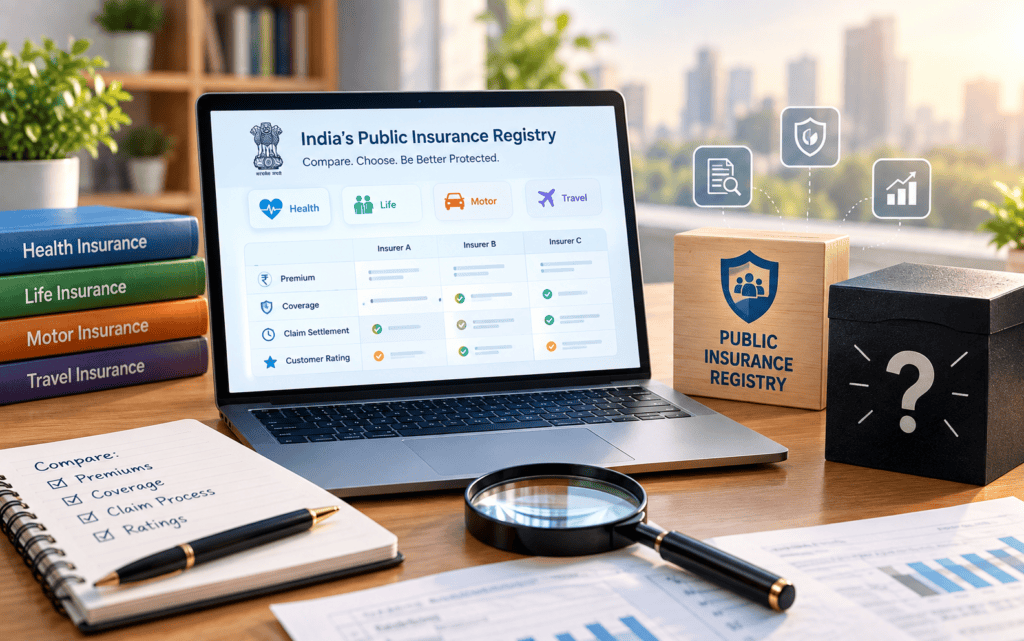
India’s insurance regulator wants to make it far easier for people to see their insurance policies in one place and compare products before buying. On 1 September 2026, IRDAI released a consultation paper proposing a Public Insurance Registry (PIR), a shared digital layer meant to connect insurers, intermediaries and policyholders. The promise is real, but so is the pushback, with some commentators asking whether the registry could turn into a black box rather than a window. Comments on the proposal are open until 30 September 2026, so the design is still up for debate.
What the Public Insurance Registry Would Do
For an ordinary buyer, the pitch is straightforward. The proposed registry could allow easier product discovery and comparison, a consolidated view of policies held across insurers, verification of insurers and intermediaries, access to policy and claims information, and better visibility of unclaimed amounts. IRDAI has framed it as digital public infrastructure built on a “source-system primacy” model, where the underlying records stay with the insurer that holds them and another insurer can pull a customer’s history only with that customer’s consent. In other words, it is designed as an access layer rather than one giant central database of every policy.
The Transparency Concerns Critics Have Flagged
The governance model is one area still open for consultation. IRDAI has proposed converting the Insurance Information Bureau into a not-for-profit company wholly owned by IRDAI, which would operate the registry under a separate regulatory framework. The paper is also seeking views on privacy, consent, data architecture and governance. Then there is data. The paper leans on consent and promises compliance with the Digital Personal Data Protection Act, 2023. Even with that architecture, the scale and sensitivity of insurance and claims data make privacy, consent, cybersecurity and governance important design questions. There is also the comparison itself. A tool is only as honest as what it shows and how it ranks, and if the methodology, inclusions and exclusions are not published, “easier comparison” can quietly become a black box. Record accuracy, data completeness and how the registry will serve policyholders whose policies or interactions are not fully digital are among the practical questions the consultation will need to address. None of this is settled, because the PIR is still a proposal, not a live system.
How to Use It, and What to Watch For
Right now there is nothing to log into and no account to create. The one concrete action available is to comment on the proposal before 30 September 2026 through the official consultation portal, which industry bodies, technologists and ordinary readers can all do. If the registry goes live in the years ahead, the sensible way to use it will be to cross-check a seller’s licence before paying, pull a consolidated view to catch policies or unclaimed money that slipped from memory, and treat any comparison as a starting shortlist rather than a verdict. The registry can point to a policy, but it cannot read the fine print, and the wording, exclusions and waiting periods still decide what a claim actually pays. That gap is where independent help matters, and MyRupia, which holds no insurer stake and works on paid consultations rather than commissions, reads what a comparison screen leaves out so a buyer is choosing on cover, not on price alone.
Disclaimer: This MyRupia article is for informational purposes only and is based on publicly available government, regulatory and industry sources. It should not be treated as investment, financial, tax, insurance, or legal advice. Information, examples, market data, and expert views mentioned in the article may change over time and should not be considered a recommendation to buy, sell, invest in, or surrender any financial product. Readers should evaluate their individual circumstances and consult a qualified financial professional before making decisions.